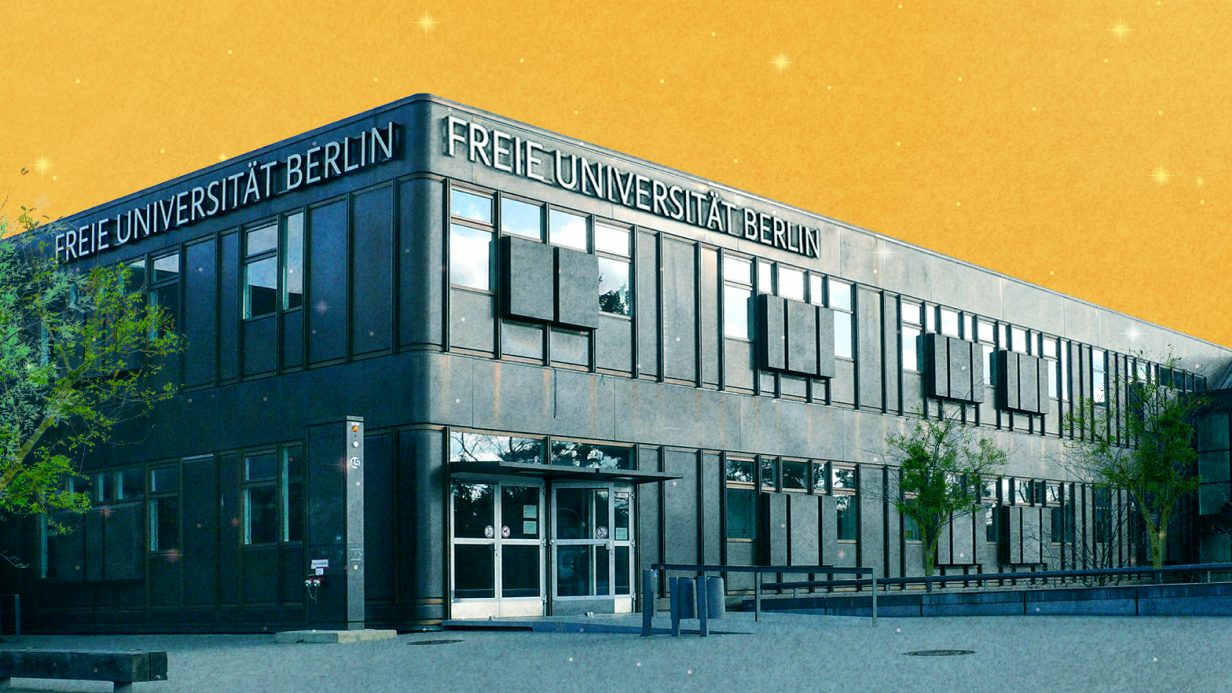
In Berlin, the first interdisciplinary European conference of the Association of Russian-Speaking Scientists Abroad (RASA) took place. Over two days at the Free University of Berlin, more than 50 talks and presentations were given across thematic sessions and roundtables — ranging from astrophysics to philosophy.
Latest news about scientists’ work and experiences during the war, along with videos and infographics — follow the T-invariant Telegram channel to stay updated.
Opening the conference, economist and dean of the London Business School Sergei Guriev spoke about the role of the academic diaspora in Russia’s future. He recalled the involvement of scientists — including those working outside Russia — in several early attempts to modernize education and science during the initial stages of Putin’s era. Guriev referenced his seminal 2006 article “Smart but Scattered,” as well as the Global Education Program and the mega-grants competition, which he also played a role in.
Today, these initiatives — which once helped steer Russian science toward greater international openness and competitiveness — have either been forgotten or lost their relevance. However, as Guriev and other conference organizers argued, Russian scientists who left Russia after the start of the full-scale war in Ukraine and obtained academic positions (mostly short-term) across Europe, Asia, and the Americas need a common platform for dialogue, coordination, and mutual support.
Up-to-date videos on science during wartime, interviews, podcasts, and streams with prominent scientists — subscribe to the T-invariant YouTube channel!
The scientific community in exile has a vital long-term role to play in helping restore democratic statehood and the economy in Russia, should the country once again embark on a democratic path. To achieve this, building a lean “Academy of Sciences outside Russia” must begin now, according to Alexander Kabanov of the University of North Carolina (USA), the executive director of RASA. Judging by the quality, diversity, and number of presentations at the Free University of Berlin, one of the association’s key strengths is its capacity for interdisciplinary scientific expertise, with specialists from different fields eager and able to collaborate. This was plainly demonstrated in the roundtable discussion on artificial intelligence.
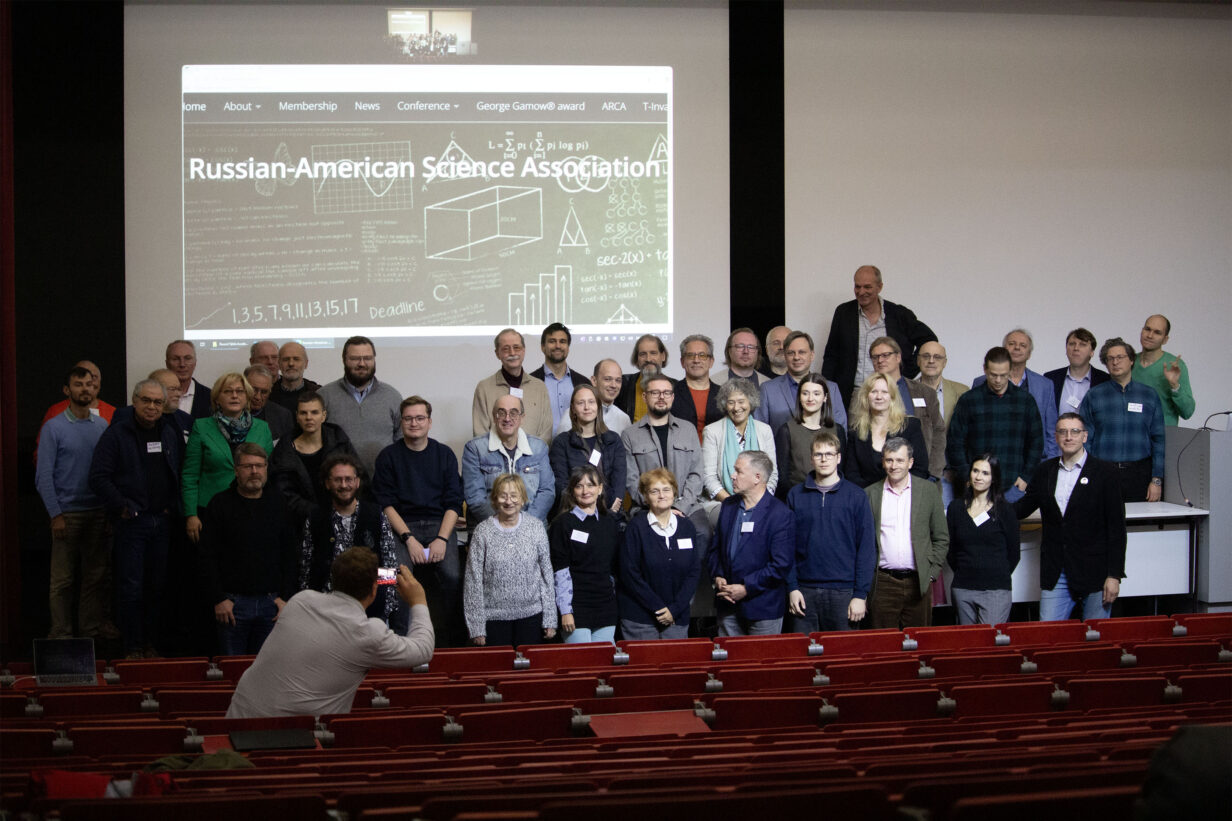
The conference concluded with a major discussion titled “The Future of the Russian Academic Community and Science in Exile.” The future is genuinely promising. As noted by Igor Efimov, professor of biomedical engineering at Northwestern University (USA) and first president of RASA, “the first meeting succeeded in assembling an excellent scientific program covering STEM as well as the humanities and social sciences, and the packed schedule attracted a large number of scientists from different generations.” “This marks the beginning of building a community of Russian-speaking scientists in exile in Europe. These scholars play a significant role in shaping the democratic future of Russia,” Efimov believes.
But reaching a democratic future for Russia will require time — and it is unclear whether Russia has any chance of such a future without a stable democratic future in Europe itself. The vast majority of the several thousand scientists who have left Russia and Belarus over the past five years are now in an extremely difficult position. They move from country to country, accepting short-term positions, and upon arriving at a new university, they cannot focus on research because they have to spend a significant portion of their time and energy searching for the next position. And these are the lucky ones. A substantial number of exiled scientists have no academic affiliation at all and therefore cannot even apply for short-term grants. They face constant problems with legal status, as each new country has its own requirements for work visas or residency permits. Those “stuck” in France or Germany may be eligible for social benefits, but in most countries of Eastern Europe, the Baltics, Georgia, Armenia, and Israel, even such support is unavailable.
Almost all conference participants acknowledged that the situation for scientists in exile has only worsened over the four years of war. One possible solution discussed was the creation of an integration program for displaced scholars — not as a form of social support from the European Union, but rather as a way to strengthen the scientific and educational systems in Eastern Europe, the Baltics, and EU candidate countries, and to enhance Europe’s security (not only technological, but also informational).
The intellectual resources of these people should be channeled into protecting Europe from potential risks and upheavals, as well as toward improving education and science in areas where there is a clear gap with Western European countries. This could also help prevent the inevitable return of struggling scientists to Russia, as well as their departure to China and Iran. Finding funding for such a program — to provide fellowships for scientists in exile outside local university budgets — is, in the participants’ view, not the biggest challenge. Far more difficult is securing long-term residency in the EU.
Scientists, graduate students, and lecturers who have left authoritarian countries and lost the opportunity to conduct research find themselves in an extremely difficult situation. However, to paraphrase Zelensky’s famous remark about weapons rather than taxis, what they need is not welfare but the right to work. Without resolving legal status issues and without a unified “scientific émigré passport,” this right is either unattainable or must be reapplied for every six months. Therefore, one of the goals of uniting scientists in exile is to find ways to help and support Europe at this critical moment, when the United States is “charting its own course” and Russia is sending drones over Berlin and Munich (some conference participants were unable to arrive on time precisely because of this).
The first step toward building this future was taken even before the Berlin conference: the creation of a European Coordinating Council within RASA. A priority for the newly elected vice-president of RASA, a visiting researcher at the Davis Center at Harvard and a researcher at the Free University of Berlin Andrei Yakovlev, is fostering interaction between RASA and various initiatives and groups of the renewed Russian-speaking academic diaspora in European and Asian countries. The organizers hope this event will establish a new tradition — similar to the annual RASA conferences that have been held in the United States for 16 years. The XVI International RASA Conference will take place on November 15–16, 2025, at Rutgers University.