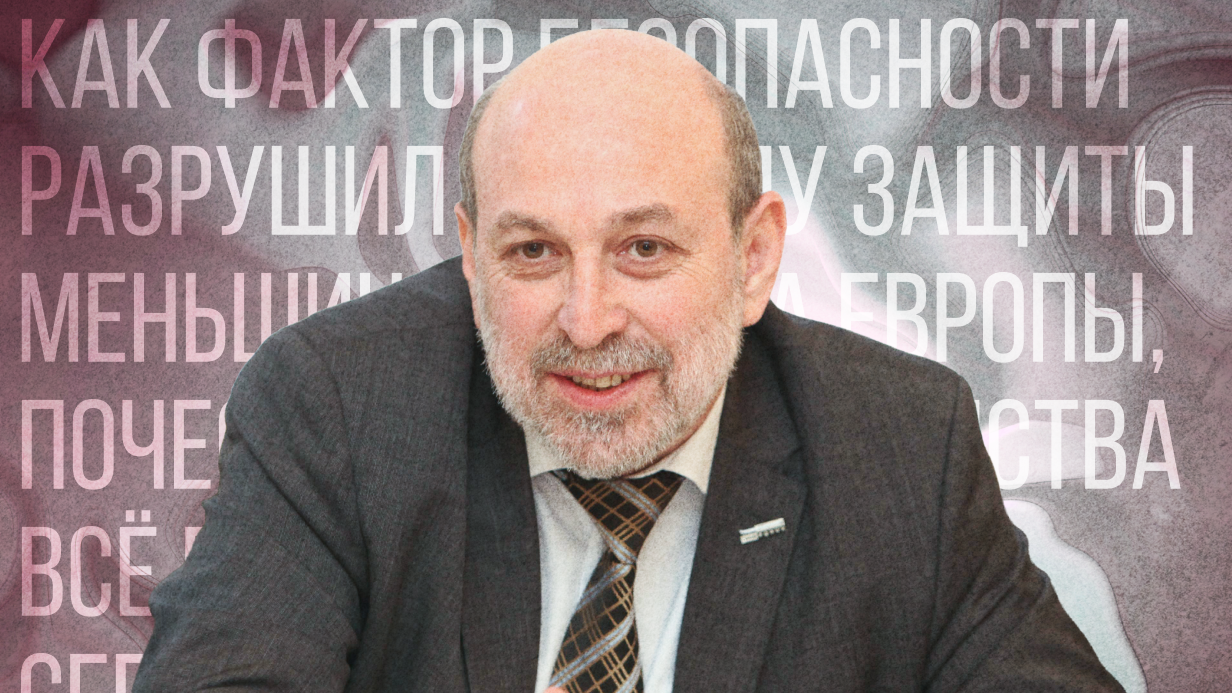
Boris Tsilevich spent decades advocating for minority rights in PACE, became the first chair of the subcommittee on minority rights, and in 2023 secured — via Latvia’s Constitutional Court — the right to use Russian-language for higher education in private universities. Today he believes the era of minority rights has effectively come to an end. In an interview with T-invariant, Tsilevich explains how the security considerations dismantled the Council of Europe’s minority protection system, why even “ostensibly satisfied” minorities tend toward political separatism, and how the principles of DEI have supplanted multiculturalism.
T-INVARIANT FACT FILE
Boris Tsilevich
Latvian politician and human rights advocate, member of the Harmony party. In 1978 he graduated from the Latvian State University (now University of Latvia) and entered graduate school in Theoretical and Mathematical Physics (completed in 1981). From 1988 to 1991 he worked as a researcher at the University’s Institute of Mathematics and Computer Science. Author of more than 30 scientific papers on the application of mathematical modeling in various fields, including education. In the late 1980s he was an activist of the Popular Front of Latvia. He participated in creating Latvia’s first human rights groups. In 1996–1998 he served on the Advisory Council on National Minorities to the President of Latvia. From 1998 to 2022 he was repeatedly elected to the Saeima (Latvian Parliament). From 1999 to 2023 he was an active member of the Parliamentary Assembly of the Council of Europe (PACE), authoring more than 30 reports that formed the basis for PACE resolutions and recommendations. In 2005–2007 he was the first chair of the PACE Subcommittee on Minority Rights. Alongside his parliamentary work he continued to participate in international human rights projects.
Minorities: From Religion to Nationality
T-invariant: What is a minority? Is there a clear definition of the term?
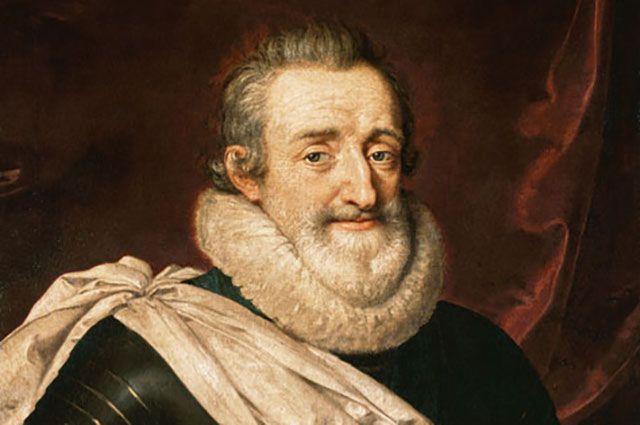
Boris Tsilevich: In international law some basic concepts deliberately lack precise definitions. The idea of special protection for people who were numerically in the minority in their societies and differed from the majority in key respects first emerged in the Middle Ages, when the primary marker of identity was religion and Europe was riven by religious wars between different branches of Christianity. For example, in 1598 King Henry IV of France [previously known as Henry of Navarre. — T-invariant] issued the Edict of Nantes, which for almost a century prohibited persecution of the Huguenots in France. More often, however, a monarch concerned for the well-being of his co-religionists in a neighboring state would reach an agreement with its ruler for their protection, and their rights would be enshrined in a peace treaty. Thus, in 1606, in Vienna, the Treaty of Vienna was concluded between the Habsburgs and the Prince of Transylvania [Transylvania gained limited autonomy, while Hungarians were granted the same constitutional and religious rights and privileges as in Hungary, and religious tolerance was extended to Hungarian Calvinists and Lutherans. — T-invariant]. Subsequently, minority protection clauses were included in almost every peace treaty up to the the Congress of Vienna (1814–1815).
The clear separation between secular and ecclesiastical authority was not firmly established until the Peace of Westphalia, which ended the bloody Thirty Years’ War. The foundational principles of international law that remain in force today were formulated, the most important of which being the idea of national sovereignty: the state exercises full authority within its territory.
In the 19th century secularization, set in motion by the French Revolution, spread across Europe. The idea of equality embraced by the French Enlightenment thinkers did not tolerate distinctions among citizens. On the one hand, revolutionaries fought against the estates system, on the other hand, against religion. It became apparent that people in France spoke different languages, and this too was seen as an obstacle to complete equality.
A well-known quote from Bertrand Barère, one of the republican leaders, delivered before the Convention reads: “The voice of federalism and superstition speaks in Breton.” France then embraced the republican model that it has followed ever since. Under this model minorities are not recognized as such, since their very existence undermines the idea of equality. Yet despite more than two centuries of consistent efforts to eradicate linguistic differences have failed. People still speak Breton, Corsican, Alsatian, and other regional languages.
In the 19th century, alongside religious minorities, national, ethnic, and linguistic minorities emerged. For example, after Napoleon’s defeat, when the victorious powers negotiated Europe’s post-war order at the Congress of Vienna, Poland as a state was not reestablished. Nevertheless, the Congress documents provided limited guarantees for Polish minorities in the territories allocated to other states.
The next major stage came after World War I in the era of the League of Nations. At that point the existence of dissatisfied minorities began to be seen as a potential cause of conflict. An entire system of multilateral and bilateral treaties was created that contained specific provisions for protecting particular minorities. In addition, several states — including the Baltic countries — adopted unilateral declarations on the protection of their largest minorities as an informal condition of their admission to the League. A key mechanism of individual petitions was established. Minorities could appeal to the relevant League bodies with complaints about rights violations that seem strikingly modern today: prohibition of discrimination, access to citizenship, permission to use their language, the right to establish their own cultural, educational, and religious institutions, and non-interference by the state in their activities. If a political solution proved impossible, such petitions were submitted to the Permanent Court of International Justice at the League. Some of its rulings are still cited in political debates and even in court decisions. For instance, in one case a state argued that no such minority existed on its territory. The Court ruled that the existence of a minority is a matter of fact, not of law, and failure to recognize it does not absolve the state of the obligation to respect and protect its rights.
But every action has two sides. When Hitler set his sights on the Sudetenland, one of the justifications for aggression was specifically the need to protect the German minority there. The idea became so discredited that shortly thereafter, after World War II, when the League of Nations was formally dissolved and the United Nations created, no one was willing to discuss minority rights. Nevertheless, in 1948 the UN General Assembly adopted a special resolution emphasizing the importance of the matter. A Sub-Commission on the Prevention of Discrimination and Protection of Minorities was established under the Commission on Human Rights and was tasked with developing a definition. It operated through the 1950s and 1960s, proposed three different versions, but all were ultimately rejected. Special Rapporteur Francesco Capotorti, in an extensive study Study on the Rights of Persons Belonging to Ethnic, Religious and Linguistic Minorities, summarized relevant judicial decisions and treaties and proposed his own definition, which remains the operative one today.
Over time, references to minorities began to appear in UN documents. Key conventions protecting them — albeit indirectly — were adopted during this period: the Convention on the Prevention and Punishment of the Crime of Genocide (1948) and the International Convention on the Elimination of All Forms of Racial Discrimination (1965). The first explicit provisions on minority rights appeared in the International Covenant on Civil and Political Rights in 1966. Article 27 cautiously states that in those states in which ethnic, religious or linguistic minorities exist, persons belonging to such minorities shall not be denied their right, in community with the other members of their group, to enjoy their own culture, to profess and practice their own religion, or to use their own language. These are known as negative rights; no positive obligations were placed on states. In 1992 the UN finally adopted the Declaration on the Rights of Persons Belonging to National or Ethnic, Religious and Linguistic Minorities.
Top news on scientists’ work and experiences during the war, along with videos and infographics — subscribe to the T-invariant Telegram channel to stay updated.
T-i: And what exactly is Capotorti’s definition?
BTs: A group accounting for less than 50% (on the other hand, there must also be a minimum size — no fixed threshold exists; it depends on the context and common sense); a distinct identity expressed through language, religion, customs, traditions (objective criteria). There is also an important subjective criterion: these groups must have the will to preserve their distinct identity and must explicitly express that will. In other words, minority rights are rights that must be actively claimed. This contrasts, for example, with the prohibition of torture — an unconditional right for which people are not asked whether they object to being tortured. But the possibility of addressing local-government bodies in a minority language is a matter of choice, and there are often weighty reasons for not exercising that right.
T-i: Why was no definition ever adopted?
BTs: Consensus proved impossible to reach on several points (beyond those already listed). The main disagreement concerned the link between these groups and territory. Most states believe that only their own citizens can claim minority status. Many add that a “stable and longstanding connection with the territory” is required — in other words, one must prove that one is an “indigenous population.” Others object to that approach. Thus the UN Human Rights Committee in 1994 adopted a General Comment stating that the rights of minorities provided for in UN instruments cannot be restricted whatsoever: temporary workers or even tourists can claim them. This is understandable — many Global South states in the UN defend the interests of recent post-colonial immigrants who have left their homelands. The European approach differs markedly. Most European states consider only groups that have lived on their territory for a very long time to be minorities; some even try to set quantitative criteria — Poland and Hungary demand at least one hundred years. The United Kingdom (a former colonial power with great population diversity) stands out by consistently taking an open position and regarding such criteria as discriminatory. France and Turkey deny the very existence of minorities, consider the concept harmful, and voted against any definition.
After the fall of the Iron Curtain, bloody ethnic conflicts erupted in the former socialist camp. It became clear that no normative basis existed for resolving them. Therefore in 1990 the OSCE — an organization dealing not with human rights but with international cooperation and security — adopted the so-called Copenhagen Document. It is not a legally binding convention but a political declaration; nonetheless, minority rights are formulated clearly in it: the right to free self-identification, to use one’s native language in private and in public, to profess one’s religion, to create non-governmental organizations. Once again, no agreement was reached on a definition. So the purely diplomatic OSCE took an pragmatic approach and created the institution of the High Commissioner on National Minorities. Max van der Stoel, the first person to hold the post, liked to repeat that he was the Commissioner “on minority issues, not for minorities” — his task was not to represent them but to prevent conflicts. I interacted extensively with van der Stoel and all his successors. It is a purely practical institution that sought to monitor the situation, respond to potential threats, collect information, and in some countries maintain permanent missions. Latvia and Estonia had them too. When asked how he could work without a definition, van der Stoel would reply: “When I meet a minority, I recognize it.”
In 1995 the Council of Europe adopted the Framework Convention for the Protection of National Minorities, transforming the political commitments of the Copenhagen Document into legal norms. There were again huge debates about a definition, and many years later — in 2003 — I participated in them as a Council of Europe rapporteur. Once more, no agreement was reached. Therefore the Capotorti criteria remain in force today, with some additions over time — for example, the position of the minority cannot not be dominant, as was recently the case with Afrikaners in South Africa or Alawites in Syria. All other aspects depend on the state. If it so chooses, it lists in a special declaration — submitted upon ratification of the Framework Convention — the groups it recognizes as minorities. Germany, for instance, recognizes the Sorbs, Frisians, Danes (in Schleswig-Holstein), and Sinti. Jews are considered a religious minority. Denmark recognizes only Germans, and only in Southern Jutland. Luxembourg declared that there are no minorities on its territory but signed the convention out of solidarity.
T-i: And France?
BTs: France did not even sign it — nor have three other European states: Turkey, Monaco, and Andorra. Belgium, Greece, Iceland, and Luxembourg signed but have not ratified. Greece is a particularly difficult case. The Treaty of Lausanne, signed after World War I, continues to govern the rights of the only “Muslim minority” in the country — in Western Thrace. These people call themselves Turks. There are European Court of Human Rights judgments stating that Greece may not refuse to register NGOs simply because they call themselves Turkish.
As a Council of Europe rapporteur, I visited those regions, as well as Florina, in Greek Macedonia [officially named Western Macedonia. — T-invariant], where I saw the only sign in the Macedonian language anywhere else in Greece. For a long time discrimination was enshrined in law: Greek citizens could be stripped of citizenship for prolonged absence if they was not an ethnic Greek. The provision in question was repealed, but the process of restoring citizenship — mainly to Turks and Macedonians — remains ongoing.
At present the prevailing position of the Advisory Committee and the Parliamentary Assembly is that states have a certain margin of appreciation in deciding which groups to recognize as minorities on their territory, but that choice cannot be wholly arbitrary.
Satisfied or Angry?
T-i: Isn’t there a contradiction in the fact that group rights are protected by institutions created to safeguard individual human rights?
BTs: Minority rights are not in themselves collective rights; they are rights of specific individuals. True, in many cases they can only be realized together with other individuals. Yes, some argue that there are human rights on one hand and additional minority rights on the other. That is legal flat-earthism, which I have sought to combat. There is no contradiction. Article 1 of the Framework Convention states that the rights of persons belonging to national minorities form an integral part of fundamental human rights. These include the right to protection from discrimination and the right to preserve one’s cultural identity — rights enjoyed by all, but minorities face special difficulties in exercising them. As for institutions — well, there are no special bodies created solely for minorities. There are certain judicial and quasi-judicial mechanisms. If a state has ratified the Optional Protocol to the International Covenant on Civil and Political Rights, individuals within its jurisdiction can submit individual communications to the UN Human Rights Committee. The Committee adopts its “views,” which are not legally binding, but the state is required to provide a reasoned response within a prescribed period.
For example, the notable Latvian Ignatāne case (2001) concerned the question of whether a candidate in municipal or national parliamentary elections could be required to demonstrate sufficient proficiency in the official language and be barred from running if an inspector deemed their knowledge insufficient. The Committee held this to be a restriction on the fundamental right to stand for election. Thanks to that ruling — and a similar later decision by the European Court of Human Rights — the provision that allowed language inspectors to disqualify candidates was removed from Latvian law.
The judgments of the European Court in Strasbourg carry even greater weight. When joining the Council of Europe a state ratifies the European Convention on Human Rights and thereby undertakes to comply with those judgments. Yet the Convention itself contains almost no provisions on minority protection. The only relevant provision is Article 14 and Protocol No. 12, which prohibit discrimination on grounds of minority status. In a broader sense, however, the right to one’s own identity is linked to other articles. For example, the Court has explicitly stated that freedom of expression applies not only to the content of information and ideas but also to the form in which they are conveyed, including the choice of language. Thus prohibiting the use of certain languages without adequate justification constitutes a violation of freedom of expression.
Latest videos on science during wartime, interviews, podcasts, and streams with prominent scientists — follow to the T-invariant YouTube channel!
In 2005, in Turkey, politicians of Kurdish origin were sentenced to prison terms for campaigning in the Kurdish language. The ECHR found this a violation of freedom of expression and an interference with private and family life. A similar ruling was issued two years ago in a Bulgarian case in which the applicant — leader of the predominantly Turkish Movement for Rights and Freedoms (MRF) — was fined for campaigning in his native language. Ethnic parties are banned in Bulgaria, yet the MRF is the country’s leading liberal party — similar to, for example, the Swedish People’s Party in Finland.
The European Court, however, examines not the legal norm in the abstract but the specific situation. What constitutes a violation in one context may not be a violation in a comparable one. Not long ago Latvia introduced a partial ban on Russian in paid election campaigning. An application to the ECHR has been lodged. But there is a war is ongoing, Russian is the language not only of the local minority but also of the neighboring aggressor state, and that factor may affect the decision.
T-i: Are Russians a minority in Latvia? And in Germany?
BTs: From a legal standpoint, Russians are recognized as a minority in Latvia. Some nationalist-minded politicians claim otherwise — “you came here on Soviet tanks” — but that is nonsense. It is clear that Russians lived here when the territory was part of the Russian Empire. Excluding Russians from the list of minorities would be manifestly discriminatory. Yes, a significant portion of the Russian community arrived after 1945. Attitudes toward immigrants are legitimately different: someone who consciously moves to a country usually knows and accepts the rules of the game. But in Europe — especially Eastern Europe — people often moved not necessarily because they wanted to: they fled war, famine, genocide, or forced deportations. Those who came to Latvia moved within what was de facto a large country. One can criticize them, but it is baseless to demand that people sent by the Komsomol to build factories should have understood that Latvia had been illegally occupied and foreseen that its independence would be restored. That does not correspond to general principles of humanity, and we cannot point to any applicable international instrument that regulated the situation. What we do know is that when residents were registered in 1991, over 40% of Russians were registered as citizens. In other words, almost half the community consists of old Russians. Moreover, most non-citizens today are second- or third-generation residents — that is quite enough to consider them part of Latvian society. Therefore a refusal to recognize them as a minority is largely rhetorical and political.
T-i: Professor Dimitry Kochenov has argued — citing as examples negative decisions on discrimination against non-citizen pensioners and the ban on publicly and privately funded bilingual (Russian) education — that the ECHR tends to justify discriminatory treatment of Russian-speakers in Latvia because it is an unpopular minority.
BTs: I partly agree with Professor Kochenov. But law reflects certain ethical views and norms prevailing in society. Unfortunately the humanistic approach characteristic of the early 1990s — a period of rapid development of human rights in general and minority rights in particular — is fading, and the analogy with the interwar period of the 20th century readily suggests itself. Russia has to a large extent destroyed the Council of Europe’s system for protecting minorities because the factor of security emerged.
T-i: So minorities are now perceived as aggrieved by definition?
BTs: No — it turned out that even when they are satisfied, nothing is guaranteed. The crisis of the European minority protection system is an important topic; I devoted my latest article to it, published last year as a chapter in a Routledge edited volume. I argue that, among other things, minorities themselves did not accept the compromise offered to them. Even in states where they were granted very extensive rights, they still did not abandon aspirations to their own statehood, separatism, demands for autonomy, and so on. Moreover, they used the existing autonomy to attempt secession. In practice, all successful cases of separatism were linked to some form of autonomy. We see examples in South Ossetia, Abkhazia, Nagorno-Karabakh.
Perhaps the most civilized in form yet unambiguous example is Catalonia. I was the PACE rapporteur on the punishment of Catalan separatist leaders. The long prison terms imposed by the Spanish court clearly did not meet the requirements of the European Convention, and we eventually secured their release. But on the other hand… As rapporteur I had no right to express any position on Catalonia’s status and consistently refrained from doing so. As a private individual — which I now am — I believe it was utterly harmful and deadly to minority rights in general. The Catalans had been granted as many rights and competences on their land as one could possibly imagine! Yet they used them to try to leave Spain anyway. This completely undermines the theory that a satisfied minority is a loyal minority. I think the concept of minority rights has exhausted itself.
T-i: So France’s position has been vindicated?
BTs: It doesn’t work very well either. Activists in the French regions of Brittany and Corsica continue from time to time to use quite forceful methods. For example, they deface road signs in French only, leaving Breton inscriptions.
Something else is needed, perhaps the idea of full and effective equality — unity in diversity. That is what Europe is trying to formulate, mostly at the level of slogans to date. Although in the last couple of years we have also seen a crisis of this approach. The DEI concept (Diversity, Equity, Inclusion) is not about minority rights but about equal opportunities and taking diversity into account. Of course, different actors have sometimes acted on the principle “make a fool an altar boy and he’ll burn down the church.” But overall I disagree with those who now portray DEI policies as willful stupidity. They are highly effective. Their opponents often depict migrants as a homogeneous mass marching in lockstep to build an Islamist-style state in Europe and claim that crime rates among them are higher than among native populations. That is either obscurantist thinking or a deliberate campaign to rationalize xenophobia.
PREVIOUSLY IN T-INVARIANT
“We Recognize Marxism in Modern Ideologies.” Professor Anna Krylov — on the Harm of DEI, the Dangers of Censorship, Trump’s Reforms, and Cancel Culture.
“To Claim That White Men Have No Privileges At All Is Modest Racism.” Dmitry Dubrovsky on the Assault on DEI, Inequality in Academia, and the Culture of Consequences.
“Merit-based selection vs academic equality. Why DEI practices are not taking root in Germany. (in Russian)
Not only DEI and DOE.. How Trump’s policies are destroying American science. (in Russian)
Of course, in Germany a ethnic Sorb or Turk whose ancestors arrived in the 1960s, and a Syrian who came during the recent war may have significant differences. But they have much more in common. The current trend is to integrate minority rights into other policies addressing diversity. This is most clearly realized in the United Kingdom, where a person’s social situation, political views, and success correlate increasingly less with their origin, skin color, native language, or religion. Quite recently the Prime Minister was a Briton of Indian descent, the leader of the Scottish National Party has Palestinian heritage, and the Mayor of London was of Pakistani origin. These people belong to different parties, hold different political views, and none of them reached their position because of their religion or ancestry.
Color Blindness and Imposed Choice
T-i: And what about multiculturalism?
BTs: The idea of multiculturalism originated in Australia, was borrowed by Canada, then spread to the United States and partially to Europe. It never really took off anywhere except Australia and Canada. It consists of distributing benefits through cultural communities that structure society. For immigrant countries this is more or less adequate. Its serious drawback is that it fosters artificial identities. To gain access to benefits you must belong to one of the communities — in fact, you are effectively required to choose an identity.
Returning to your question about whether Russians are a minority in Germany — according to the declaration submitted upon ratification of the Framework Convention, no. But from the point of view of integration support — yes, it is a vulnerable group that needs to be engaged with, supported, and from which positive outcomes can result.
Last spring we were in Berlin for the open “What? Where? When?” championship. In a large municipal building in a relatively affluent district an entire floor is dedicated to various Russian clubs, projects, and organizations. Dozens of teams from all over Germany — educated people of various professions — play What? Where? When? in Russian and receive municipal and federal-level grants for it. They do far more than gather in the evening, put on kokoshniks, and sing Russian songs. Fairly active political discussions take place in Russian. Russian-speaking Member of the European Parliament Sergey Lagodinsky works closely with this audience.
This illustrates my point that it no longer matters whom we officially recognize as a minority and whom we do not. We are moving away from historical debates about who qualifies as a minority and who does not, together with all the talk of separatism, the right of nations to self-determination (“we want it too”), and so on. We have a single state containing different groups with different cultural needs. The state should not be blind to differences, should respect them and make use of them, should meet people halfway, and provide necessary support to those with a distinct identity — especially vulnerable groups, people with special needs, immigrants, the elderly — particularly in education, including, where necessary, the use of their languages.
In principle, the precondition of obeying the law and unquestioning loyalty was built into all minority-rights documents from the beginning. In theory everything sounds fine, but when one looks at practice… There is the European Free Alliance (EFA) — a European political party that calls itself the party of minorities. But if you read its documents, it describes itself as the party of unrepresented peoples, stateless nations, regionalists, autonomists, and nationalists. Long-serving Member of the European Parliament Tatiana Zhdanok of Latvia’s Russian Union belonged to that party for many years [the EFA suspended the Russian Union of Latvia’s membership due to “fundamental disagreements” over Russia’s invasion of Ukraine, including Zhdanok’s vote against the European Parliament resolution supporting Ukraine and condemning the invasion. — T-invariant].
That seriously discredits the idea of minorities. It becomes especially dangerous when an external actor — a so-called kin-state or “mother country” — tries to instrumentalize them, as Hungary does. All Hungarian minorities in neighboring countries are clearly structured, have their own parties that report directly to Fidesz, receive funding from the Orbán government, and obtain Hungarian citizenship as ethnic kin. Despite all its flaws, Hungary is not going to invade anyone militarily. But the political complications are serious, and Orbán’s special attitude toward Russian aggression in Ukraine is largely determined by Hungary’s long-standing struggle — ostensibly — for the rights and interests of Hungarians in western Ukraine. Yet Ukrainian Hungarians have so many rights that probably only the Romanians have more — there are even Hungarian-language universities there. Still, they constantly criticize Ukraine.
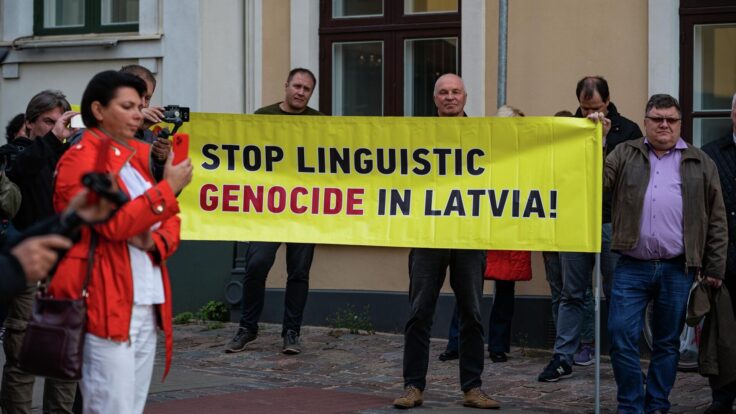
T-i: Speaking of universities. When Latvia banned all education in Russian, your lawsuit concerning the ban on private higher education in Russian was considered by the European Court of Justice. What was the final decision?
BTs: We did not apply directly to the European Court; it was the Constitutional Court that referred the case to Luxembourg for a preliminary ruling after we filed our complaint there. And the decision was generally in our favor. The Court found that the additional conditions unduly freedom of establishment and entrepreneurship and contravened EU law. However, the mere fact of a restriction says little; what matters is whether it is proportionate, pursues a legitimate aim, and is necessary in a democratic society. The Court avoided those assessments, stating that proportionality would be better determined by the national court, and referred the case back. Ultimately our claim was largely upheld.
Another matter is that demand for education in Russian has simply disappeared. At one time many solvent young people from the former Soviet republics — Central Asia, the South Caucasus — wanted a European diploma and a European program but lacked sufficient English; many private universities thrived on that demand. But then Russian ceased to be a neutral language. In theory, new programs in Russian could now be launched on the basis of those court decisions. I am not sure there would be any demand, though.
In several cases concerning the ban on Russian in public schools the Strasbourg Court did not side with the applicants. But there is nothing new here since 1968, when the Court decided the so-called Belgian linguistic case: more than half a century ago it ruled that the European Convention does not require states to provide public education in the language chosen by parents. What disappoints me greatly, however, is the Court’s position in the Djibouti case, where it found no violation. Tengiz Djibouti sued Latvia over the ban on private Russian-language schooling. The ECHR is generally conservative and has never been particularly generous in minority cases. But what troubles me is something else: for once it upheld a restriction even in the private sphere — something that usually does not happen. Thus the Court assessed the proportionality of the restrictions precisely from the standpoint of security. Many human-rights defenders criticize that judgment. But one must bear in mind that education is a very special business with great public importance; the degree of state control and intervention is far higher than in other sectors.
I do not think the Djibouti case reflects some special partisan approach toward Russians. The trend is far more serious — it is a change in attitude toward diversity, toward the private sphere, and toward the role of the security factor overall. This is a clear manifestation of the return of a security logic not only to minority rights but to the entire field of human rights. The Court has sanctioned a higher level of state control and broader possibilities for state interference in private life in the name of security. We all know who to thank for that.