
A bill pending in the U.S. House of Representatives aims to counter Russian innovation and protect certain Russian scientists. T‑invariant examines whether it will ever pass and, if so, who might actually benefit from it.
Measures introduced by the U.S. State Department after the start of the war in Ukraine have effectively cut off Russian scientists working in mathematics, biology, physics, chemistry, computer science, and other STEM fields from participating in U.S. scientific collaboration. Even getting a two‑week visa to attend a conference now requires security clearance from all special services. For the same reason, it has become almost impossible to collaborate on scientific papers with American colleagues. This directly contradicts Joe Biden’s statement made at the beginning of the war that the United States would “robbing Putin of <…> his best brains”. In reality, over the past four years the situation has only worsened. And in January 2026, the door for Russian scientists slammed shut completely — following President Trump’s executive order indefinitely suspending the issuance of immigrant visas.
Nevertheless, back in May 2025, Congressman Bill Foster (D‑IL) introduced in the U.S. Congress H.R. 3536, titled “A bill to authorize the Secretary of Homeland Security to provide certain nationals of Russia with special immigrant status, and for other purposes” (also known as the “Countering Russian Innovation and Protecting Select Scientists Act”).
Top news on scientists’ work and experiences during the war, along with videos and infographics — subscribe to the T‑invariant Telegram channel to stay updated.
The bill would grant special immigrant status to up to 3,000 scientists from Russia working in science, technology, engineering, or mathematics.
“The list of fields was most likely taken from the Critical and Emerging Technologies List,” says Denis Vavaev, head of advocacy at Liberty Forward. “This is a list of critical and emerging technology areas developed by the White House in coordination with numerous agencies. For the bill, this is undoubtedly a strength that could help it pass. As for the number — 3,000 people — I have two theories. The first is based on recent statistics showing that U.S. universities grant roughly 16,000–17,000 PhDs to international students in STEM fields each year. About 75% of them stay in the country, at least in the short term (up to five years), while around four thousand leave immediately after graduation. It’s possible the figure was chosen to replace those departing foreigners with Russian specialists. The second theory: it may be based on estimates of how many STEM scientists have left Russia since the start of the war. I haven’t seen such estimates myself, but I can’t rule out that U.S. authorities obtained these numbers somehow.”
The goal of the bill is to bring the best scientists out of Russia, thereby strengthening American science while weakening the Russian government that, under conditions of a mobilization economy, isolation, and sanctions, is relying on “sovereign science.” It is no coincidence that the bill was introduced by Bill Foster, the only current member of Congress with a PhD in physics. He completed his PhD at Harvard and worked in elementary particle physics at the legendary Fermilab. Since 2008, he has been active in Democratic Party politics.
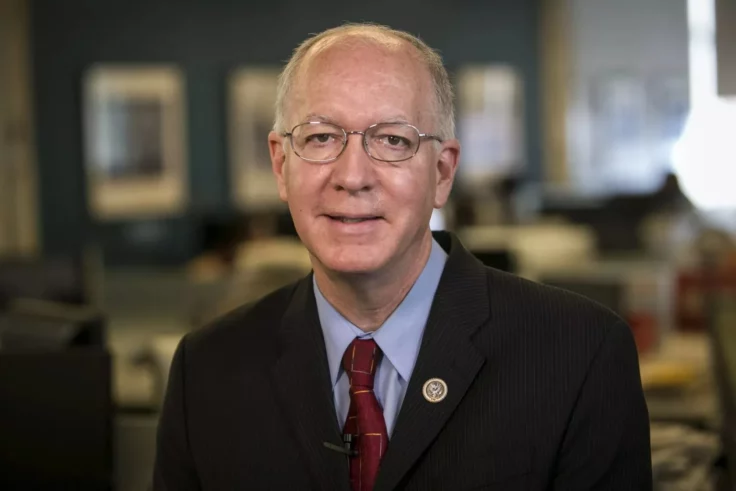
Why was the bill introduced at a time when the Trump administration had sharply tightened immigration policy, including toward Russian nationals? “Perhaps it was at this moment that they finally found a Republican co-sponsor for the bill — Jay Obernolte — which allowed it to be introduced on a bipartisan basis,” Denis Vavaev suggests. “Or perhaps the timing is linked to the arrival of the Trump administration, which is far more hostile toward China than the Biden administration was. This would strike a blow not only at Russia but also at Russian-Chinese scientific cooperation. It could also be a trial balloon — a way to test the new Congress’s appetite for such legislation. Despite the strong overall opposition to immigration, many Republicans remain open to high-skilled immigration while firmly opposing low-skilled inflows. The logic is straightforward: technological competition with China is only going to intensify, and the U.S. cannot afford to fall behind.”
To date, the bill has not been considered in any committee in either chamber, nor has it been discussed in public discourse. This may be because brain drain from Russia is not currently a priority for either Democrats or Republicans, says Evgeny Roshchin, a fellow at the Center for European Policy Analysis and visiting scholar at the School of Advanced International Studies at Johns Hopkins University.
“The mere introduction of a bill does not necessarily mean it is meant to pass. Such bills are fairly common. They are introduced, one might say, to signal a position. Then they sit in committee for years. This seems to be the case here. It doesn’t even matter that Trump was in power in 2025. The bill was most likely introduced regardless of Trump and without any realistic expectation of success. Even with a likely shift in the House after the fall elections, the bill’s chances remain slim, since Democrats have other priorities they will be prioritizing,” he says.
This view was indirectly confirmed by the congressman’s own office.
“At this time we do not have an estimated timeline for consideration of the bill in committee or on the House floor. Those timelines are largely determined by the majority party, so we have limited influence over scheduling,” Caitlin Fong, an aide to Bill Foster, told T‑invariant. Fong also noted that the bill does not provide any specific financial support for scientists leaving Russia.
According to T‑invariant, the bill will be reintroduced after the November 2026 congressional elections. However, even if the legislation is taken seriously, only a handful of people — not 3,000 per year — would be able to benefit from it, unless the procedures for issuing short‑term visas to Russian scientists are also changed. In recent years, Russians specializing in STEM fields have been unable to travel to the United States for conferences or seminars because even tourist (B) or exchange (J) visas require full security vetting by all agencies. This vetting process can take years and has no fixed timeline. Moreover, U.S. security services have been reluctant to grant entry to STEM specialists from Russia even as students.
“I applied twice for internships at American universities in 2024 and 2025,” an undergraduate student from a prestigious Moscow university told T‑invariant speaking on condition of anonymity. “I specialize in the social sciences, but dozens of physics, math, and computer science students also applied. They were all denied visas. Historians, journalists, and political scientists got them.”
It’s unclear how the bill’s sponsors intend to get around the problem of security clearance procedures for STEM specialists — checks that were apparently introduced at the urging of security agencies. “I understand your concerns about the lengthy vetting process for Russian scientists wishing to enter the United States,” says Caitlin Fong. “Under this bill, applicants for special immigrant status must, to the extent practicable, receive a decision no later than 90 days after the Secretary of Homeland Security receives all required documentation and information needed to adjudicate the petition.”
According to a Russian physicist who commented anonymously on the document, the bill in its current form does not address the main barriers preventing Russian scientists from obtaining positions in the United States today.
Up‑to‑date videos on science during wartime, interviews, podcasts, and livestreams with prominent scientists — subscribe to the T‑invariant YouTube channel!
“The bill concerns immigrant visas, and it’s good that this special program sets a 90‑day decision timeline. However, to apply for it, applicants first need a job offer. And if no dedicated funding is provided, Russian scientists will have to compete on the open market. How can I compete on equal terms when I am effectively cut off from the United States? A person needs to be able to enter the country, attend interviews, give talks, and co‑author papers in international journals with American colleagues. I don’t have that opportunity now. Today, for a Russian STEM scientist to come to the U.S. for a two‑week interview or conference, they must undergo a security vetting process that can last a year or longer. I’m not even sure which group of people this program is targeting. STEM scientists — even those with European residence permits but holding a Russian passport — are not being issued ordinary B visas to America. Getting one from inside Russia is even more difficult. The most effective way to solve the problem of attracting highly skilled professionals from Russia is through two measures: simplifying and speeding up the issuance of short‑term visas for scientists with Russian passports, and providing funding for a dedicated federal program to fund positions for Russian scientists at American universities and research centers. This would not be a large sum for the U.S. federal budget. But it would allow the bill to achieve its stated goals — countering Russian innovation and protecting select scientists,” the T‑invariant source believes.
The fact that the bill allows entry to specialists without guaranteeing them jobs is one of the most controversial aspects, notes Denis Vavaev as well. “Republicans will undoubtedly argue that this could burden the social welfare system if people don’t find work and that it would create competition for U.S. workers. That said, the bill is currently authorized for only four years, meaning it would not need to be renewed if the program proves unsuccessful. Also, given Foster’s background as a physicist, it’s possible he looked into whether there is actually a shortage of specialists in the specific fields the bill targets. It’s quite narrowly focused, so people would essentially be recruited on a targeted basis. In addition, this would give the U.S. time to train its own workforce,” Vavaev says.
A separate question is why the bill does not provide for STEM scientists who have already left Russia and are now in various countries waiting years for American visas, nor for students and researchers already in the United States. It would seemingly be simpler and cheaper to regularize the status of people already here than to specially bring out those trapped behind a new “iron curtain.”
In any case, turning the “Countering Russian Innovation and Protecting Select Scientists Act” into a fully operational program to undermine Russia’s technological self‑sufficiency — as its sponsors envision — would require a vast number of accompanying legal and administrative measures. Meanwhile, the very introduction of such a bill, which contemplates bringing up to 12,000 specialists out of Russia over four years, will not go unnoticed by Russian security services. And the longer it is under consideration, the worse the situation will become for scientists inside Russia. “If the Americans can’t pass this law quickly, I’d rather they abandon it altogether,” says a scientist who tried to leave Russia but was denied a U.S. visa because of his affiliation with a sanctioned university. “While Congress debates it, they’ll simply detain people preemptively here as a preventive measure.”