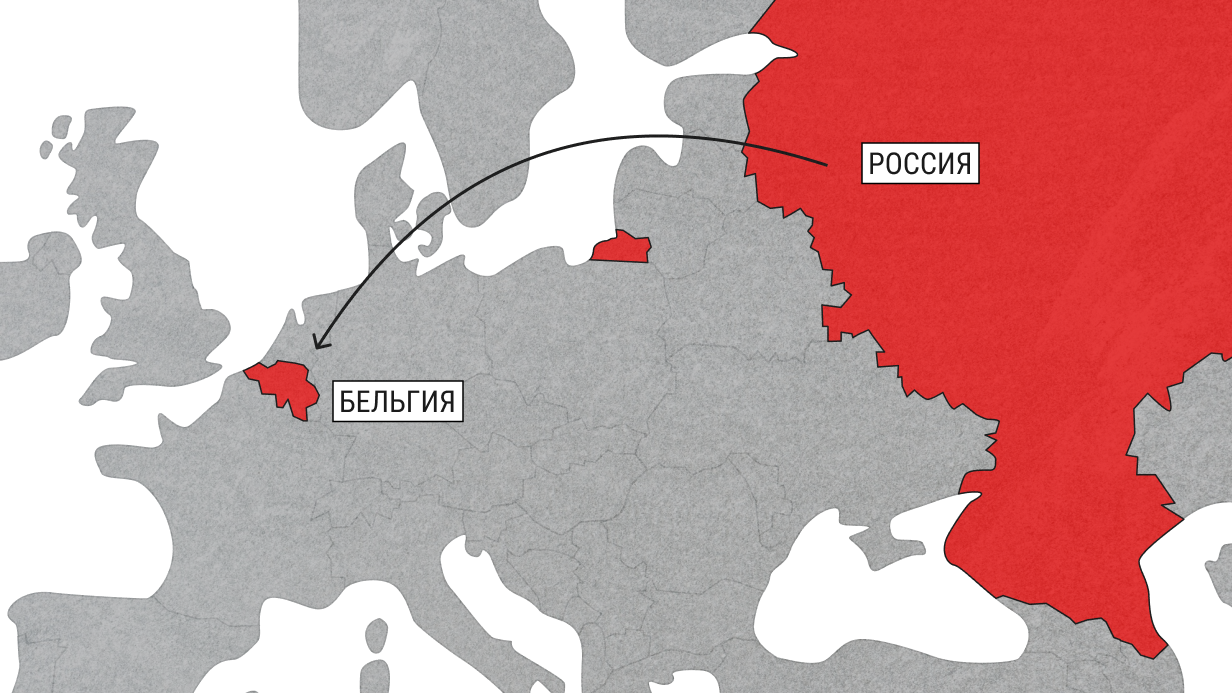
A questionable publication in Nature, several fake images, a professor with a dozen suspicious papers, a phantom author with an h-index who turns out to be a Zenit football fan from a fan website — this is not an isolated oddity, but part of a system, a cross-section of today’s Belgian academic environment. More in the latest installment of Plagiarism Navigator.
The main news about scientists’ lives during the war, along with videos and infographics, is available on the T-invariant Telegram channel. Subscribe so you don’t miss anything.
One of the latest critical comments on PubPeer, a platform for post-publication peer review, concerns a study by Belgian researchers at KU Leuven, one of Belgium’s largest and most prestigious universities.
Experts noticed something odd: an image of the vascular network around tumor nodules in mouse lungs appeared twice, even though the authors said the images had been obtained under different laboratory conditions. The second image was a mirrored version of the first, rotated clockwise and dimmed.
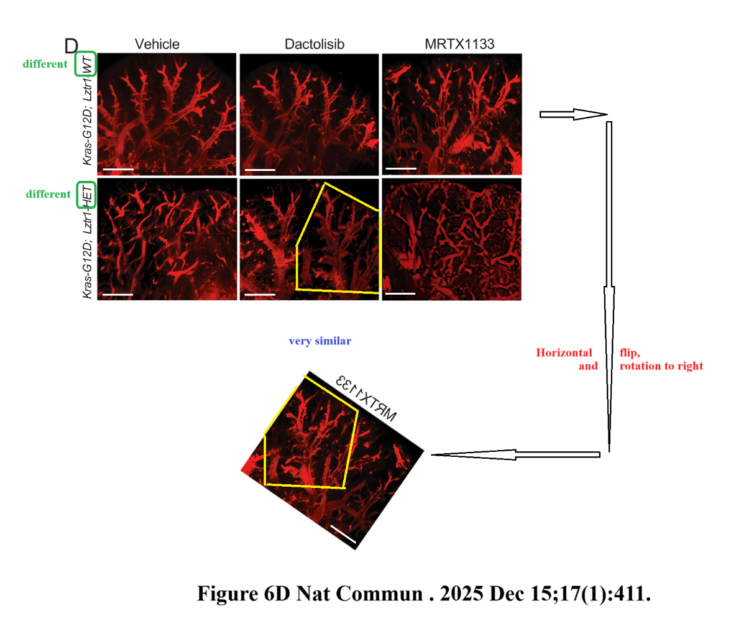
Researchers sometimes use such tricks to conceal traces of scientific misconduct. Nature Communications, which published the results of this study in 2025, is a prestigious top-tier interdisciplinary journal with a high impact factor of 14.7. One would like to believe this was merely an unfortunate technical error, especially since the Belgian authors of the paper had not previously been caught in similar manipulations. But it is not that simple.
Among the eleven authors of the publication, one name stands out: Anna Sablina. Her record includes more than a dozen papers in which experts have found signs of image manipulation. Who is she?
According to For Better Science, shortly after defending her Candidate of Sciences dissertation in Moscow, Anna Sablina left Russia. She first worked as a postdoc in the United States, and from 2009 as an associate professor at KU Leuven. She is now a full professor and heads her own laboratory.
Here is another example showing that the methods of “working” with images in Sablina’s co-authored publications have changed little over the years. The figure below shows histological sections of mouse embryo skin: normal embryos on the left, and embryos with the loss of one copy of the gene on the right. The two images partially overlap when one is rotated clockwise, which should not happen.
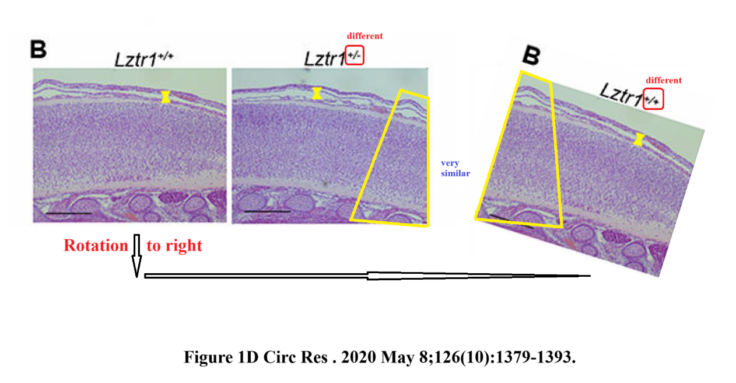
In 2020, this paper was published in Circulation Research, a prestigious journal and leading outlet in cardiovascular and translational biology, with a five-year impact factor of 20.8. Among its co-authors we find another name: Mikhail Steklov, a former employee of the K. A. Timiryazev Institute of Plant Physiology of the Russian Academy of Sciences and now a postdoc at the Flemish Institute for Biotechnology in Ghent, Belgium. Steklov also has several PubPeer comments in which experts have noticed signs of image manipulation.
Even so, Steklov still has a long way to go before catching up with Professor Sablina. Sablina appears to have persuaded even some Belgian researchers of the effectiveness of her methods. One of them is Professor Francis Impens of Ghent University, who, like his colleagues Sablina and Steklov, has repeatedly been flagged on PubPeer. One of Impens’s papers was published in Nature, whose impact factor exceeds 50, making it one of the world’s most prestigious and highly cited scientific journals.
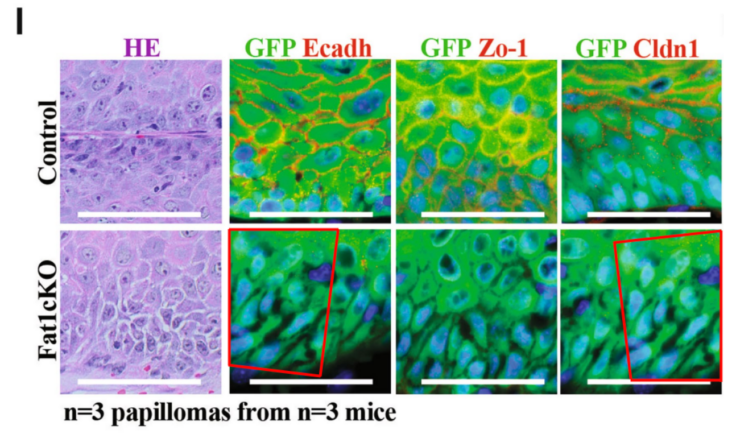
Here is an example of image manipulation from that paper. The figure below shows a histological analysis of papillomas from three different tissues. But two of the three images partially overlap when rotated, which should not happen.
None of the papers mentioned above, published mainly by teams of Belgian scientists, has been retracted. The only paper by Professor Sablina that has been retracted was co-authored with Chinese scientists. It was withdrawn a year after publication at the request of Sablina’s co-authors. The retraction note states: “We discovered that the data presented in Fig. 1C, Fig. 2D and Fig. 4A in the manuscript were inappropriately manipulated. These manipulations are contrary to the journal’s policy.” Unlike their Belgian colleagues, the Chinese scientists were ultimately prepared to acknowledge their mistakes.
China is also linked to another amusing and instructive story involving KU Leuven and Russia. Several years ago, scientific papers began appearing in various academic journals in which a certain Anthony Lam, a young professor at the Faculty of Economics and Business at KU Leuven, was listed as a co-author of Chinese researchers. It soon turned out that no such professor existed at the university.
Nor, for that matter, did he exist at any other university in the world. The Chinese authors had simply invented him, taking the photograph from a Russian football fan website, where it showed a certain Bleder Yakovlevich Kanalgeruch.
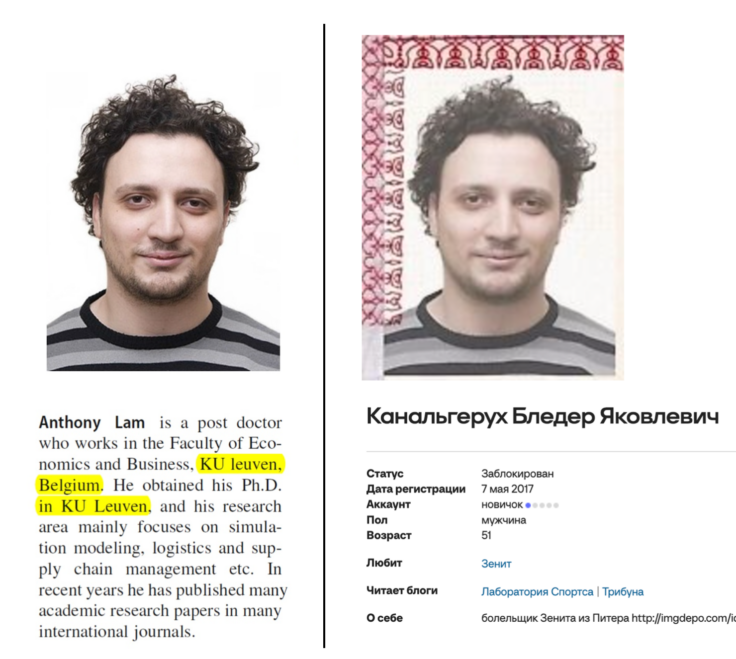
The name on the fan website was probably invented as well: translated from German, and possibly from Yiddish, Kanalgeruch literally means “sewer stench,” while Blöder means “fool” or “stupid person.” Most of those papers were later retracted. But now we know this: Zenit fan Bleder Yakovlevich Kanalgeruch has an h-index of eight. By this academic metric, Kanalgeruch even outperforms some members of the Russian Academy of Sciences.
A curious detail: one of the papers authored by the fictional Belgian professor Anthony Lam was published in 2021 in the Russian journal Izvestiya Vuzov. Fizika. This may well be the only journal in the world that never bothered to retract a paper with a fake co-author.
Taking all these circumstances together, one is led to suspect that the fictional Belgian professor — and the subsequent promotion of publications under his name — were the product of a paper mill involving Russians with a strong sense of humor.
To be fair, questionable publication practices are entering the European academic environment not only from the post-Soviet space. The problem is much broader. In recent years, Belgian universities have increasingly faced forms of academic misconduct whose roots lie in countries in Asia and North Africa.
As researchers from these countries move to Belgium for postdoctoral, teaching, or faculty positions, they sometimes bring with them academic norms shaped in their previous environments — including a tolerance for plagiarism, fictitious co-authorship, publications in dubious journals, and the artificial inflation of publication records.
Here is just one, but telling, example. Professor Hamada AbdElgawad has worked at the University of Antwerp for more than ten years. Yet even after such a long period, experts continue to find serious violations in his publications.
For example, in a 2023 paper published in Molecules, a Swiss journal indexed in Scopus, and co-authored with his Egyptian colleagues, the Belgian professor used a scanning electron microscope image taken from someone else’s article, published several years earlier and devoted to entirely different experimental conditions.
Experts also find in the professor’s record images borrowed from the internet, data falsification, manipulations with experimental spectra, and obvious conflicts of interest. It should be noted that in most such publications, AbdElgawad is the only representative of a European university. The other co-authors come from various countries in the Middle East.
This situation is typical of Asian paper mills, which use some Western European co-authors to give their publications greater weight.
Current videos about science during the war, interviews, podcasts, and streams with prominent scientists are available on T-invariant’s YouTube channel. Become a subscriber!
Of course, the cases described above concern a minority of individual researchers, not Belgian universities or Belgian scientific schools as a whole. But what is the overall picture? On one side, professors with dozens of suspicious papers, postdocs moving from one institute to another with the same set of “tricks,” and prestigious journals that prefer not to notice the obvious. On the other, the fictional Anthony Lam — also known as Bleder Yakovlevich Kanalgeruch.
The absurdity of this situation reveals a simple truth: the modern publication system has long been evaluating not so much science itself as the ability to imitate it. The problem is that it takes only a few percent of dishonest scientists and one or two indifferent editors for systematic misconduct to penetrate the system. Belgium is not an exception; it is an indicator of a broader crisis in publication oversight across academia.
As long as retractions remain isolated events that happen only under external pressure, rather than as a result of universities’ own internal checks, stories like these will keep recurring. And each new case is not merely another bad paper, but a quiet erosion of trust in the entire European academic system.