Estonia spent years building a reputation as being at the forefront of science, but scandals involving violations of research ethics are becoming increasingly common. Professors sharing authorship with falsifiers; associate professors hiding data behind a “confidential” label; mathematicians publishing “math salad” — all of this reflects today’s challenges: the spread of paper mills and the uncontrolled adoption of AI. Sociologists found that more than 40 percent of Estonian researchers had used “gift” authorship. More in the latest installment of the Plagiat-Navigator project.
In February 2024, the prestigious scientific journal Nature published the article WNT signalling control by KDM5C during development affects cognition. The researchers were trying to understand why mutations in the KDM5C gene cause intellectual disability. The author team brought together researchers from Boston, Oxford, and universities in Australia and China, along with a single Estonian representative from the University of Tartu — Professor Katrin Ounap, a specialist in medical genetics. A year after publication, experts found multiple deliberate manipulations of illustrations in the paper. The figure below shows the same fragments of nerve-cell processes, or dendrites, reused after mirror reflection, 180-degree rotation, and partial retouching. “Such different transformations of individual image fragments are difficult to explain as a simple mistake,” one expert commented. Some images in the paper also bear a striking resemblance to images from earlier publications by other authors.
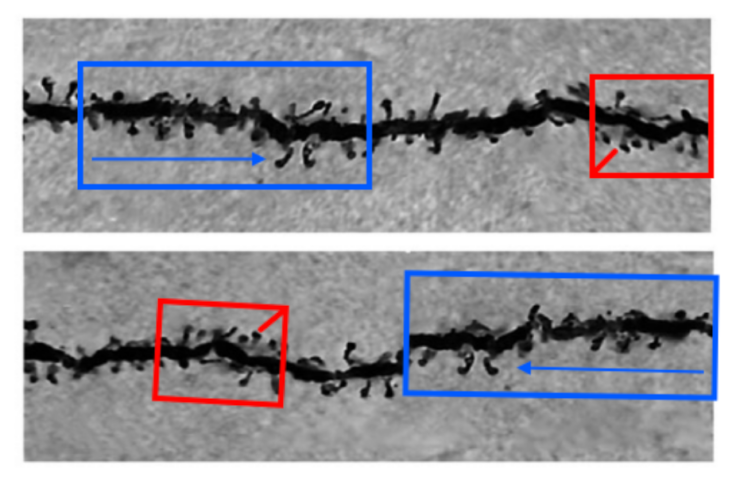
It turned out that a group of co-authors from Harvard Medical School in Boston, led by Professor Yang Shi, had been using similar methods for at least a decade. In a paper published in early 2016, fragments of dendrite images were likewise copied from another publication and modified through mirroring and scaling.
Professor Ounap’s contribution to the Nature paper was clinical: she provided fibroblast samples from patients. Her co-authorship with the Boston group, however, dates back to 2015. This does not prove that she knew about the falsifications, but in academia co-authorship entails responsibility for the entire content of a paper. The argument that the professor merely supplied biological material does not absolve her of responsibility for the final result fabricated by her colleagues.
While investigations into international publications can drag on for years, within Estonia’s national system universities sometimes demonstrate an ability to act quickly and decisively. The following case is a telling example. In 2013, Andres Menind, an associate professor at the Estonian University of Life Sciences, defended a dissertation on biotechnology for energy production. Soon after the defense, it emerged that the work contained at least three lengthy plagiarized passages, in both the theoretical and research sections. A procedure to revoke his academic degree followed. It was the first case of its kind in the university’s history. The university leadership acted promptly, without delays or bureaucratic evasions. The university did not publish a percentage of textual overlap, stressing that the decision was based on expert assessment of the nature and significance of the borrowings rather than on a formal similarity score exceeding some arbitrary threshold.
The main news about the lives of scholars during the war, videos, and infographics are available on T-invariant’s Telegram channel. Subscribe so you don’t miss anything.
But Estonia’s academic immune system does not always work. In 2002, Valery Korb defended a doctoral dissertation in St. Petersburg that had been copied in its entirety from an earlier work by someone else. Today, the Estonian politician Valery Korb is a member of the supervisory board of Ida-Viru Central Hospital in Kohtla-Jarve. All attempts to strip him of his academic degree have come to nothing.
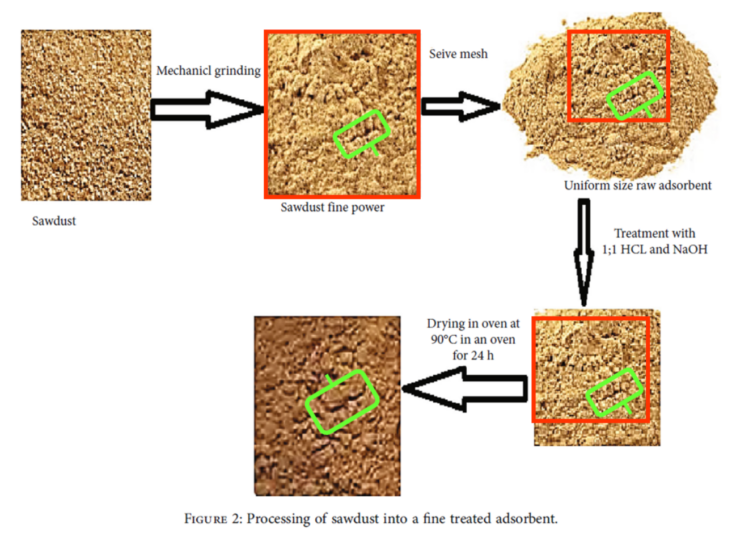
Manipulation of images in scientific publications often ends in retraction — the formal withdrawal of a paper by a journal. The process is usually slow and can take years. The Nature paper remains under question, but a 2022 publication in Adsorption Science & Technology has already been officially retracted. Its authors included researchers from Ethiopia, Pakistan, and Saudi Arabia, as well as an Estonian representative, the young University of Tartu scientist Ivar Zekker. The illustration below shows how the same image was used repeatedly, with only its scale, color, and placement changed.
That paper was retracted, as was another publication by Zekker, for serious violations of publication ethics, including nonexistent bibliographic references, unattributed borrowing, and the use of artificial-intelligence tools in preparing the article without disclosing that use, in violation of the journal’s editorial policy. These are not isolated episodes: experts have accumulated concerns about a whole series of Zekker’s papers. In 2021, his publication output increased by dozens of times, while researchers from Middle Eastern countries began appearing among his co-authors with increasing frequency. This pattern often points to the use of paper mills — shadow Asian markets where ready-made papers and fictitious co-authorship are sold.
In 2023, the University of Tartu conducted and later published an anonymous survey of 354 Estonian researchers. Among other things, they were asked whether they had observed signs of research misconduct in the actions of colleagues. More than 40 percent of respondents said that colleagues had accepted “gift” authorship, while more than 10 percent had witnessed colleagues falsifying data in scientific work. These figures reflect not so much precise statistics as the troubling environment in which Estonian researchers work today.
The University of Tartu is far from the only Estonian research institution where questions have arisen about the reliability of published images. One of the most prominent figures in such cases is Sabarathinam Shanmugam, an associate professor at the Estonian University of Life Sciences. According to the post-publication peer review platform PubPeer, roughly one in five papers involving him has become the subject of critical discussion.
One publication by Shanmugam is especially revealing. Experts found manipulation of figures in the paper. After concerns were raised, the authors replaced the illustrations several times, each time apologizing and attributing what had happened to an “unfortunate mistake.” Yet every new version again contained signs of manipulation. Eventually the exchange reached a dead end: the authors never provided convincing explanations, and discussion of the apparent fakes simply faded away. In a later paper, Shanmugam and his co-authors chose a different defense strategy, stating: The data that has been used are confidential. That position effectively deprived independent researchers of any opportunity to verify the reported results.
The story does not end there. A number of Shanmugam’s publications were later retracted after journal editors discovered that the author list had been replaced at the final stage of preparing the papers for publication. Such author substitution is considered one of the characteristic signs of papers circulating on the purchased-authorship market. While one set of “dealers” pushes a manuscript through the journal with a credible author list, another takes orders from people wishing to buy co-authorship in the almost-published paper. At the final stage, once all reviewers’ questions have been resolved, comes the climax: in the last version of the manuscript, the names of the original authors are quietly replaced, without the editors’ approval, by those who responded to the offer in time and paid. The editor, unaware of the switch, publishes the paper. The newly minted co-authors receive a publication to which they did not contribute a single line and which they most likely never even read.
Finally, Tallinn University and one of its employees, mathematics professor Jorge Eduardo Macias-Diaz, also deserve attention. In recent years, specialists have increasingly encountered papers prepared with generative artificial intelligence. In mathematics, such publications are often betrayed less by stylistic roughness than by gross errors in formulas and proofs. To a non-specialist, the text may look entirely convincing, yet mistakes already appear in the first stages of the calculations, rendering everything that follows meaningless.
Mathematics is an exact science. If the third line of a calculation contains the wrong sign, the final ten pages lose all meaning, no matter how many formulas they contain. The image below shows examples from four relatively recent papers by Macias-Diaz in which such errors appear literally in the opening lines of calculations or theorem proofs.
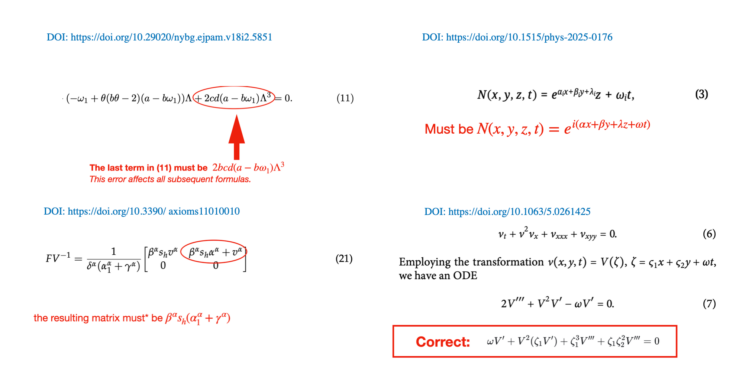
“Math salad” is the term specialists use for texts that look scientific on the surface because they contain an abundance of formulas and technical terminology, but on closer inspection turn out to be internally contradictory or contain errors that make their conclusions unreliable. Naturally, artificial intelligence is “to blame” for everything: the author simply gave the neural network a task and then copied the result into the paper without even checking it.
A curious manifestation of this practice emerged in a case that went far beyond university offices. Tallinn Administrative Court fined a group of plaintiffs who had cited “authoritative scientific studies” on the harms of clear-cutting in their filings. There was only one problem: both the studies and their authors had been entirely generated by a neural network. The court treated this as fabrication of evidence and fined the plaintiffs.
To conclude, here is a curious case in which nonexistent Estonian researchers appeared not only in materials before a Tallinn court, but also on the pages of scientific journals. In a paper by Chinese authors on estimating fuel-cell parameters using the metaphor-based “Grey Wolf” optimization algorithm, a co-author from Tallinn University of Technology suddenly appeared: Tekle Demsas. Apparently, adding a mysterious Estonian scientist to the author list was meant to give the paper greater weight. The deception did not last long. After checking the author’s credentials, the editors established that no such researcher actually existed. The paper was then retracted.
Current videos about science during the war, interviews, podcasts, and streams with prominent scholars are available on T-invariant’s YouTube channel. Become our subscriber!
Estonia, which spent years building a reputation as being at the forefront of science, is now confronting the underside of the global crisis in academic ethics. The cases involving Ounap, Zekker, Shanmugam, and Macias-Diaz are not merely isolated scandals, but reflections of today’s challenges: the spread of paper mills, the ethics of co-authorship, and the uncontrolled adoption of AI. The results of the University of Tartu survey show that these problems are systemic.
The central problem for Estonian science is not that violations occur, but how institutions respond to them. Universities often prefer to look the other way, outsourcing the role of “academic police” to journal editors, courts, and volunteers on PubPeer. In the twenty-first century, a reputation as a scientific center can no longer be taken for granted. Maintaining zero tolerance for falsification requires daily work. And the sooner Estonian universities recognize that responsibility, the fewer reasons for sarcasm they will leave to those watching them.