Russian mathematics is losing ground, scientists are leaving, and international ties are fraying — yet the government’s new Concept for the Development of Mathematical Sciences through 2036 presents all of this almost as a force of nature. The number of researchers has “declined,” access to global science has been “restricted,” and the country’s competitive edge is at risk of being “lost.” Who restricted what, where the scientists went, and why Russia is losing influence, the document hardly explains. T-invariant read the Concept and found a striking picture: global mathematics appears in it as something like a warehouse to which access must be “ensured” — preferably along with additional funding.
On September 24, 2026, Prime Minister Mikhail Mishustin signed Directive No. 2631-r approving the Concept for the Development of Mathematical Sciences in the Russian Federation through 2030 and in the Long Term through 2036 (the Concept). The full text of the document is available here. At a meeting with his deputy prime ministers on September 28, Mishustin explained that the document is meant to “ensure the active application of fundamental research in high-priority, high-tech fields.” In his words, this “will open up additional opportunities not only for industry, medicine, and agriculture, but also for energy, aircraft manufacturing, and the space industry.” Deputy Prime Minister Dmitry Chernyshenko has been put in charge of overseeing its implementation.
The Concept’s stated goal is “to achieve and strengthen Russia’s position in the mathematical sciences in order to ensure the state’s technological leadership, competitiveness, independence, and security.”
The Concept runs to about twenty pages. It opens with reflections on the role of mathematics in the world, then describes the “current state of affairs” and the tools for achieving its objectives. The main tool is the Program of Fundamental Scientific Research in the Russian Federation for the Long Term (2021–2030), adopted on December 31, 2020, and substantially amended on December 25, 2025 (the Program). In addition, a network of international and regional mathematical centers is expected to play an important role in developing mathematics. The document closes with a table of four indicators under two scenarios: a target scenario and a conservative one.
Negative Growth
If the Concept is to be believed, mathematics in Russia is developing quite normally. There are, admittedly, a few difficulties: “At the same time, unfavorable trends have persisted… In 2020–2024, the number of researchers in the group of scientific specialties 1.1, ‘Mathematics and Mechanics,’ fell by 24.3 percent, including a 20.3 percent drop among holders of advanced degrees. In research training, the share of graduates who defended dissertations among all graduates of PhD programs in field group 01.00.00, ‘Mathematics and Mechanics,’ rose in 2020–2022 (from 10.6 to 17.9 percent), but this growth gave way to a decline in 2023–2024 (to 11.2 percent).”
Apparently, something happened in 2022 that made PhD graduates far less likely to defend their dissertations. But the authors of the Concept have an answer: “The trends described are caused by a combination of factors, including the low level of material support and social guarantees for graduate students, scientists, and faculty, which does not match their actual workload and adversely affects both the quality of teaching and research activity. In addition, access is restricted to scientific and technical information in mathematics and related sciences contained in international citation and analytics databases, including scientific monographs, analytical reviews, and other sources of information.”
The answer is simple: raise salaries and “ensure access.” If such measures were enough to advance Russian mathematics, then it really would be in fine shape. But the Concept warns that unless something changes now, “within the next 10 years the Russian Federation will lose its competitive advantage in training research and teaching personnel in mathematics.” The conservative scenario shows a gradual contraction: mathematicians’ share of all researchers falls from 2.8 percent in 2026 to 1.8 percent by 2036. The Concept admits that unless the salary problem is solved and access is “ensured,” Russian mathematics will shrink by more than a third. So the government had better hurry.
History of Mathematics: The Unwritten Chapters
The Concept includes a section on the glorious traditions of Soviet mathematics. It mentions the November 13, 1986, resolution of the Central Committee of the Communist Party of the Soviet Union and the USSR Council of Ministers On Strengthening Research in Mathematics and Its Applications and Improving the Working and Living Conditions of Scientists. According to the authors of the Concept, implementing this resolution “contributed to steady progress” that has allowed Russia “to maintain world leadership in a number of areas of mathematical research to this day.” True, some problems did arise, but they were successfully overcome: “The Soviet school of mathematics held leading positions in the main areas of the mathematical sciences. The socioeconomic and political upheavals of the late 1980s and the 1990s led to an outflow of scientific personnel abroad and into other sectors of the economy. Nevertheless, the Russian Federation managed to preserve its high potential and global competitiveness in mathematics and related sciences.”
Top news on scientists’ work and experiences during the war, along with videos and infographics — subscribe to the T-invariant Telegram channel to stay updated.
Anyone who remembers the late 1980s will read this with a bitter smile. Three or four years after the 1986 resolution was adopted, the largest exodus of mathematicians in the country’s history began. Many of those who had made the Soviet school of mathematics famous left for Princeton, Berkeley, Paris, Bonn, and Tel Aviv. Today, every Fields Medalist who came out of the Soviet school — Grigory Margulis, Vladimir Drinfeld, Efim Zelmanov, Maxim Kontsevich, Andrei Okounkov, and Stanislav Smirnov — works abroad. The only Fields Medalist who stayed in Russia, Grigori Perelman (awarded in 2006), has not published any new work in twenty years.
The second historical episode is just as telling. The Concept cites as an example Kolmogorov’s 1957 theorem on representing continuous functions of several variables as superpositions of functions of one variable and addition. According to the Concept’s authors, the theorem “created the theoretical foundation for the effectiveness of neural network architecture.” That is a gross exaggeration. Together with Arnold’s result, Kolmogorov’s theorem settled Hilbert’s 13th problem — a remarkable achievement, but one only indirectly related to neural networks. The real theoretical grounding for neural networks comes from entirely different theorems that appeared much later, in the 1980s. Interest in Kolmogorov’s construction revived only in 2024 with the emergence of the KAN neural network architecture, and its practical value is still an open question.
Yet Soviet and Russian science has made genuine contributions to machine learning. These include Vapnik–Chervonenkis theory and Nesterov’s accelerated method, both widely used in today’s neural networks. Vladimir Vapnik and Yurii Nesterov are both still working — but not in Russia. In 2024, Vapnik received RASA-America’s George Gamow Award. Nesterov, a professor at the University of Louvain, received the Gauss Prize this summer and delivered a special plenary lecture at the International Congress of Mathematicians. Their contributions to machine learning are beyond dispute. Yet for some reason, the Concept points to a decades-old result by Kolmogorov.
Invisible Supercomputers
The section on supercomputers is a frank admission of how far behind Russia has fallen. The best academic machine named in the Concept, Lomonosov-2, no longer appears in the current TOP500 list (as of June 23, 2026). The document says Lomonosov-2 ranks 451st, but that stopped being true long ago: all of the TOP500 data it cites are from 2025 or even earlier and do not reflect the list as it stands today. All of the Russian machines on the TOP500 belong to private companies — Yandex and Sber. The most powerful of them, Chervonenkis, has a peak performance of 29.4 petaflops (ranked 101st). The Concept speaks of the need to develop “Russian computing resources based on open hardware architectures.” This can be read as an admission that modern Nvidia processors are hard to come by in Russia: they are not supplied legally, and gray-market channels are unreliable and cannot meet demand.
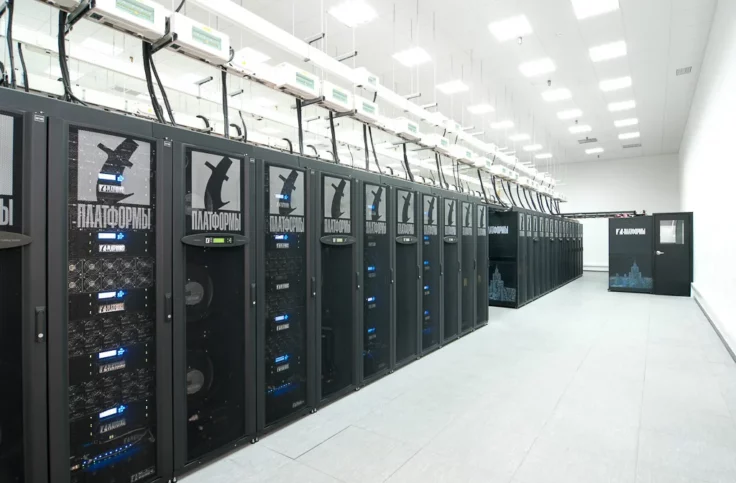
Among the countries ahead of Russia on the TOP500 list (Russia has slipped to the bottom of the top 20) is the Netherlands. Listed under the Netherlands are two machines owned by Nebius, the company led by former Yandex head Arkady Volozh: ISEG and ISEG2, with a combined peak performance of about 425 petaflops. By the Concept’s own figures, the five Russian machines on the TOP500 together deliver less than 100 petaflops of peak performance. In other words, Arkady Volozh’s company alone has more computing power than all of Russia’s TOP500 systems combined.
The TOP500 is a list of machines (and not all of them, only those whose developers have submitted their systems) ranked by high-precision performance on the Linpack benchmark. It is a good “yardstick” for comparing computing power for climate modeling or numerical solutions to fluid dynamics problems. Neural networks, which the Concept’s authors keep bringing up, run today on low-precision arithmetic, and for such computations the same GPUs deliver orders of magnitude more operations. AI workloads are handled by other machines. The world’s largest AI clusters, owned by xAI, Meta, OpenAI, or Google, do not appear on the TOP500, and neither do the largest Chinese AI clusters. The document invokes the AI race to justify developing Russian supercomputers, but it talks about machines that are only indirectly relevant to that race: they were not built for it.
Among the priority problems listed in the Program is this one: “Differential equations are essential for modeling all physical, technical, or biological processes, from celestial motion to bridge design and interactions between neurons. The central problem in this field remains the global existence of smooth solutions to the three-dimensional Navier–Stokes system, which describes the motion of a viscous Newtonian fluid and underlies fluid dynamics. It is also one of the ‘Millennium Prize Problems.’” A team of mathematicians, engineers, and AI agents working on an AI cluster owned by OpenAI has proved the opposite: rather than existing globally, a solution can “blow up” even under a smooth external force. This was a huge step forward in the study of the Navier–Stokes equations. Yet the Concept didn’t even notice these machines (after all, they aren’t on the TOP500): it cares only about classical supercomputers traditionally used for mathematical modeling, and today that is no longer enough.
Just Give Us Access
Several times, almost word for word, the Concept repeats the same formula: Russian scientists must be guaranteed “access… to scientific and technical information… contained in international citation and analytics databases.” Once, it says that this access is “restricted.” By whom, when, and why it was “restricted” is never specified.
But on the whole, mathematicians don’t suffer much from this “restricted access.” Many results are published open access, preprints are posted on arxiv.org, and authors upload their papers (and even monographs) to academic social networks. Colleagues working in the same area also rarely refuse to share their papers with one another.
What Russian mathematicians really do need is legal “access” — but not to papers. Vladimir Arnold wrote: “Mathematics is a part of physics. Physics is an experimental science, a part of natural science. Mathematics is the part of physics where experiments are cheap.” One can argue about whether mathematics is part of physics, but the claim that mathematical experiments are cheap no longer holds up: they simply aren’t. What’s more, with the rise of neural networks, mathematics is becoming a very expensive science. The 88 hours of work by 10,000 AI agents searching for a solution to the Navier–Stokes equations, plus another 17 hours spent verifying the results, cost OpenAI (by its own estimate) millions of dollars. And that was just one problem, albeit a great one. This is the kind of “access” Russian mathematicians lack. Russia has no “sovereign” AI clusters comparable in power to OpenAI’s machines — and, as the work of Arkady Volozh’s Nebius shows, it would have them, were it not for the events the Concept never mentions.
The Concept portrays global science as a warehouse to which “access must be ensured,” rather than as a community to take part in: publishing in top journals, attending conferences, working with leading mathematicians from other countries. Yet this is precisely where Russian mathematicians face their biggest problems: they can’t pay open-access publication fees, their coauthors have scattered around the world, a Russian affiliation makes things awkward, and traveling to a conference is risky.
As one of its development tools, the Concept names a network of mathematical centers, above all four “world-class international mathematical centers”: the Steklov Mathematical Institute, the Moscow Center for Fundamental and Applied Mathematics, the Euler International Mathematical Institute in St. Petersburg, and the “mathematical center in Akademgorodok” (oddly, not capitalized as a proper name). There is nothing “international” about how these centers are described today. Their mission, according to the Concept’s authors, is “to promote the interests of the Russian school of mathematics worldwide,” not to engage in active collaboration.
The Russian Academy of Sciences is mentioned in the Concept many times and is given a separate section on its “role in the development of the mathematical and related sciences.” There, the Academy is described in the present tense and exclusively with active verbs: it “develops,” “takes into account,” “participates,” “carries out.” Among the Concept’s objectives is “scaling up the system of scientific and methodological guidance” — in other words, expanding the powers of the Academy itself. Universities are barely mentioned.
Yet three of the four “world-class centers” are consortia with universities. The Moscow center includes Moscow State University (its Faculty of Mechanics and Mathematics, Faculty of Computational Mathematics and Cybernetics, and Research Computing Center) together with two institutes of the Russian Academy of Sciences. The Euler Institute’s lead institution is St. Petersburg State University. The Akademgorodok center brings together the Sobolev Institute of Mathematics and Novosibirsk State University. The document lists the centers but carefully “erases” any mention of universities, even when a university is the lead institution.
An Unenviable Share
All four of the Concept’s target indicators are shares: mathematicians as a share of all researchers, the same share for computer science, and two ratios of dissertation defenses to the number of students admitted to PhD programs. There is not a single absolute number, and no quality indicators either. Perhaps the Concept’s authors mean that some absolute numbers and quality indicators (including the percentage of publications in White List journals [Russia’s official list of recognized academic journals — T-invariant]) can be found in the Program, but that should have been stated explicitly.
Up-to-date videos on science during wartime, interviews, podcasts, and streams with prominent scientists — subscribe to the T-invariant YouTube channel!
Shares have a well-known property: they grow not only when the numerator goes up, but also when the denominator goes down. Cut the number of physicists and chemists, and the share of mathematicians will “grow” even if not a single mathematician has been added. The share can rise even as the number of mathematicians falls, as long as everyone else is declining faster. A document that promises “accelerated development” has chosen a metric by which the shrinking of science can look like a success for mathematics.
Mathematics, meanwhile, has a “yardstick” that can’t be gamed by cutting chemists: the number of invited speakers at the International Congress of Mathematicians. At the 2026 congress in Philadelphia, according to our count based on the official list, there were three sectional talks with a Russian affiliation and not a single plenary.
In 2022, the International Congress of Mathematicians was supposed to take place in St. Petersburg. Many Russian mathematicians were involved in preparing it, and the bid had been championed by Fields Medalists Stanislav Smirnov and Andrei Okounkov, who were then actively working in Russia. But the congress was relocated and held online. Smirnov and Okounkov removed their Russian affiliations from the congress materials. Even so, HSE University and the Steklov Institute fielded five speakers, two of them plenary. In addition, Nikolai Andreev received the Leelavati Prize for popularizing mathematics, and there were invited speakers from St. Petersburg and Novosibirsk. Overall, Russian mathematics was well represented at the congress. But four years have passed, and a lot has changed.
How many Russian mathematicians were invited to the 2026 congress but declined is unknown: the International Mathematical Union does not publish refusals. But consider the climate in which Russian scientists were deciding whether to attend. Since 2022, Article 275.1 of the Russian Criminal Code has made “confidential cooperation” with a foreign state or organization a crime. To bring charges under this article, it is enough to establish the mere fact of contact. According to data from Mediazona, 82 people had been convicted under this article by fall 2025. On January 26, 2026, half a year before the congress, Deputy Minister of Science and Higher Education Konstantin Mogilevsky sent out a letter. It advised scientists to “carefully assess the nature of events for possible politicization,” to weigh the “advisability of participating” in events held in “unfriendly” countries [Russia’s official term for states that have imposed sanctions on it — T-invariant], and to inform the ministry. The 2026 congress was held in the United States. In a climate like this, you’d think long and hard before accepting even an invitation as prestigious as speaking at the International Congress of Mathematicians.
The Concept does contain some things that are unquestionably right. It calls for a “decent salary” for mathematicians and teachers, and for stipends that let graduate students study and do research “without having to take” side jobs. It acknowledges the shortage of math teachers and identifies math circles and olympiads as the core of the tradition, to be made accessible regardless of family income. Any mathematician would sign on to that. But young mathematicians don’t leave the country just for the pay. They go where they can publish freely, attend conferences, work with the best people in their field, and not worry about what an email exchange or a meeting with a coauthor from another country might cost them.
Impersonal Sentences
The strongest impression the Concept leaves is not any particular figure or error, but the document’s style. The number of researchers has “declined.” Access is “restricted.” The competitive advantage may be “lost.” All of this just happens on its own, like fog rolling in or the weather turning bad. The Concept contains no war, no sanctions, no post-2022 emigration, no criminal cases, no relocated 2022 International Congress of Mathematicians. There is only a “combination of factors,” chief among them low salaries.
It is impossible to believe that the document’s authors are unaware of all this. It is equally clear that a 2026 government Concept cannot name the causes, and impersonal phrasing makes it possible to ask for money by blaming “bad weather.” The document records the decline but leaves out what caused it. And so it seems as though the decline can be fought with higher salaries, stipends, and new Kolmogorov prizes. But that won’t work.
T-invariant has been keeping its Chronicles of the Persecution of Scientists for three years now. Instead of studying in Paris, the young and gifted Leonid Katz is sitting in pretrial detention. Azat Miftakhov, instead of talking with colleagues at international conferences, is writing his study of Chui’s conjecture in a prison in Dimitrovgrad. Andrey Dymov, an associate professor in the Faculty of Mathematics at HSE University who was named best teacher in 2022 and 2024–2025, is now awaiting transfer to a penal colony to serve a three-and-a-half-year sentence instead of teaching students. Distinguished Professor Mikhail Volkov has been dismissed from the department where he had worked for half a century and ordered to pay a fine. The Concept is deeply worried about Russia falling behind in supercomputing, yet Sergei Abramov, a corresponding member of the Russian Academy of Sciences and a leading expert in parallel computing, has been barred from working, ordered to pay a fine, and stripped of his civil rights, and he waits for hours for his own pension to be released from his own account so that he doesn’t starve. These are far from all the mathematicians in our files. It is no surprise that their names are absent from the Concept. What is strange is that it reads as if their names were absent from its authors’ memory as well. And yet its authors are mathematicians, too. Some of them are even real ones.