
Following Russia’s invasion of Ukraine, countries in NATO and the EU (as well as Japan, Switzerland, and several others) imposed economic sanctions on Russia that included either a complete trade ban or significant restrictions on commerce. This severely impacted sectors of the economy critically dependent on imports of high-tech products. One such sector is experimental scientific research. Nevertheless, many university and academic laboratories continue to operate. Alexander Chizhov, PhD in chemistry and author of more than 200 publications in organic chemistry and structural chemistry of natural compounds, tells T-invariant how this remains possible.
EDITOR’S NOTE. Since the article contains potentially sensitive information, the names of quoted experts are anonymized, and organizations are referred to in generalized terms.
Older readers may remember Soviet-era propaganda posters depicting a Soviet chemist: a serious bespectacled figure holding a flask of some liquid. The image is not entirely divorced from reality, but it has been outdated for nearly a century. Yes, flasks and other glassware remain essential tools for chemists and related specialists, but conducting modern research requires many other material components. First, the range of studied objects has expanded dramatically. Second, powerful and highly sensitive physico-chemical methods for analyzing composition and molecular structure have emerged (gas chromatography (GC), high-performance liquid chromatography (HPLC), electron and infrared (IR) spectroscopy, nuclear magnetic resonance (NMR) spectroscopy, mass spectrometry (MS), X-ray structural analysis (XRD), X-ray powder diffraction (XPD), electron microscopy (EM), X-ray photoelectron spectroscopy (XPS), and many others). These methods have dramatically increased the reliability and productivity of scientific work while reducing the required sample mass by orders of magnitude. Third, the increased complexity and diversity of research have led to greater division of labor, necessitating coordination among large teams and inter-institutional — and often international — collaborations. From the perspective of scientific organization, conducting a good study (one acceptable for publication in an indexed journal) single-handedly or with minimal equipment (“on a shoestring”) outside a proper scientific infrastructure became impossible half a century ago. By the end of the first quarter of the 21st century, this has become so obvious that it feels awkward even to discuss it. Five to ten authors on the first page of a paper (plus an unknown number acknowledged in the notes) is now the norm.
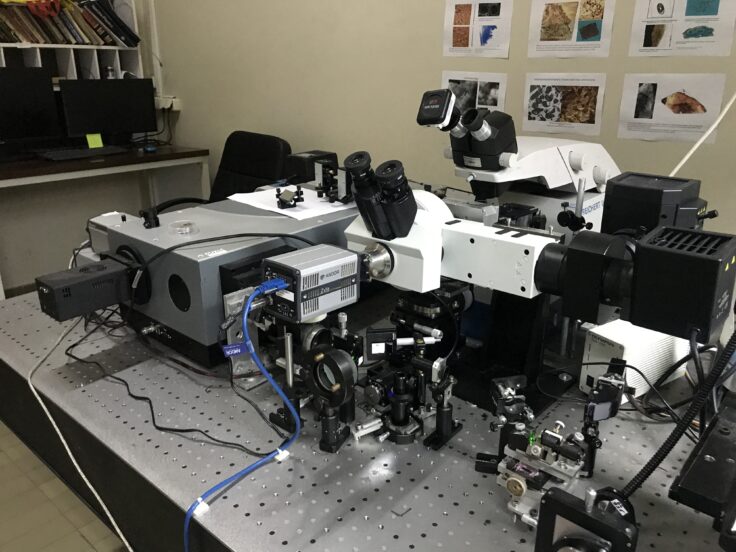
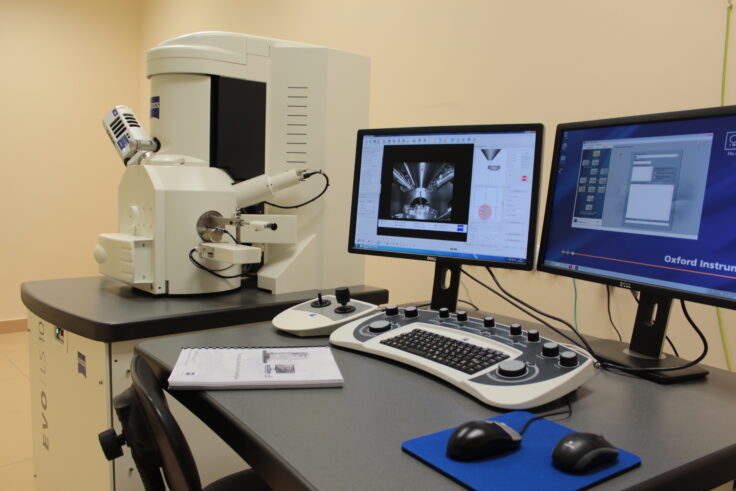
Science has become an expensive endeavor. The cost of a modest research project at the level of a bachelor’s or master’s thesis starts at several thousand dollars, while large projects run into millions. Expensive instruments (those enabling the methods listed above, with capital costs ranging from tens of thousands to tens of millions of dollars) are typically consolidated in shared-use centers (core facilities) to serve multiple laboratories and projects. These instruments are operated either by specialized staff (fulltime operators) or by specially trained researchers, and their maintenance is handled by highly specialized engineers (whether in-house or contracted from vendor service teams). Notably, since roughly the 1990s, instrument reliability has generally increased while repairability has declined. Fixing a serious malfunction in a modern NMR or mass spectrometer with a multimeter and soldering iron is no longer possible. Repairs involve replacing entire modules supplied by the manufacturer; these are usually specific to the instrument brand and even model. Thus, users of high-tech, expensive equipment are tightly bound to their manufacturers. Switching suppliers is a costly and painful process. As for inexpensive routine laboratory equipment, consumables, and reagents, there is generally no rigid vendor lock-in (though exceptions exist — for example, centrifuge rotor cup sizes are not always compatible). The real issue is often quality, which consumers must assess through trial and error rather than trusting glossy marketing images. Maintaining experimental research resembles household shopping for food and supplies: it must be continuous — experiments “consume” reagents and supplies, laboratory glassware breaks like kitchenware, and roofs and plumbing occasionally needs repair or replacement — just like instruments.
Top news on scientists’ work and experiences during the war, along with videos and infographics — subscribe to the T-invariant Telegram channel to stay updated.
Import Substitution in Laboratories
Those who began their scientific careers in the Soviet era likely remember large jars labeled with a prominent “Р” — the trademark of NPO “Reakhim,” the Soviet monopoly that produced a wide range of reagents, mostly inorganic (salts, acids, and bases) in bulk packaging, across numerous USSR factories. Reagents from Comecon countries were also common. Obtaining genuine Western imports was considered a coup. The limited choice of reagents significantly hampered chemical research, especially organic synthesis: chemists exercised a form of self-censorship when planning work, avoiding “scarce” reagents to avoid jeopardizing results. Much of what was commercially available in the West had to be synthesized in-house, wasting time and effort. This hierarchy collapsed along with the USSR and Comecon; “Reakhim” quietly vanished, replaced by numerous resellers of domestic and imported reagents and materials. Some focused on a single foreign supplier, but most were independent. Only a few had their own specialized production. The abundance of suppliers and connections made previously inaccessible Western products available (except for items prohibited for export by U.S. and European regulators — narcotic substances and their immediate precursors, highly explosive, fire-hazardous, or toxic reagents). The limiting factor shifted from “shortage” to grant funding levels — and, of course, bureaucratic regulation, which never disappeared and only grew more complex.
In February–March 2022, major Western suppliers of reagents and materials (Sigma-Aldrich, Fluka, Merck, ThermoFisher, Eppendorf, and others) ceased operations in Russia under threat of sanctions, forcing Russian resellers to find new supply routes: demand for consumables from end users, including scientists, remains almost unchanged. Grant funding has nominally stayed close to pre-war levels. Despite the emigration of some researchers, those who remain continue working tirelessly. What has changed? Two things can be assumed: the length of the supply chain (from manufacturer to initial seller) and the originating countries of production. These are not “new” players in the chemical market; they were simply less familiar to Russian experimental scientists spoiled during the “oil-fueled 2000s.” These are primarily China and India.
“Chinese? Sure, you can get Chinese reagents. But be prepared for the minimum order to be a ton. Ordering from European firms directly is pointless — you’ll get a firm refusal: ‘National interests trump corporate ones.’ How to get around it? Through shell companies, not necessarily via China, Turkey is better.” (E., representative of a high-tech small business)
If you visit the website of any Moscow or St. Petersburg chemical supply company, you’ll notice a striking picture: the offered reagents and materials still bear labels from manufacturers in “unfriendly” countries. How is this possible? Very simply: scientists value their working time and do not want to risk months of work by switching from proven consumables to untested alternatives. Therefore, demand — especially in well-funded organizations and laboratories — has not gone away.
Price upon request. For many items, a “request quote” placeholder appears instead of a price. Sometimes prices are listed. For example, in a mailing from Moscow-based Biomtekh, an Eppendorf Research Plus single-channel pipette (2–20 µL) was priced at 53,100 rubles, and a Gilson Pipetman 5000G (500–5000 µL) at 51,350 rubles (March 2024 data). For the uninitiated: this is a basic instrument for dispensing solutions; every biochemist, molecular biologist, or analytical chemist should have a set of two or three on their bench. I bought a similar pipettor in 2012 for around 5,000 rubles. Thus, in 12 years the nominal price has risen tenfold — payment for circumventing sanctions (lengthened supply chains). Not everyone, even in the capital, can afford this. Delivery times have become utterly unpredictable.
“Three months? That’s great! One reagent took a year to arrive. By the time it came, I’d already forgotten why I ordered it.” (K., synthetic chemist, senior researcher, RAS institute)
Suppose a chemist or biochemist in a less privileged provincial institute decides to buy something cheaper. One might assume it is a domestic product. Yes, Russia produces basic reagents (acids, salts, bases, common organic solvents). Example: LLC “Greenvan SPb,” registered in Shushary (St. Petersburg), offers ultra-pure solvents. Their promotional mailing states that these solvents (acetonitrile, isopropanol, methanol) are suitable for spectroscopy, chromatography, and even for LC-MS. As proof of in-house production, they provide a photo of a laboratory distillation column. The sources of raw materials and objective quality metrics are not disclosed.
What if there simply is no domestic substitute? Then one can buy Chinese or Indian products. Prices are several times — sometimes an order of magnitude — lower than American or European equivalents. Opinions on quality vary.
“Chinese plastic might work for someone, but definitely not for me. I once tried pouring acetonitrile into a Chinese Eppendorf tube and injecting it into the instrument. The signal went off-scale! And it wasn’t even known plasticizers — something completely unidentified. No, if you want reliable results, the Eppendorf has to be a real Eppendorf or at least one from BRAND GMBH.” (A., mass spectrometrist, senior researcher, RAS)
“China is a disaster! It takes forever to arrive, and when it does, it turns out to be the wrong quality — or even the wrong compound altogether. That has happened…” (B., head of major projects, RAS)
Are contacts with other Eastern partners, such as Japan, possible? In 2022 Japan joined anti-Russian sanctions, albeit in a relatively mild form. I have conflicting information: on one hand, Japanese companies refuse to supply electronic components to Russian instrument manufacturers fearing secondary U.S. sanctions; on the other, major Russian reseller “Gala-Trade” offers reagents from Tokyo Chemical Industry Co., Ltd., as evidenced by their recent promotional mailing.
Held Together with Screws
Major manufacturers of analytical equipment (Agilent, Bruker, JEOL, PerkinElmer, Thermo Fisher Scientific, etc.) that had subsidiaries and official dealers in Russia left the country (March–June 2022) after the start of massive invasion into Ukraine and stopped servicing previously sold instruments. Yet all instruments wear out and break. Laid-off service engineers bought remaining stocks of parts and modules from liquidated subsidiaries and registered as small/individual entrepreneurs (IE) to continue their usual work using their skills and contacts. Naturally, these stockpiles will soon be — or already are — depleted. How to solve this problem? The engineers openly admit to cannibalizing suitable modules from old decommissioned instruments when possible and using spare parts previously purchased by customers themselves.
“ Instrument repair is problematic. Yes, engineers have registered as IEs. No, not all — some emigrated. A few work as self-employed. For example, (service engineer) at K***va, though he is planning to become part of one such IE-led team. Reagent companies advertise repair services? They just subcontract those same self-employed or IE workers!” (B., head of major projects, RAS)
Buying used instruments abroad is possible — large manufacturers fear sanctions, but small resellers of second-hand equipment do not. The issue is price. Recently, while reviewing a paper, I needed specifications for an IR spectrometer from an obscure manufacturer. A Yandex search brought up a page from such a reseller: yes, the instrument is for sale, located in Ohio, non-functional, for parts. One and a half million rubles. I repeat: non-functional and apparently unrepairable. How much would a working IR spectrometer suitable for routine work cost? For comparison: a presidential grant for young scientists ranges from 600,000 to 1.5 million rubles per year, including institutional overhead and other expenses.

Sometimes individual parts or assemblies can be custom-made in Russia. Both large Soviet-era factories and small private workshops manufacture and repair complex equipment. For example, vacuum pumps (forevacuum and turbomolecular) are produced and sold by Kazan-based JSC “Vakuummaš.” Companies specializing in repairing old turbomolecular pumps include Moscow-based “BLM Sinergi” (Pfeiffer dealer), “VS-Tekhnologii” (at the Angstrem plant in Zelenograd), “HighVacEngineering,” “VACUUMID,” and “VT-Service,” St. Petersburg-based “Lichlab” at LETI, and many others. Additionally, YouTube hosts numerous tutorials on repairing various equipment (including, believe it or not, turbomolecular pumps). Obtaining spare parts subject to dual-use export controls is possible only through intermediaries in third countries. Experts note a sharp increase in Kyrgyzstan’s imports of electronic components and precision mechanics in recent years. It is not hard to guess where those goods ultimately go.
What about equipment from China? The typical response from an average Russian citizen might be: “Chinese cars are everywhere now — why not other equipment too?” Specialists have a somewhat different view.
“The Chinese have been copying European and American instruments for years without understanding the underlying principles. Two examples. First: for a factory I bought a Chinese viscometer instead of a German one. Calibrated with ethanol — fine. With heptane — readings drift upward. Thermostating is normal. But instead of a special gasket they used ordinary rubber that dissolves in organics! Second example: buying a gas analyzer directly from a Chinese factory. Required precision — four decimal places. Poor reproducibility, readings drift. I look at the gas flow schematic — it should be purged with dry argon. Instead they circulate it in a loop — the gas already humid! What are you doing?! — I write a complaint. They seemed to accept it, but I recently checked — still the same.” (E., representative of high-tech small business)
“We bought a Chinese NMR spectrometer to replace a Bruker. Filled the superconducting magnet with helium and nitrogen, started testing. Poor shielding — strong noise from powerful motors running on the floor below. That’s only half the problem. Worse: the helium leaked out in two weeks, whereas it should stay above the mark for at least three months. We file a complaint, but they refuse to accept a return: they send a reply saying ‘we supplied everything complete.’ They insisted we pay additional transport costs. And how do we prove to customs that this is a return rather than new goods?” (Yu., employee of a RAS institute)
What about domestic instrument manufacturing? Do Russian instruments exist? Individual prototypes do, but there are no commercial series — even small ones — as the following accounts demonstrate.
“In the fall of 2023 there was a conference. Coffee break in the foyer, with a sponsor exhibition. Essentially one exhibit — a benchtop MALDI mass spectrometer, visually similar to a 25-year-old Bruker model. It is marketed for medical applications, primarily pathogen typing. Plugged in, spectra flashing on the monitor. I notice suspicious cyclic repetition every three minutes or so. The manufacturer’s representatives are drinking tea and chatting, ignoring me. But when I touched the sample introduction node, a young woman screamed: “Don’t touch it! It’s held together with a screw! Someone already broke one!” I pressed for details the internals: “Nothing. Empty case.” “How many functional units?” “Four.” “Where?” “One at the factory under debugging, two at the Kurchatov Institute with physicists, and one sent to a hospital for testing.” That’s the entire series.
This year at the All-Russian Mass Spectrometry Society conference, domestic tandem mass spectrometers were presented as pre-production prototypes (developed at MEPhI). They had previously been shown at Analitika Expo 2024. These are instruments for routine chemical analysis. I know the developers — they are qualified physicists and chemists. As for scaling production, the existing units need thorough testing first. I won’t speculate too far ahead; my forecast is cautiously optimistic.
At Skolkovo, developers have one high-resolution instrument. I saw it with my own eyes. It has a unique analyzer unlike anything elsewhere in the world. But it is a working prototype, not a finished instrument. They achieved a resolution of half a million on xenon. No real samples have been run. What about a product line? Two prototypes for other tasks are at the stage of individual modules and concept development, and another exists only as parts.” (A.)
Note that not every domestic development can be considered truly domestic.
“I buy a Chinese instrument, my engineers bring it up to standard by replacing everything that doesn’t work. Yes, including the case. We test it. I’ll tell you what instrument when it’s ready.” (E.)
Everything written above concerns Moscow, St. Petersburg, or other large cities. Problems in remote provinces are far deeper, at the level of basic infrastructure.
“In the industrial city of N. there is a branch of **** (a major Moscow technical university). They received some funding, and I sold them surplus stock at a discount. I arrive to install it. Four-story building with no elevator. Okay, we carried it up and set it up. Outlets are old Soviet ones without grounding. Plug in the instrument — it doesn’t work. Check with a tester — no voltage in the outlet! ‘Our entire electrical wiring burned out.’ ‘Is there power at the panel?’ ‘Yes.’ I get in my car, drive to the nearest hardware store, buy heavy-duty cable with my own money, run a temporary line from the panel, and then start the instruments. That’s how we live!” (E., representative of high-tech small business)
Help Will Come from Abroad (and We’ll Return the Favor)
Scientists — whether in natural sciences or humanities — must read the literature in their field and related areas to stay abreast of global colleagues’ achievements. This is a fundamental principle of science. Daily work planning requires rapid access to search engines and databases, including full-text versions of scientific publications. On May 1, 2022, Web of Science (Clarivate) ceased operations in Russia, severely complicating thematic searches. Publishers ACS and APS did not renew journal subscriptions and revoked access to services (e.g., SciFinder). Many others followed: Springer Nature, SAGE, Taylor & Francis, IOP, Wiley. This is not yet a catastrophe, but a major inconvenience.
The second-most important indexed journal database, Scopus (Elsevier), is currently available in a limited form (the full subscription version is unavailable), unlike the organic compounds and reactions database Reaxys (access revoked November 1, 2022). The search service ScienceDirect (Elsevier) still works. Open global publication databases such as Google Scholar also function. Subscriptions to journals from the leading publisher Elsevier remain active in RAS institutes as of fall 2025. (Update: on December 8, 2025, full-text access via ScienceDirect was found to be unavailable.) And, of course, open-access journals remain open — this applies to all publishers operating fully open-access models (MDPI, Frontiers, etc.), specific journals (Scientific Reports — Springer Nature, PLOS One, Journal of Biological Chemistry, etc.), and individual articles in traditionally subscription-based journals.
What to do when a page displays “Your institution does not have a subscription”? Buying articles individually is not an option (and became impossible in Russia after international payment systems pulled out). Several alternatives exist. First, and simplest: search for the article in open access — sometimes possible (e.g., via the research-oriented social network ResearchGate, on an author’s university page, or a book preview on a vendor site). Second: request the text directly from the author via ResearchGate or private email if the address is listed in the metadata. Third: Academia.edu mailings, though inconvenient and limited. Fourth: ask a foreign colleague to download (or scan a print version) and send the file. This works both ways — my colleagues and I have repeatedly provided our own and colleagues’ papers to foreign scientists via ResearchGate (most commonly) or email.
As for specialized databases (numerical and other anonymized data, not publications — e.g., free KEGG or HMDB), most remain accessible except a few American ones (e.g., Wiley’s SpectraBase or NIST databases). Ukrainian databases are completely unavailable: attempts to access them from Russia trigger a block notice accompanied by profanity.
At present, the potential threat to scientific information access in Russia seems to me to come less from outside than from within: introducing “whitelists” by the communications regulator (allowing only approved sites while blocking everything else) alongside current “black lists” risks leaving Russian scientists solely with RSCI, eLibrary.ru, and RuWiki [a Kremlin-compliant Wikipedia clone. — T-invariant]. I hope it does not come to that.
Science in Russia has not died — at least not where it thrived during the prosperous 2000s and 2010s: in major cities, especially the capitals. Despite overall cuts in education and science funding, major research centers continue receiving multi-million-ruble grants for civilian projects of various scales. Publications still emerge from Russia (mostly genuine, not from paper mills — which favorably distinguishes Russia from another sanctioned country, Iran). Scientific conferences are held in Russia, though it is increasingly rare to call them truly “international,” even when the word appears in the title. Experimental scientists find working in Russia difficult, yet the country retains strong educational centers producing motivated and qualified researchers. I emphasize “motivated” — dedicated to science regardless of who occupies the Kremlin, Lubyanka, Okhotny Ryad, or Staraya Square. The state of Russian science can be described as challenging but stable. For the current period. Everything depends on external conditions, which are unpredictable even in the medium term.