After Russia’s full-scale invasion of Ukraine, the Western coalition imposed an unprecedented number of sanctions against Russia. By the end of 2025, nearly 24,000 legal entities and individuals in Russia are subject to restrictive measures — three times more than in Iran, and five times as many as in Syria and North Korea. Almost all spheres of public life in Russia have been affected by the imposed sanctions, including higher education and science. 53 Russian scientific and educational organizations have been included in at least one Western sanctions list: 17 universities, 34 research institutes, as well as the National Research Center “Kurchatov Institute” and the Skolkovo Institute of Science and Technology. However, despite the damage suffered by Russian universities and research institutes, a significant portion of them remain outside sanctions regulation. Among the sanctioned organizations are some that ended up there seemingly by accident, while others that might be expected to belong there are inexplicably absent. T-invariant examined documents from the US, the EU, and other countries supporting Ukraine to understand how and why restrictions are imposed on key elements of Russia’s education, science, and technology system.
The latest news on scientists’ work and experiences during the war, along with videos and infographics — subscribe to the T-invariant Telegram channel to stay updated.
The most sanctioned
Among all sanctioned Russian universities, the Moscow Institute of Physics and Technology (MIPT, PhysTech) occupies a special place. On November 25, 2021, the U.S. Department of Commerce added MIPT to a sanctions list for “involvement in the development of military technology.” As a result, MIPT became the first Russian university to be targeted by restrictive measures and the only university sanctioned before the full-scale invasion began. On February 25, 2022 — the second day of the full-scale invasion of Ukraine — PhysTech was placed under EU sanctions, on April 7, 2022 — under Canadian sanctions, on May 4, 2022 — under UK sanctions, and on June 8, 2022 — under New Zealand sanctions.
In August 2022, the U.S. Department of the Treasury imposed sanctions as well, this time for involvement in UAV development. In 2023, Switzerland and Japan imposed sanctions against MIPT. As of 2025, MIPT remains the only university sanctioned by almost all of Ukraine’s partner countries (except Australia).
T-invariant has described in detail how MIPT actively participates in developing drone technology. It was recently revealed that the state has specifically supported the university for projects at the intersection of UAV and AI technologies; in 2026 the university will receive the largest grant for these purposes — 830 million rubles. The funding will come under the key “Priority 2030” support program, in which PhysTech has participated since 2021.
T-INVARIANT FACT FILE
Sanctioned Rectors
The Western coalition has also imposed individual sanctions on rectors of Russian universities. Vladimir Litvinenko, rector of the St. Petersburg Mining University, was added to U.S. sanctions in May 2023. However, he was included primarily as a billionaire, scientific supervisor of Vladimir Putin’s dissertation, and head of his election campaigns in St. Petersburg. The second one was MGIMO rector Anatoly Torkunov, added to Canada’s lists in September 2023. Also on the sanctions lists of several countries is a corresponding member of the Russian Academy of Sciences (RAS) Vladimir Bespalov, current head of the Russian Science Foundation, who until 2024 led the Moscow Institute of Electronic Technology (MIET). The fourth was HSE University rector Nikita Anisimov. He was “singled out” for turning HSE into part of a propaganda machine and for active work on the front lines and in occupied territories — by the rector himself, his team, and even students. T-invariant detailed Anisimov’s work as HSE rector in the investigation “From a ‘Hooligan University’ to a ‘State Civilization’”.
Which countries impose the most sanctions?
Canada has sanctioned the most universities, having included nine of them — including their structural units — in its lists. However, Canada’s sanctions policy toward the academic sector appears piecemeal. For example, in six of the nine cases, sanctions were imposed not against the entire university but only against individual laboratories or research centers. As a result, Canadian sanctions targeted the MSU Center for Quantum Technologies, the NSU Interdisciplinary Quantum Center, the ITMO University National Center for Quantum Internet, the Kazan Quantum Center at Kazan National Research Technical University, and two research centers at MISIS. In addition, Canada imposed sanctions against MGIMO and HSE, but not for cooperation with the military-industrial complex, rather for spreading Russian propaganda.
Besides MIPT, eight more universities are under U.S. sanctions: Bauman Moscow State Technical University, St. Petersburg Mining University, Moscow Aviation Institute, Tomsk State University of Control Systems and Radioelectronics, Russian State Geological Prospecting University, Grozny State Oil Technical University, MIET, and Almetyevsk State Oil Institute.
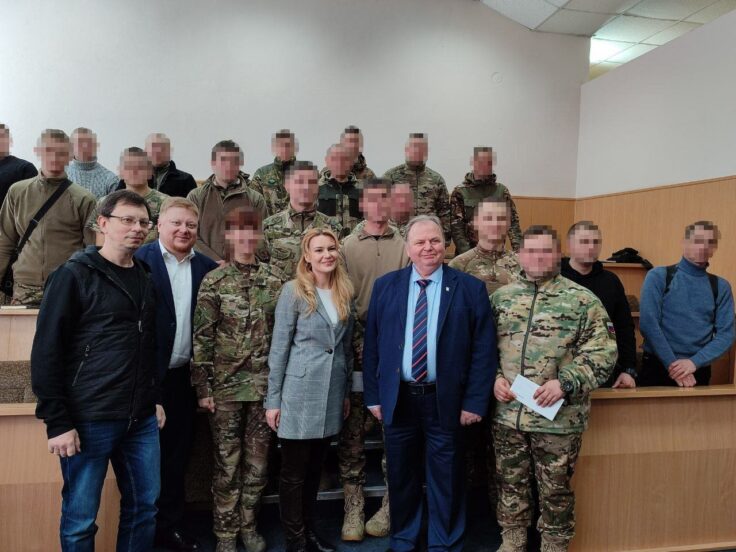
Meanwhile, HSE has the highest number of staff members placed under sanctions. In addition to rector Anisimov, the EU sanctions list includes Deputy Director of the Center for Comprehensive and European Studies Dmitry Suslov, scientific supervisor of the International Relations program Fyodor Lukyanov, and Dean of the Faculty of Creative Industries Andrei Bystritsky. The listing cites their public statements and intellectual contributions to justifying Russia’s aggressive foreign policy, including discussions of nuclear threats. All three are active participants in the Valdai Discussion Club, which is also subject to EU sanctions.
Unexpected guardians of the regime
The sanctions policies of Ukraine’s allies can be divided into three main lines. The first is oil-related, targeting the largest oil and gas companies such as Rosneft, Gazprom, and Lukoil. The second is military, directed against enterprises developing weapons for the Russian army. The third is ideological, covering propaganda outlets and individuals spreading disinformation. Technical institutes supply cutting-edge technologies to enterprises for weapons development and hydrocarbon processing. Humanities institutes, in turn, provide ideological support to the regime.
However, the allies’ sanctions policy toward research institutes appears inconsistent and slow. T-invariant identified 34 institutes that have appeared in a sanctions list at least once. Yet not a single research institute is under sanctions from all of Ukraine’s partner countries, and in many cases they are added with significant delay and only to the lists of one or two countries.
The geography of sanctions reveals the leading role of the United States, which imposed restrictions on 33 institutes. Next come Japan (16), Switzerland (14), the EU (12), and Canada (10). The United Kingdom and New Zealand have barely joined these efforts (one sanctioned research institute each). Most sanctioned research institutes have a distinctly technical profile: 13 belong to the Division of Physical Sciences of the Russian Academy of Sciences, 7 to the Division of Energy, Mechanical Engineering, Mechanics, and Control Processes, 3 to the Division of Chemical Sciences and Nanotechnologies, and 2 each to the Division of Mathematical Sciences and the Division of Earth Sciences.
In addition to institutes of the Russian Academy of Sciences, other organizations engaged in research and development have also come under restrictions. In August 2022, the U.S. Treasury imposed restrictions on the Skolkovo Institute of Science and Technology. Founded in 2011, Skoltech has collaborated with leading global research institutes, including the Massachusetts Institute of Technology (MIT). By 2020, Skoltech had 14 research centers working on artificial intelligence, energy technologies, neurobiology, and more. On February 25, 2022, MIT announced it was terminating cooperation with Skoltech, and in in the spring, Philips, Bosch, TopCon, and other Western companies broke contracts with it. In February 2023, Australia and New Zealand joined sanctions against Skoltech.
The Kurchatov Institute also was sanctioned, though only a year after the start of the full-scale war. As of 2025, the Kurchatov Institute is sanctioned by the United States, Canada, Australia, Japan, and Switzerland. Established in the 1940s as a center for nuclear weapons development, the Kurchatov Institute is now one of Russia’s largest scientific organizations, conducting research in nuclear and molecular physics, computer science, chemistry, microelectronics, and other fields.
Over the past fifteen years, a number of scientific institutes have been placed under the Kurchatov Institute’s jurisdiction, many of which have also ended up on sanctions lists. Since 2011, at least eight research institutes have been incorporated into Kurchatov, with four of them added after the full-scale invasion of Ukraine (All-Russian Scientific Research Institute of Radiology and AgroEcology, Institute for Systems Research, Technological Institute of Superhard and New Carbon Materials, and the Magarach All-Russian National Research Institute of Viticulture and Winemaking).
Sanctions leaders of the RAS
The Boreskov Institute of Catalysis SB RAS is the record holder for sanctions. Today it remains the largest chemical center of the Siberian Branch of the Russian Academy of Sciences and has significant scientific potential. As of 2018, about 400 researchers are employed there, including two academicians, one corresponding member, 290 PhD holders (73 Doctors and 217 Candidates of Sciences). In terms of scientific impact, the institute has one of the highest h-index (111) and ranks among the top three chemical research institutes of the RAS.
The Institute of Catalysis was sanctioned almost immediately after the start of the full-scale invasion. The EU added it to its lists on February 25, 2022; in March the United States, Canada, and Japan joined, with Switzerland and New Zealand following a few months later. The institute has strong and long-standing ties with giants such as Rosneft, Gazprom Neft, Gazprom, and SIBUR, and about 20% of its scientists actively work with the real economy. Moreover, after the start of the full-scale invasion, the institute’s leadership publicly announced its readiness to support key oil-producing enterprises amid a catalyst shortage.
Among all technical research institutes, the P. N. Lebedev Physical Institute (FIAN) and the Ioffe Institute are particularly notable. These were once leading Soviet research institutes — both employed several Nobel Prize laureates. Both renowned institutes were added to the lists of the United States, Canada, the EU, Switzerland, and Japan.
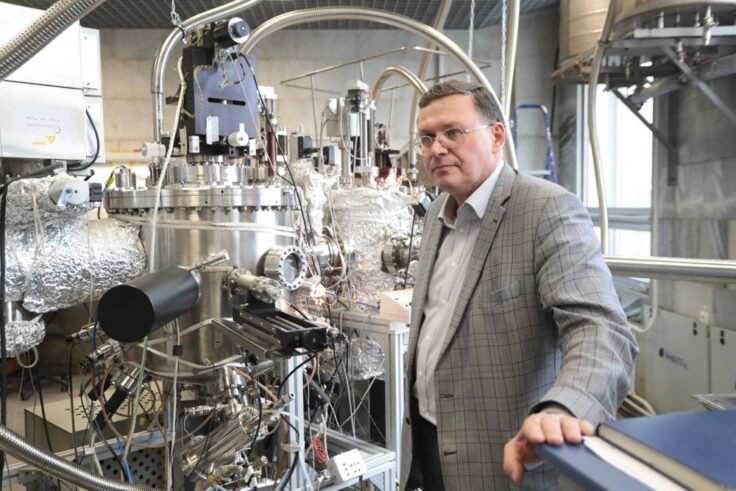
In 2022, the Ioffe Institute came under intense scrutiny from Western countries: its developments in applied physics and energy are considered potential dual-use technologies, making the institute one of the key targets of sanctions policy. The Ioffe Institute specializes in semiconductor physics, plasma physics, solid-state physics, and nanotechnology. It actively participates in developing new energy sources and materials and collaborates with industry and government agencies. Currently the institute’s leadership demonstrates support for the SMO in various ways. In 2024, institute director Sergei Ivanov spoke at the “Patriot” exhibition center during an expert meeting on “advanced Russian projects and technologies for the SMO,” and the institute’s website posted a Victory Day greeting addressed to Russian servicemen (mentioning the special operation).
In September and December 2022, respectively, the Lebedev Physical Institute appeared on the U.S. and EU sanctions lists. The inclusion of the largest institute — known primarily for fundamental physics projects — seemed somewhat unexpected. Some employees attribute the institute’s placement under the harshest sanctions to the publication of a letter by FIAN staff in support of the war in exchange for receiving additional funding of 300 million rubles (approximately $4 million at the March 2022 exchange rate) from the Russian Ministry of Science and Higher Education.
On March 14, 2022, a letter prepared by the institute’s administration was published on the FIAN website, stating in particular:
“…the special military operation in Ukraine is a forced measure — Russia was left with no other choice. To claim that the eight-year tragedy of Donbas does not exist, to ignore the deaths of children and the suffering of the people of Donbas — is to consent to the revival of Nazism and fascism in Europe.
The events following February 24 — attempts to break Russia’s financial system, the launch of “killer” sanctions, rampant Russophobic information attacks — show that this is not a consequence of the military operation but consistent actions deliberately prepared by the United States and Britain over recent years. This is not about the usual local pressure but a deliberate attempt at global isolation and alienation of Russia. The façade of “liberal values” has been removed. The fate of the Fatherland for decades to come is now being decided. The familiar world has radically changed. And Russia’s future depends on each of us.
We, the staff of the P. N. Lebedev Physical Institute of the Russian Academy of Sciences (FIAN), wish to express our civic position regarding current events.”
The letter bears the signatures of 287 employees, while more than 1,500 people work at FIAN. Afterward, a group of physicists appealed to the institute’s academic council to take down the letter (since it was anonymous and did not reflect the opinion of all staff) and replace it with the Presidium of the Russian Academy of Sciences’ statement [English version available below. — T-invariant], which is more conciliatory in tone.
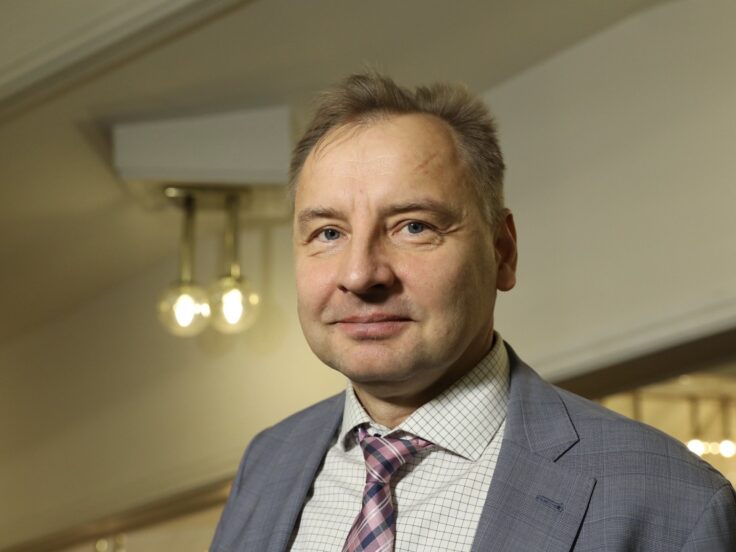
On March 28, 2022, the FIAN academic council held a tense discussion about this proposal. During the meeting, institute director Nikolai Kolachevsky indicated that the letter in support of the war by FIAN staff was initiated not by the directorate but by external government bodies because a significant portion of FIAN employees had signed an anti-war letter that appeared in the very first days of the war. He also noted that all public letters related to the war are closely read by the Presidential Administration.
Speaking to the academic council members, Kolachevsky said in particular:
I am the director of a state institution, I fulfill a state assignment and fulfill the state defense order, including orders from Roscosmos, the Ministry of Defense, and others. Accordingly, it was difficult not to respond to such a thing [meaning the anti-war letter. — T-invariant). Because that would effectively mean FIAN admits we condemn everything that is happening and place all the blame on ourselves. <…> As the head of an organization with credentials from all sides, I was placed in a difficult position by the content of that letter, which is not being discussed today [the same anti-war letter. — T-invariant). <…> I envy people who can avoid signing any letters, because right now there is no need to pit anyone against one another <…> If it were possible to withdraw all the letters, I would withdraw all the letters. <…> When I had to form a position, I found it very hard to do so <…> If we do not respond correctly now, we will never be given a state assignment again, life inside the country will be very difficult for us. I believe FIAN must be protected from this as much as possible. [A full recording of Kolachevsky’s speech and the entire academic council meeting is available to the editors. — T-invariant]
Several academic council members proposed publishing the names and positions of the 287 employees who signed the pro-war letter so that it would no longer be anonymous. However, this never happened. And at the end of the year, as an anonymous source informed T-invariant, an additional 300 million rubles indeed arrived in the institute’s budget.
According to another version, FIAN ended up under the harshest sanctions because of applied work in quantum optics and lasers. Either way, scientists affiliated with FIAN now find it practically impossible to publish in top international journals, purchase high-quality scientific equipment from Europe and the United States, participate in many international collaborations or conferences. And if any anti-war scientist from FIAN wants to distance themselves from the compromising affiliation, resign, and find work in Europe or the United States, their candidacy will not even be considered because of the damning entry in their CV related to working at a sanctioned institute.
The ideological front remains largely in the shadows
Humanities research institutes, by contrast, are largely absent from the “Ukrainian coalition” sanctions lists. As of November 2025, only one institute has come under restrictions — the Institute of State and Law of the RAS, against which Canada imposed sanctions for “complicity in spreading disinformation and propaganda.”
Up-to-date videos on science during wartime, interviews, podcasts, and streams with prominent scientists — subscribe to the T-invariant YouTube channel!
However, the absence of mass sanctions does not mean that humanities research institutes play no significant role in supporting the regime. Their activities often move into the ideological sphere. For example, the Institute for African Studies of the RAS publishes materials that portray favorably the activities of the “African Corps” in a positive light — a GRU-linked unit that provides military support to Moscow-friendly regimes on the continent. Meanwhile, the Institute of Europe of the RAS regularly holds conferences where scholars deliver talks supporting the official narrative about a “neo-Nazi regime in Ukraine” and the “Russophobic course of the EU”. Despite their involvement in spreading pro-war propaganda, neither has yet come under restrictions.
Sanctions logic
The main question T-invariant sought to clarify with experts is why a number of leading Russian universities closely tied to the Russian military-industrial complex have not been placed under sanctions by any country. For example, we could not find information about sanctions against MEPhI, the St. Petersburg and Tomsk Polytechnics, Voenmekh, Dubna University, and many other universities whose ties to the Russian military-industrial sector seem formally obvious.
Several well-known Russian economists who have some influence over sanctions policy commented to T-invariant on how universities and research institutes are considered sanctions targets.
Doctor of Economic Sciences and one of the founders of HSE University Igor Lipsits stated that there is still no systematic analysis of the role of Russian universities and research institutes for the purposes of sanctions policy. “I think no one in the EU is even planning to do this. But the general attitude — ‘a Russian university is an undesirable partner’ — is shaped even by such sanctions, and it will long influence the behavior of European universities,” he believes.
Harvard University professor Oleg Itskhoki believes that in its sanctions policy the United States has primarily targeted Russia’s energy sector rather than the research sphere.
“Universities, unlike oil-producing enterprises, do not play a significant role in Russia’s ability to wage war. Most likely, the United States proceeded from short-term objectives, namely to cut Russia’s profits from energy exports. Therefore, the research organizations that did end up under sanctions were included there largely by accident,” Itskhoki is convinced.
At the same time, Columbia University professor Timothy Frye expressed the view that overly aggressive sanctions policy can do more harm than good: “I worry that poorly targeted sanctions can end up hurting people that should be helped and it would be good to find ways to support healthy elements in Russia. I just don’t have a good idea about how to do this since any public support might cause them harm from the Russian state. For Russians abroad, I imagine that there should be a more liberal approach. It is just hard to figure out who is a Vyacheslav Morozov* and who is not. But in general, I think that an overly restrictive approach will probably do more harm than good.”
“So far, the sphere of science and education in Russia has not been viewed as something important in strengthening and developing either Russia’s military machine itself or the system of its public support,” believes a former rector of one of Russia’s leading universities, who spoke to T-invariant on condition of anonymity.
According to the expert, the example of sanctions against Nikita Anisimov, rector of one of Russia’s most prominent universities, is telling.
“Educational institutions and their leaders are increasingly seen as direct accomplices of Russian authorities in waging war in Ukraine, although the process is not fast and not sufficiently systematic,” he believes.
“There are no clear explanations for why this or that educational or scientific organization ends up under sanctions. The impact of sanctions is obvious: although it is connected not only to the blacklists themselves but also to the overall situation after February 24, 2022. A sharp decline in scientific exchange, academic contacts, near-elimination of internships for Russian students in Western countries and, accordingly, of students from those countries in Russia, reduction in the number of international conferences, seminars, symposia, and other events important for science development, joint research. Finally, in some scientific journals an explicit ban, while others have an implicit ban on publications by Russian scientists, especially those affiliated with sanctioned universities… The latter, however, is not total: publication opportunities remain, although they decreased at some point. However, recently there has been a noticeable increase in the number of publications in international journals again. Any science today develops through close interaction among different scientific schools in different countries. And whatever one may say, the leading scientific schools are in the United States, Canada, Europe, and Japan. Replacing these losses with connections to scientists from other countries, for example China, is nevertheless happening. And the wall built is not an “iron curtain.” In the modern world it is hard to hide or conceal anything. Of course, the losses are very serious, especially when it comes to joint research,” believes a researcher analyzing the international activity of Russian universities, who spoke to T-invariant on condition of anonymity.
Thus, the lack of a clear systematic approach to sanctions against Russian scientific and educational organizations can be explained rather by emotional, random, and spontaneous decisions due to the low priority of this direction in sanctions policy. And there is currently no reason to believe that such an approach is likely to change in the near future — despite the fact that during the war the role of universities and research institutes is growing and increasingly attracting the Kremlin’s attention.
*Vyacheslav Morozov — former professor of international politics theory at the University of Tartu (Estonia). In January 2024 he was accused of working for Russian intelligence and collecting information on Estonia’s domestic policy, defense, and security policy. In June of the same year, Harju County Court sentenced him to 6 years and 3 months in prison.