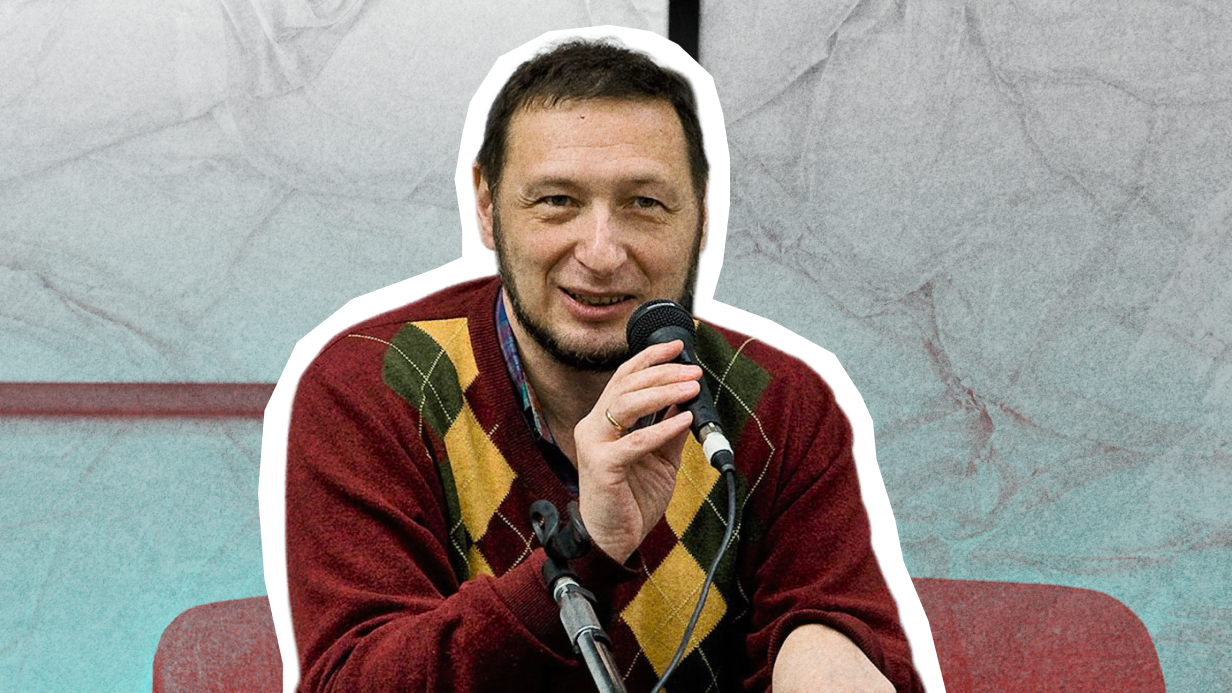
Two years ago, on February 13, 2024, the Appellate Military Court toughened the sentence of publicist, sociologist, and political scientist Boris Kagarlitsky. The scholar, accused of “public calls for terrorism” (in a YouTube video discussing the explosion of the Crimean Bridge), had his previously imposed fine replaced with five years in a general-regime correctional colony. T-invariant explains why one of the most prominent left-wing intellectuals was not left at liberty and why even careful criticism of the authorities in today’s Russia often ends in a prison term.
“So here I am in the prison hospital. They gave me a separate ward; outside the window, classical music is playing — Mozart, Tchaikovsky, even Mendelssohn’s Wedding March (for the first time I listened to it all the way through; usually only the first few bars play, which everyone knows by heart anyway). On the table in front of me lies a postcard — Albrecht Dürer’s engraving ‘Rhinoceros.’ I’ve known it since childhood and love it very much. Someone miraculously guessed and sent it to me,” this is how Boris Kagarlitsky’s short account of prison-hospital life begins.
He ended up in the prison hospital in November 2025 when his health began to fail. “He complained of high blood pressure and vision problems — floaters in his vision. During remote consultations, doctors suspected it wasn’t ophthalmology but neuralgia. In the prison hospital, he was diagnosed with cataracts. Surgery is not possible under these conditions,” Ksenia, Boris Kagarlitsky’s daughter, told T-invariant. “Naturally, being in the hospital is better — at least he can lie down during the day. Given his health, it’s preferable to the rather harsh prison conditions. We hoped he would stay there for several months. Unfortunately, it was not long.” Kagarlitsky was discharged before New Year’s and returned to Penal Colony No. 4 (Torzhok, Tver Region). The colony has six detachments, including a “pensioners” one — for older inmates. That is the detachment where Boris Kagarlitsky is held, Ksenia explains.
“He’s holding up very well, never gets down. It seems to me he supports us more than we support him. Dad gets along well with his co-prisoners (I recently learned that word). I don’t know who you’d have to be to have a bad relationship with my dad. He’s very kind, responsive, and always ready to help. Extremely courteous — he has never said a rude word to anyone in his life. When people interact with him, they somehow become a little better themselves. At least that’s what I want to believe,” says Ksenia Kagarlitskaya.
She left Russia three years ago and now lives in Montenegro. She has not seen her father in the colony. Kagarlitskaya engages in human rights work and runs the international project “Freedom Zone”, which raises funds to support political prisoners.
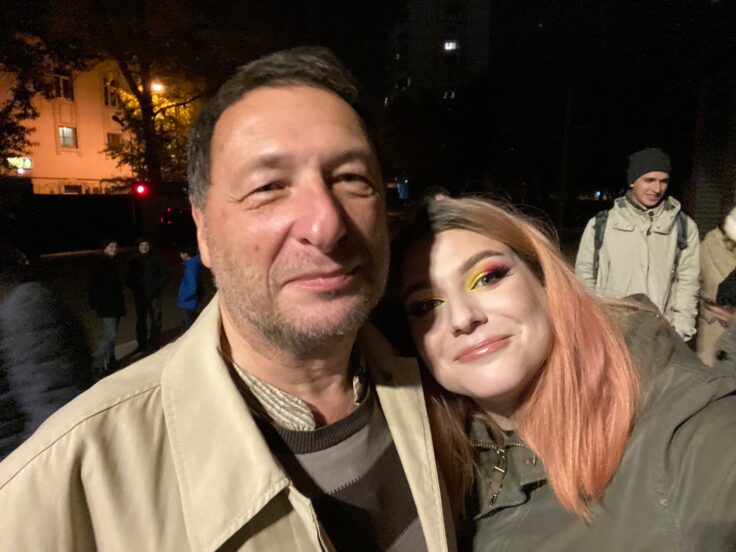
“We hold events in different countries and distribute the funds raised to the families of political prisoners. These include large festivals and lectures. Last year we held ten events and raised 12,000 euros. Political prisoners are in dire need of these funds. And the number of political prisoners keeps growing,” Kagarlitskaya explains.
“There will be a lot of funny stuff”
The first mention of health problems came from Kagarlitsky’s lawyer Yulia Kuznetsova on October 20, 2025. She asked the colony administration to hospitalize the scholar. On November 1, Kagarlitsky himself reported through the Rabkor channel that his condition had worsened — problems with blood pressure and eyesight. Yet on November 8, instead of the hospital, Kagarlitsky was sent to three days in a punishment cell (SHIZO). Later he told his lawyer that he had been placed in SHIZO “for disorder in the nightstand.” The reason was tobacco crumbs left by the previous owner of the nightstand (Kagarlitsky himself does not smoke).
The real reason for the SHIZO placement may have been an interview with Kagarlitsky that appeared on October 16 on the Vestnik Buri and Rabkor channels, Yulia Kuznetsova told T-invariant. Some of his answers were recorded by audio, but most came via letters. The politician himself was “animated” using neural networks — as if he were really in the studio. And the trouble began right after the interview.
“We don’t know the official version. We can only guess, considering the claims made against Boris Yulyevich by colony staff. It seems to us that the interview was the reason for the SHIZO. Any state bodies involved in criminal prosecution — courts, investigators, and so on — strongly dislike it when anything about a person in their hands appears on YouTube. First they gave Boris Yulyevich an oral warning over some trivial matter — maybe he didn’t greet someone properly, or something else. Then they placed him in SHIZO,” Kuznetsova explains.
In the interview Kagarlitsky spoke about how recruitment for the “special military operation” [SMO — official Russian term for the invasion of Ukraine. — T-invariant] takes place in the colony and called for the release of political prisoners. In July 2025 Kagarlitsky urged the international community to demand the release of everyone imprisoned in Russia for their political beliefs. According to Ksenia Kagarlitskaya, in the AI-revived interview Kagarlitsky came across as if he were free, and apparently that is what angered the colony administration.
In the same interview Kagarlitsky said he is writing a book about life in the colony: “It even has a title — ‘Walks with Leviathan.’ I assure you, there will be a lot of funny stuff. Neighbors and even staff already know about this still-unwritten book. I remember in Rzhev the head of the operational unit called me in and asked: ‘Are you really writing a book about prison?’ I said yes. He said: please write about our problems too. We have poor funding and can’t do proper repairs.” I promised. I will! Of course I have big plans — both political and literary. But first and foremost, I need to take care of my health. Nothing terrible has happened to me here, but still, prison camp is no resort.”
An explosive greeting
Boris Kagarlitsky is a sociologist and political scientist, author of publications and studies on left-wing movements in Russia and worldwide; in the past he taught at the Moscow School for Social and Economic Sciences (Shaninka). He is also Director of the Institute of Globalization and Social Movements and editor-in-chief of the left-socialist online journal Rabkor and its YouTube channel.
Latest news on scientists’ work and experiences during the war, along with videos and infographics — subscribe to the T-invariant Telegram channel to stay updated.
On October 18, 2022, a video titled “Explosive Congratulation from сat Mostik, Nervous People and Events, Strikes on Infrastructure” appeared on the channel. The video was later removed from YouTube but is available here. It was dedicated to the explosion of the Crimean Bridge that took place on October 8, 2022 — the day after President Putin’s birthday. In the video Kagarlitsky questioned the FSB version that the explosion was caused by a truck loaded with explosives dispatched from Odesa. All explosives engineers assert that the nature of the damage indicates the explosion occurred not on the bridge but under it, the scholar noted: “In short, there are many questions that I think no one will ever explain because no one is interested. In the end, the bridge got blown up — and that’s it. What matters is that the Crimean Bridge was a symbol of the achievements of the Putin era, and its symbolic value is perhaps even greater than its military-strategic one. And you have to understand that this was the most expensive and most heavily guarded bridge in human history.”
The video stayed on the channel for more than nine months. Then on July 25, 2023, FSB officers came to Kagarlitsky’s apartment in Moscow. They searched it and detained the sociologist. Kagarlitsky was charged with justifying terrorism. That same day a search took place at the home of Moscow activist and psychologist Alexander Archagov, who also streamed on the Rabkor YouTube channel. On July 26 the apartments of Rabkor administrator Artyom Yerofonov in Yekaterinburg and former Penza Region gubernatorial candidate Anna Ochkina were searched. In total, searches were conducted at the homes of five Rabkor staff members. But criminal proceedings were initiated only against Kagarlitsky. The case was opened by the FSB directorate for the Komi Republic; Kagarlitsky was transferred to Syktyvkar.
“By law, since the case was opened and is being investigated in Syktyvkar, Boris Yulyevich Kagarlitsky has been transferred there and is being held there,” his lawyer Sergei Yerokhov noted. “In his work the professor has never supported or justified terrorism. The purpose of all his statements has been to highlight the real problems facing the Russian state.”
Kagarlitsky himself commented on his detention, stating: “When you criticize Russian authorities, you understand you’re walking a fine line, but I managed to stay out of trouble for a year and a half after the start of the SMO. I very carefully observed all the restrictions tied to my foreign-agent status and phrased all my statements cautiously. They were critical, but — in my opinion — within the law.”
A decision from above
The trial in Kagarlitsky’s case also took place in Syktyvkar. “It’s highly convenient — being far from Moscow. Getting there takes a long time, either a day by train or a flight, which is quite expensive. It’s hard to organize a support group in court, even if it’s open,” historian Pavel Kudyukin, co-chair of the University Solidarity trade union, explained to T-invariant.
The reason for opening the criminal case was the title of the video — or rather, part of the title: “Explosive Congratulation from сat Mostik” [Mostik (Rus: little bridge) — the name of a cat adopted by the builders of the Crimean Bridge, and “greeted” Putin on his 70th birthday, the day before the explosion. — T-invariant]. The investigation had no claims about the content of the video.
“The video remained on the channel for almost ten months — and nothing. Then suddenly they latched onto it,” Ksenia Kagarlitskaya says. “Dad always tried to formulate everything perfectly so that nothing could be pinned on him. The title was the only thing they could stretch to fit. They couldn’t find anything else. The logic was roughly: congratulation is something good, an explosion on the bridge is terrorism, therefore this is justification of terrorism.”
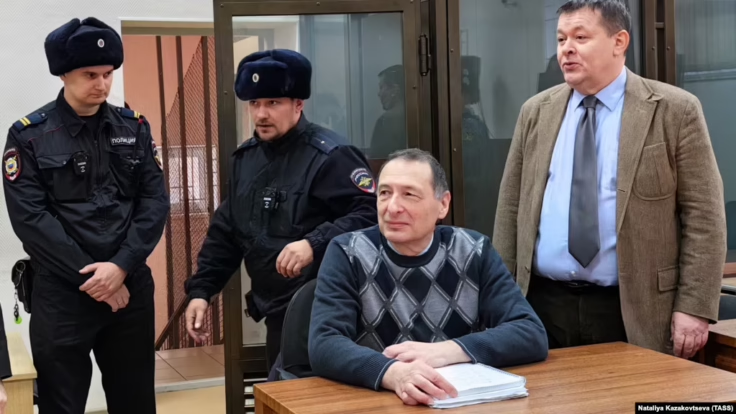
The inspection of the video was requested by municipal deputy of Ukhta (Komi Republic) Leonid Krasnoperov. He also oversees youth policy in the city. At trial he appeared as a prosecution witness. “This is a completely random person. I think he was asked to write the denunciation. It clearly wasn’t Krasnoperov’s idea. All these denunciations are written to exactly the same template: someone saw something somewhere on the internet, got terribly outraged, and decided to express that outrage on paper. But in reality the decision is always made from above — especially when it’s not a random person but someone like my father,” Kagarlitskaya believes.
Former Rabkor employees also testified for the prosecution. “One of them is a person with chronically provocative behavior. He was involved in a whole series of conflicts, acted very destructively, even tried to seize Rabkor at one point, for which he was expelled. Apparently that determined the rather vicious way he testified. The other witness was neutral and said nothing different from what Boris himself said in his testimony,” Pavel Kudyukin recalls.
He himself appeared as a defense witness. “To interpret the flippant phrase about the explosive greeting from cat Mostik as justification of terrorism — I don’t know what kind of person you’d have to be,” Kudyukin believes. “What justification of terrorism is there? That’s nonsense. At most it’s a not-very-successful joke. Strictly speaking, it doesn’t even qualify as an administrative offense. But apparently Boris had begun to irritate the authorities too much. I think his criticism of the war was the reason. And Boris did it quite cautiously, not head-on, but still his position was clearly critical. At the same time he had quite a large audience.”
A court-ordered expert examination confirmed that the video title contained justification of terrorism. Kudyukin calls the examination “blatant hatchet job.” The prosecution demanded five and a half years of imprisonment for Kagarlitsky. At that time Vladimir Putin also commented on the scholar’s case, saying he was not familiar with it but that “a certain attitude must be taken toward people who cause us damage inside the country.”
Winter holidays
On December 12, 2023, the court fined the scholar 600,000 rubles. Having spent almost five months in pretrial detention, Kagarlitsky was released right in the courtroom. It seemed like a victory. The next two months of his life he called “winter holidays.” At that time friends suggested he leave Russia, but he refused.
Up-to-date videos on science during wartime, interviews, podcasts, and streams with prominent scientists — subscribe to the T-invariant YouTube channel!
“I think the fine was a harsh warning — you’ve been released from pretrial detention, now leave while you can. Moreover, they immediately returned his passport. Technically he had every opportunity to leave. But persuading him to leave proved absolutely impossible. My feeble attempts ended very quickly. His position was: if you’re a politician in Russia, you have to be ready to go to prison for your views. Otherwise you’re simply not a politician,” Ksenia Kagarlitskaya recalls.
Rabkor subscribers collected the full fine literally within a day. While free, the scholar managed to pay it. This was not easy — because in August 2023 he had been placed on the list of terrorists and extremists. “By law he cannot spend more than 10,000 rubles a month, and the fine was 600,000 rubles. The law does not specify how to pay it. He went to the main Sberbank office, wrote statements, it was all very long and tedious, but in the end he managed to pay the fine,” Ksenia recalls.
At the same time the prosecution appealed the verdict, calling it “unfair due to excessive leniency.” On February 13, 2024, the appellate court sentenced the sociologist to real imprisonment — five years in a colony. Later the cassation court upheld the sentence, and then the Supreme Court left the sentence unchanged.
“In the prosecution’s opinion the original sentence was too lenient, not frightening enough, because all these sentences are meant to intimidate those who are not yet in prison — so they don’t dare move. Here he got off with just a fine — not serious. It was rather unexpected that the sentence was toughened. Although apparently Boris considered it possible; he came to the hearing with a packed bag,” Pavel Kudyukin says.
The fine amount was returned to Kagarlitsky — but not immediately; according to Ksenia, it took some effort from the family. The money went toward lawyers and to her father in the colony.
A dangerous repeat offender
In his youth Boris Kagarlitsky had already been in prison. During the Soviet period he was involved in the dissident movement. In 1982 he was arrested in the “Young Socialists case” and charged with “anti-Soviet propaganda.” The 24-year-old Kagarlitsky spent more than a year in Lefortovo.
“Dad is a well-known repeat offender. The first time he served 13 months. So in the modern prison he has already spent more time than in the Soviet one. But back then he was much younger. The difference is that in Lefortovo they always addressed him by his first name and patronymic. Now it’s not quite like that. But still, things are better now. There is the FSIN-letter system [special correspondence system for prisoners. — T-invariant), which significantly improves the conditions of imprisonment. Many people write to him,” Ksenia Kagarlitskaya says.
“On April 28, 1983, together with my other comrades from the Young Socialists group, I was released from Lefortovo Prison. We were released then because the Young Socialists case turned out to be extremely scandalous for the authorities, and the Russian authorities of that time — which were, after all, Soviet — were still a different kind of state, one that cared about its reputation and understood that keeping us in prison was extremely harmful to the USSR’s image. So in the end they left us alone and let us go free,” Kagarlitsky recalled.
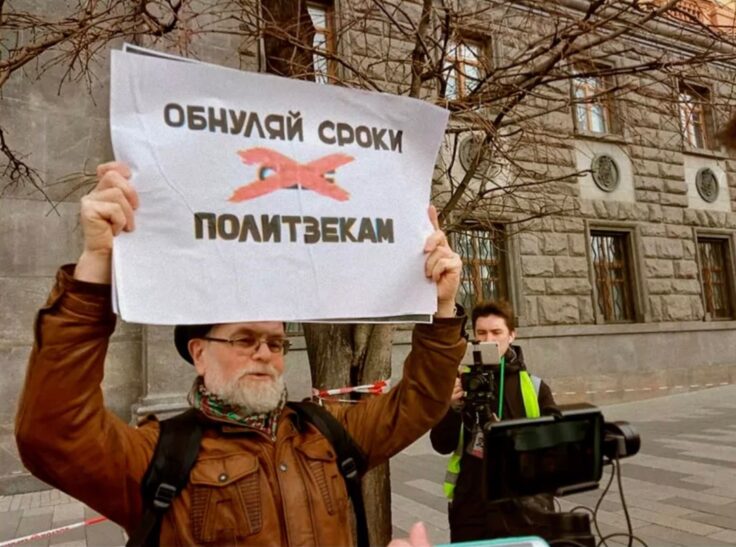
Pavel Kudyukin was also a defendant in that case. “We now have more political prisoners than in the late Soviet period,” he notes. “Sentences under these articles are substantially longer. The professionalism of operatives and investigators has declined; the special services have been affected by the general degradation of the state apparatus. Nowadays cases are fabricated left and right; there are crude provocations. For example, the cases of ‘New Greatness’, ‘Network’, sloppily thrown together, with obvious provocateurs among the participants.”
In the 1990s Kagarlitsky was a deputy in the Moscow City Soviet, an organizer of trade-union movements. In the 2000s he participated in creating the Left Front and founded the research Institute of Globalization and Social Movements. In 2018 the institute was designated a foreign agent. The grounds were joint projects with the Rosa Luxemburg Foundation, which is funded by Germany.
In 2014 Kagarlitsky was criticized for supporting the creation of the so-called Donetsk and Lugansk People’s Republics and the annexation of Crimea. But two years later the scholar changed his mind.
“In 2014 he was quite neutral toward the annexation of Crimea and at first rather positively assessed developments in Donbas. I think this was connected with certain illusions that there was some grassroots movement there, socially colored, almost socialist. And when people accuse him of selling out to the Kremlin — I disagree. I think it was a quite sincere mistake. We strongly disagreed with him at the time and didn’t speak for a while. Then his attitude toward what was happening in Donbas grew more and more critical — when it became clear that everything was being subsumed by the Kremlin, that it was purely a puppet entity,” Pavel Kudyukin recalls.
In 2022 Kagarlitsky condemned the beginning of Russia’s full-scale invasion of Ukraine. In May 2022 he was designated a foreign agent, and three months later the sociologist was fined 10,000 rubles for failing to comply with foreign-agent obligations.
In January 2024 politicians and public figures from various countries signed a petition demanding the release of Kagarlitsky and other political prisoners in Russia. The petition was published on the site freeboris.info and on the platform change.org.
In June 2024 Kagarlitsky refused to sign a petition for pardon. “If the people in power were ready to release me, they could easily have done so without losing face on June 5, when the Supreme Court considered my cassation appeal (…) Nevertheless the decision was made to keep me behind bars. They think they have sentenced me, but in reality they have sentenced their own political and legal competence. Can one expect in such a situation that a clemency petition will be granted? There is no basis for it,” Kagarlitsky stated at the time.
Later he asked not to include him in any exchange lists: “If I had wanted to leave the country, I would have done it myself. But I am not going to leave my homeland, and if that requires sitting in prison — I will sit in prison. In the end, for a left-wing politician or social scientist in Russia, imprisonment is a normal professional risk that must be accepted when you choose this path. It’s like being a firefighter or a rescuer. Just part of the job that I did and will try to do as conscientiously as possible.” In addition, Kagarlitsky threatened to sue any foreign state that agreed to a prisoner exchange with Russia and he ended up on the list against his will.