Winter is coming. Why has the FSB reclassified research on the Russian North as working for foreign intelligence?
You can read this article in Russian
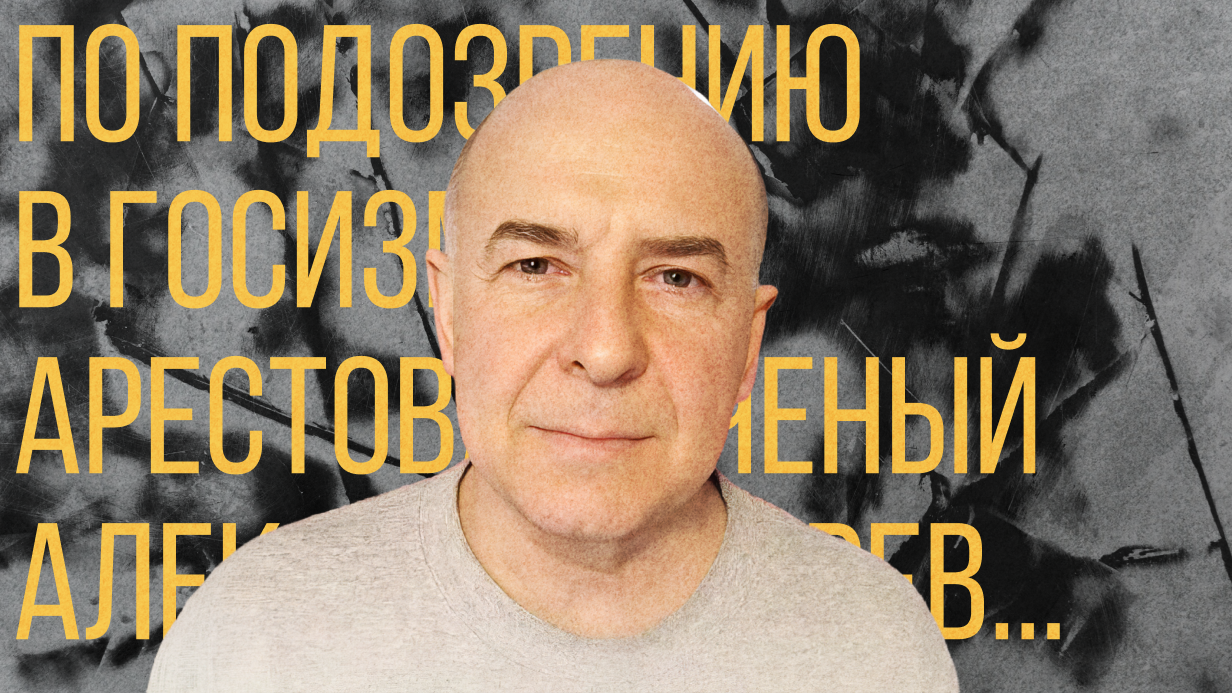
Doctor of Medical Sciences Alexey Dudarev spent 25 years as the lead author of regular monitoring reports on pollution in the Arctic originating from Russia. After Russia’s full-scale invasion of Ukraine in 2022, official participation by Russian scientists in the Arctic Monitoring and Assessment Programme (AMAP) working group of the international Arctic Council was paused, but contacts resumed in 2025 — something Maria Zakharova of the Russian Foreign Ministry announced enthusiastically. The joy was short-lived: less than a year later, the FSB arrested Dudarev, and the new five-year Arctic pollution monitoring report will likely be released without up-to-date Russian data — for the first time since 1991. Experts speaking to T-invariant explain: if in 2021 the “cocktail of PCBs and POPs” (heavy metals and persistent organic pollutants in food chains and the human body) in Russia’s northern regions was openly published in scientific journals, by 2026 it has become a potential “tool for the enemy.” Now 61-year-old Dudarev faces up to 20 years in prison for state treason: according to the security services, the monitoring data could have been used by Norwegian intelligence.
Top news on scientists’ work and experiences during the war, along with videos and infographics — subscribe to the T-invariant Telegram channel to stay updated.Doctor of Medical Sciences Alexey Dudarev was detained on January 14 on his way to work. After searching his St. Petersburg apartment, FSB officers took the scientist to a pre-trial detention center. Dudarev has been remanded in custody until March 13 and charged with state treason, reports “First Department”. According to investigators, information from Dudarev’s scientific publications could have been used by Norwegian intelligence. Alexey Dudarev is the chief research fellow at the North-Western Scientific Center for Hygiene and Public Health of Rospotrebnadzor. He has long been engaged in scientific work: publishing articles in Russian and international journals, participating in conferences, and researching the health of northern indigenous peoples. According to his son, Dudarev never held a security clearance and never signed any nondisclosure agreements. He denies any guilt in the state treason charge. The reason for Dudarev’s arrest may lie in his publications in open international scientific journals associated with the Arctic Monitoring and Assessment Programme (AMAP). This is one of the six working groups of the Arctic Council — an intergovernmental forum made up of eight member states. The Arctic Council suspended all official relations with Russia in March 2022, but later began the process of resuming cooperation with Russia. The first reports of this appeared in late 2023, and the work of AMAP and the other five groups was restarted only in 2025. In mid-January 2026, Russian Foreign Ministry spokesperson Maria Zakharova made a separate statement that such work would continue in 2026. However, in February several Russian Foreign Ministry representatives issued official statements that “the work of the Arctic Council is effectively blocked.” The FSB arrested the main Russian author of Arctic pollution monitoring reports right between these two rounds of diplomatic statements. This came less than a full year after the resumption of joint AMAP work on the next report, which — according to T-invariant — is due for completion in 2026. It may well be published without any up-to-date Russian data. AMAP’s tasks include measuring and monitoring the impact of pollutants on Arctic ecosystems and human health. In his publications, Dudarev wrote about pollution problems in Russia’s Arctic regions. His most recent scientific paper related to AMAP, where he is listed as a co-author, is dated 2024. It focuses on analyzing concentrations of persistent organic pollutants in Arctic populations. “Hostile countries will find out what our pollution levels are” Dudarev is one of the few scientists in Russia who studied the impact of toxic pollution on the lives of indigenous peoples, as explained to T-invariant by Ilya Shumanov, founder of the Russian Arctic research NGO “Arctida”.
“And these were not just studies — Dudarev showed how toxic exposure affects women’s and children’s health. This is a highly sensitive issue for the Russian authorities: very unpleasant stories emerge about the consequences of barbaric treatment of nature and disregard for the needs of indigenous populations,” Shumanov emphasizes. “And when an international organization, citing Dudarev’s data, publishes a report saying that mercury levels are negatively affecting birth rates among indigenous peoples and that this is linked to unresolved waste problems, clearly this hits a nerve and tarnishes Russia’s reputation. Monitoring toxic substances is extremely — extremely — sensitive for Russian foreign policy. These data need to be refuted with other data, but none exist.”Today, about 2.5 million people live in the Russian Arctic. This is less than 2% of Russia’s population and about 40% of the entire planet’s Arctic population. For the region and its indigenous peoples, environmental pollution is a very serious problem, says Arctic researcher Anna (name changed at her request). “As soon as environmental problems shift into the realm of harming human health, the Russian state tends to persecute those who study them. It is no surprise to me that the target became someone who was not merely monitoring the environment, but examining the impact of pollution on health. How dare they — hostile states will learn what our pollution levels are!” she explains. Before the war against Ukraine began, Dudarev actively traveled abroad on scientific trips. “He went to Turkey, to Europe. He had a large number of scientific and research trips; he presented his work. But since 2021 there has been no record of him traveling abroad. Apparently he self-censored his activities, at least he stopped going abroad,” notes Shumanov. It is difficult today to judge exactly which publications triggered his persecution. But they likely concern works on the health of indigenous peoples in areas of industrial development, believes Nail Farkhatdinov, executive director of “Arctida.”
“Amid the securitization of the region and the restoration of military infrastructure, the exchange of data collected through systematic scientific work becomes an object of intense scrutiny by the security services. At the same time, the results of this research are publicly available, and anyone without a security clearance can read them. Such are the conditions of global science — conditions that today are in sharp conflict with the interests of those advocating total securitization.”According to Farkhatdinov, Russia effectively completed its chairmanship alone amid the 2022 freeze in the Council’s activities, handing over the chair to Norway in 2023. The Council’s activities can be divided into two levels: the expert level (work of thematic groups that conduct research, publish data, and develop recommendations) and the intergovernmental level (political meetings at the ministerial and senior official levels). Over time, however, the expert groups’ activities gradually resumed. Annual reports, assessments, and materials were published at the end of Norway’s chairmanship. Little is known about this level of cooperation — the routine work of scientists rarely draws attention and remains “below the radar.” “Dudarev’s arrest and the charges brought against him deal a blow to these efforts, which continued in parallel with the political freeze of the Council,” says Farkhatdinov. “On the one hand, Russian Foreign Ministry representatives in recent interviews emphasize the importance of the organization and the need to restore its full operation. On the other hand, we see that any scientific activity — including publication of results and professional exchange — can serve as grounds for accusations of treason.”
Up-to-date videos on science during wartime, interviews, podcasts, and streams with prominent scientists — subscribe to the T-invariant YouTube channel!According to the expert, today any Russian scientist participating in the Arctic Council’s expert groups is at risk of criminal prosecution and arrest. Dudarev, AMAP, and the securitization of the Arctic Alexey Dudarev himself participated as one of the lead authors of AMAP reports for at least 25 years (here are links to several earlier reports he contributed to: [1][2][3]). Preparation of these reports traditionally involved official participation by top-level Russian experts. From the early 1990s until his death in 2021, Yury Tsaturov, Deputy Director of Roshydromet and an Actual State Counselor of the Russian Federation Class II, served on the committee preparing the reports. The most recent AMAP report Dudarev contributed to was prepared in 2021 — before Russia’s full-scale invasion of Ukraine — and published in 2022. Over the four years of war, the security framing of anything related to the Russian Arctic has changed fundamentally, experts interviewed by T-invariant believe. Pressure from the security services on any independent activity related to the Arctic grows by the day. After Dudarev’s arrest, Russian authorities designated “Arctida” — whose founder and experts quoted in this article — an “undesirable organization.” Now not only the NGO’s activities themselves, but any interaction with it is criminalized. Security services in Arkhangelsk are targeting historians from the Northern (Arctic) Federal University (NArFU). Russian authorities are also actively targeting the Norwegian media outlet The Barents Observer (having a Russian-language version): its publisher has been declared “undesirable”, and its journalists have been placed on lists of “terrorists and extremists” and “foreign agents.” Just days ago it emerged that Arctic business is the main bargaining chip Russia holds in negotiations over a grand deal with the United States. Secret data of Russian science Accusations that the scientist may have disclosed some secret data that foreign intelligence could use do not hold up to scrutiny, says Pavel Sulyandziga, defender of Indigenous peoples of Russian North: Dudarev’s work relied on open data.
“Data on Arctic pollution are completely unclassified. They have been published many times already. I think the reason for the persecution is his cooperation with foreign scientists. The FSB is now trying to strangle anything alive and free. Everyone must befriend, communicate, and cooperate only according to their instructions.”“This is a typical story. Those persecuted for treason today tried to follow a familiar path. They thought publishing open data carried no risk,” notes Anna. “The Russian state, however, shows little respect for the concept of open data when it comes to the environment. The Aarhus Convention exists on access to environmental information. Russia was supposed to ratify it in 2010 and even adopted an action plan. In the end, one of the first “foreign agents” in Russia was the organization Ecodefense, which specifically called on Russia to ratify the convention.” According to Anna, Norway — as chair of the Arctic Council — is now trying to revive its work. But it is unlikely that Western colleagues could have foreseen the consequences for Russian scientists who chose to cooperate: “The Norwegian chairmanship believed that if everyone followed the rules, cooperation could proceed fairly. But in Russia that proved impossible.” Espionage on behalf of friendly countries The persecution of Russian scientists began in the 1990s and has only intensified in recent years, says Ilya Shumanov. “One of the most unusual cases is that ofAlexander Nikitin. A retired naval officer, he worked for many years on ecology and radiation hazards at the Northern Fleet. He knew everything related to nuclear submarines, their disposal and reactors. In 1996 he was charged with state treason, but acquitted in 1999. This was the first high-profile case of persecution of a scientist studying environmental conditions in the Arctic zone.” In the early 2000s, a wave of prosecutions began against scientists accused of spying and treason. One such case was that of Igor Sutyagin, a former employee of the military-political research department at the RAS Institute of USA and Canada Studies. In 2004 he was sentenced to 15 years for espionage on behalf of the United Kingdom. Sutyagin refused to admit his guilt, insisting he had prepared reports on Russia’s defense industry for a British consulting firm using only newspaper excerpts. He served 11 years before being part of a prisoner swap. “In the 2010s, prosecutions accelerated even more. There were many cases in which scientists were accused of passing secret data to China or stealing industrial or military secrets,” Shumanov recounts. Since 2014, when relations with the West deteriorated, scientists with foreign contacts have faced even harsher persecution. Physicist Viktor Kudryavtsev (of the Central Research Institute of Machine Building — TsNIIMash) was charged with treason for transmitting data in two emails to the Von Kármán Institute for Fluid Dynamics, which collaborated with TsNIIMash under the FP7 ESPaCE program. At the time of his arrest, Kudryavtsev was 75 and became the oldest detainee in Moscow’s Lefortovo pre-trial detention center. A year later he was released under house arrest. He died in 2021. Shumanov recalls truly Kafkaesque cases: “In 2018 came the case of Alexey Temirev, a scientist from Rostov Region. He sent an official request to the FSB asking which of his own research materials could be published or shared with a Vietnamese graduate student and which could not. In response to his own query, he was arrested and charged with passing secret information to Vietnam.” In 2020 Valery Mitko was detained — an Arctic researcher, president of the Arctic Academy of Sciences, a hydrophysicist. “He too was charged with treason — because he gave lectures on hydroacoustics to students in China. All his lecture materials were in printed form; he carried hard copies with him. They accused him of going to Dalian University in China and claimed his notes contained submarine characteristics. Yet he insisted all the data came from open sources — essentially from Wikipedia,” recounts the head of “Arctida.” One of the highest-profile recent cases is the persecution of Novosibirsk physicists. In 2022–2023, three employees of the Khristianovich Institute of Theoretical and Applied Mechanics (ITAM) SB RAS were detained on suspicion of treason: institute director Alexander Shiplyuk and chief research fellows Valery Zvegintsev and Alexander Maslov. According to investigators, they transmitted secret scientific data to China, and Zvegintsev also to Iran. The scientists maintained that the information in question was publicly available. Later, 77-year-old Maslov was sentenced to 14 years in a penal colony, 59-year-old Shiplyuk received 15 years in a maximum-security colony. 79-year-old Valery Zvegintsev remains in custody.
“Today it is increasingly difficult for Russian scientists to exchange data with foreign colleagues. Even publications in journals in friendly countries — China, Iran, Vietnam — can lead to criminal charges.”In AMAP reports, Russian scientists for several decades portrayed the Arctic as a region with some of the world’s highest levels of pollution and social problems. They demonstrated that Indigenous peoples and residents of industrially impacted areas of the Russian North had for years been receiving a “cocktail of PCBs and POPs” (a mixture of persistent pollutants — heavy metals such as mercury, and persistent organic pollutants that accumulate in food chains and the human body). They also showed that Russia’s biomonitoring system is poorly funded and fails to cover entire regions. In the sections authored by Dudarev, it was stated that the region remains understudied, laboratory capacity is weak, and without a proper national monitoring program, the country faces new “blind spots” in public health. Up-to-date Russian data are a vital part of the overall picture. Western scientists understand that pollutants are carried by wind and currents across borders, so without information from Russia it is impossible to protect either their own citizens or the shared Arctic ecosystem. Yet after 2022, the everyday work of Dudarev and his colleagues began to look entirely different: no longer as medical-ecological analysis, but as a potential “tool of the enemy.” In the same graphs and maps the FSB now sees descriptions of vulnerable regions, problematic military and extractive zones, demographic distress — everything that can be framed as “information of interest to foreign intelligence.” Whereas in 2021 the discussion concerned the need to strengthen monitoring, in 2026 it is seen as “discrediting,” cooperation with what authorities label an “undesirable organization,” and “work for NATO countries.”
Support T-invariant’s work by subscribing to our Patreon and choosing a donation amount that suits you.
Et Cetera