
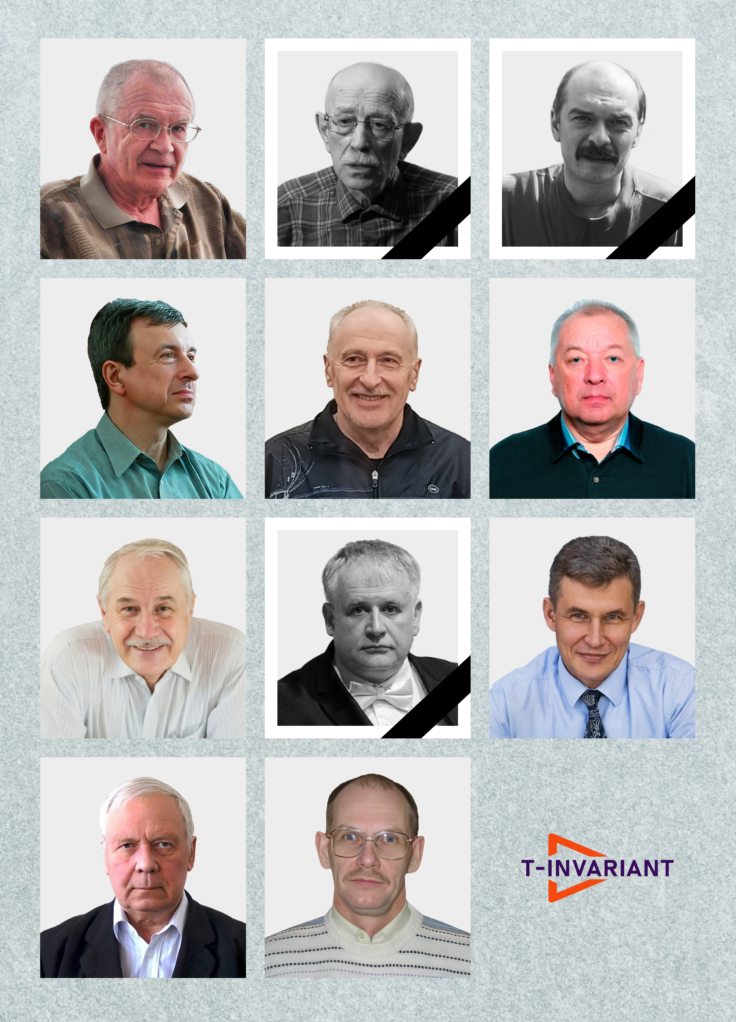
In May 2026, a court handed down sentences to physicists Valery Zvegintsev and Vladislav Galkin. This marked the end of the hypersonic scientists case — the largest criminal prosecution of researchers in modern Russia. Over the course of 11 years, 11 physicists fell victim to the security services. Three of them died while under investigation, and five essentially received death sentences. T-invariant reviews the outcome of the hypersonic scientists case and examines what convicted researchers must do to demonstrate their utility to a state that hands them prison terms incompatible with life. The scientists’ idea of reviving the sharashkas [Soviet prison laboratories — T-invariant] has already been time-tested. However, there are also proposals tailored to today’s needs — such as an “under-barrel grenade launcher munition for destroying unmanned aerial vehicles” (Zvegintsev was listed on a patent with this title in November 2025, by which time he had been under investigation for over two years). Meanwhile, young scientists who had planned to build their professional careers in hypersonic research are not only leaving the field but abandoning science altogether.
PREVIOUSLY IN T-INVARIANT
Hypersonic Silence. How scientists become prey for the FSB
They Climbed into the Nozzle Itself. The FSB took on the co-authors of Novosibirsk scientists accused of treason
“Hypersonic Horror Continues”. What the fifteen-year sentence of physicist Aleksandr Shiplyuk reveals
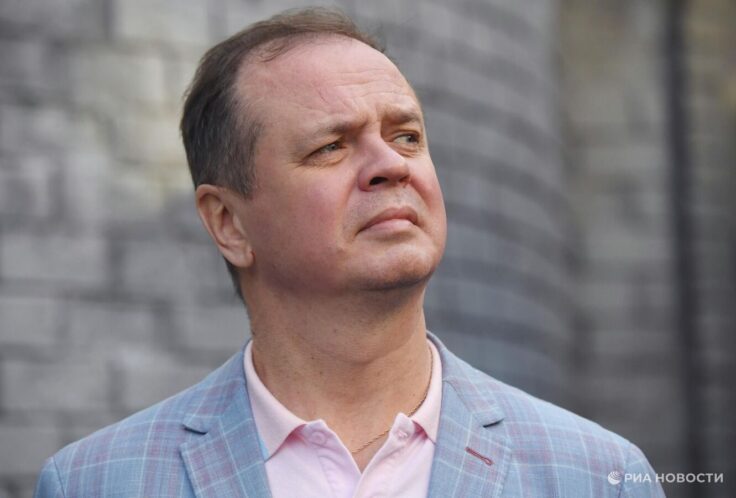
The hypersonic case began with a record and ended with one as well. In May 2015, security forces arrested a scientist who set a record as the oldest person charged with high treason. Vladimir Lapygin of the Central Research Institute of Machine Building (TsNIIMash) was 75 years old at the time of his arrest and 79 when he was granted parole. Over the next 11 years, the intelligence services seemed to develop a taste for it. According to human rights advocate and founder of the First Department project Ivan Pavlov, the targets were deliberately chosen to be “easy”: elderly scientists who could be pressured with minimal effort.
On May 5, 2026, that record was significantly broken — the court sentenced the oldest scientist convicted of high treason in Russian history — 82-year-old Valery Zvegintsev. Assuming Zvegintsev survives his 12.5-year term, he will be released at age 93 (taking into account that three years under house arrest count as 1.5 years in prison). This is effectively a death sentence, much like the case of Zvegintsev’s closest institute colleague, Anatoly Maslov, who faces imprisonment until the age of 90.
Vladimir Lapygin headed the aerogasdynamics research center at TsNIIMash (the primary research institute of Roscosmos) and taught at Bauman Moscow State Technical University. When Lapygin was arrested, the university’s then rector Anatoly Aleksandrov claimed the reason involved “certain issues during joint projects with China.” Media outlets reported Lapygin’s arrest only two months later. The scientist was placed under house arrest, a year later, in the fall of 2016, he was transferred to Lefortovo detention center, then received a seven-year sentence and was sent to a penal colony in the Tver region. Lapygin was released on parole in 2020. For the past few years he has been following the verdicts of his colleagues, most of whom he has known personally for decades, occasionally commenting on their criminal cases in the media.
Latest news on scientists’ work and experiences during the war, along with videos and infographics — subscribe to the T-invariant Telegram channel to stay updated.
While still in the detention center, Lapygin wrote a 32-page text titled “How I Became a Chinese Spy.” It begins as follows: “I, Vladimir Ivanovich Lapygin, born in 1940, worked at FSUE TsNIIMash for 46 years and participated in the creation of all launch vehicles, intercontinental ballistic missiles, and re-entry spacecraft developed in the USSR and Russia after 1970.” Case details and other excerpts from this text can be found in a report by human rights defender Zoya Svetova.
Sentences of the Hypersonic Scientists
Following Lapygin’s case, 10 more physicists received sentences under the high treason statute. Seven of them were elderly at the time of their arrest (aged 63 to 79).
Viktor Kudryavtsev, deceased
On July 20, 2018, the FSB arrested 74-year-old TsNIIMash employee Viktor Kudryavtsev on suspicion of high treason. According to the security services, he had transmitted classified information to the Belgian von Kármán Institute for Fluid Dynamics.
After a broad public campaign, the preventive measure was changed from custody to a written undertaking not to leave the area, and the investigation was suspended for medical reasons. In 2021, Kudryavtsev died from complications following cancer treatment (aggravated by the one year and two months he spent in pre-trial detention).
Roman Kovalev, deceased
In June 2019, 56-year-old Roman Kovalev was arrested — deputy head of the Department of Spacecraft at the Moscow Institute of Physics and Technology (MIPT) and head of the Center for Heat Transfer and Aerogas Dynamics at TsNIIMash, a student of Kudryavtsev.
In June 2020, Moscow City Court sentenced Kovalev to seven years in a maximum-security colony. In April 2022, the scientist was released from serving his sentence on medical grounds. Kovalev had terminal cancer and died two weeks after his release.
Anatoly Gubanov, 12-year sentence
In December 2020, the head of the Aircraft and Rocket Aerodynamics Department at the Central Aerohydrodynamic Institute (part of the Zhukovsky National Research Center), 63-year-old MIPT Associate Professor Anatoly Gubanov was arrested. The scientist fully admitted his guilt and requested leniency. Defense Attorney Olga Dinze reported that Gubanov had been subjected to severe psychological pressure during the pre-trial stage. In October 2023, the court sentenced him to 12 years in a maximum-security colony.
The latest videos on science during wartime, interviews, podcasts, and streams with prominent scientists — Subscribe to the T-invariant YouTube channel!
Valery Golubkin, 12-year sentence
On the day of Gubanov’s arrest, authorities conducted a search at the home of his subordinate, MIPT associate professor and TsAGI researcher 68-year-old Valery Golubkin. In a letter from the detention center, Golubkin reported that his arrest was linked to the testimony of his supervisor, who had made a deal with the investigation. On June 26, 2023, the Moscow City Court sentenced Golubkin to 12 years in a maximum-security colony. The scientist pleaded not guilty.
Anatoly Maslov, 14-year sentence (start of the “Novosibirsk” case)
In late June 2022, the FSB arrested 75-year-old chief researcher at the Khristianovich Institute of Theoretical and Applied Mechanics (ITAM SB RAS), professor at NSU and NSTU Anatoly Maslov. This marked the beginning of the second, Novosibirsk wave of the hypersonic case. On May 21, 2024, Maslov was sentenced to 14 years. The severity of the sentence was attributed to Russia’s invasion of Ukraine and the subsequent tightening of high treason legislation — as reported by T-invariant. Two months prior to the verdict, Maslov suffered a heart attack while in detention.
Dmitry Kolker, deceased
On June 30, 2022, the FSB arrested 54-year-old researcher at the Institute of Laser Physics SB RAS and Novosibirsk State University Dmitry Kolker on suspicion of high treason. The security services removed the scientist directly from his hospital bed (he had stage IV pancreatic cancer) and transferred him to Lefortovo. On July 2, 2022, Kolker was admitted at Moscow City Clinical Hospital No. 29, and the next day his relatives were informed of his death.
T-INVARIANT FACT SHEET
Dmitry Kolker was a specialist in laser physics, non-linear optics, and spectroscopy. As previously reported by T-invariant, Kolker had no publicly available joint papers with physicists from ITAM, and his recent scientific works were not related to hypersonic research. However, he had another affiliation with the organization Special Technologies LLC [заархивировано — T-invariant], whose main activity is “the development of mid-IR laser sources for guidance and countermeasure systems.” This affiliation was indicated in Kolker’s 2012 publication — exactly at the time when work was underway on an EU Framework Programme project. It is unclear whether Kolker’s work at that time overlapped with that of his ITAM colleagues. However, publications from the same period show that increasing laser frequencies for hypersonic experiments was of interest to them.
Aleksandr Shiplyuk, 15-year sentence
On August 5, 2022, Maslov’s colleague — a 55-year-old ITAM Director Aleksandr Shiplyuk — was arrested and also transferred to Lefortovo prison. At the institute, Shiplyuk headed the “Hypersonic Technologies” laboratory. The prosecution requested the maximum possible sentence of 20 years. On September 3, 2024, Shiplyuk was sentenced to 15 years in prison.
Valery Zvegintsev, 12.5-year sentence
The third ITAM researcher to be arrested by the FSB (in April 2023) was 79-year-old Valery Zvegintsev. Only after that did the institute’s staff respond publicly — an open letter in support of the scientists was published on the institute’s website:
“In this situation, we do not only fear for the future of our colleagues. We simply do not understand how to continue doing our job. On the one hand, the primary quality metric of our work under state contracts and projects funded by Russian state foundations and agencies is the degree to which our findings are presented to the broader scientific community, including scientific publications and conference presentations. On the other hand, we see that any paper or presentation can lead to high treason charges. What we are awarded for today and held up as an example to others becomes the basis for criminal prosecution tomorrow.”
The letter was later removed from the ITAM website; it is available in the T-invariant Telegram channel. On May 5, 2026, Valery Zvegintsev was sentenced to 12.5 years in prison.
Vladislav Galkin, 12.5-year sentence
In December 2023, it became known that the Sovetsky District Court in Novosibirsk had arrested 68-year-old Vladislav Galkin, Associate Professor at Tomsk Polytechnic University and a frequent co-author of Valery Zvegintsev and Aleksandr Shiplyuk. He received the same sentence as Zvegintsev on the same day — May 5, 2026.
Sharashkas 2.0 and the Grenade-Launcher Munition
Interestingly, both Zvegintsev and Shiplyuk continued to publish scientific papers even after the criminal cases had been opened and they were arrested. T-invariant drew attention to an unusual 2025 patent that lists Valery Zvegintsev: “Under-Barrel Grenade-Launcher Munition for Destroying Unmanned Aerial Vehicles.” The main authors are Zvegintsev’s colleagues from NSTU. This patent clearly stands out among his usual research areas and reflects work on a highly relevant current priorities.
Aleksandr Shiplyuk — the youngest of those imprisoned hypersonic scientists — is fighting most actively for his life and freedom. His case was tried in closed doors without observers or journalists, and how the prosecution proved the scientist’s guilt is unknown. The judge ordered the return of US dollars, Chinese yuan, and euros seized from him during the investigation. The scientist spent over two years in Lefortovo awaiting his verdict. His family attended the reading of the court’s final ruling. The physicist’s research was focused on the experimental aerothermodynamics of hypersonic flows. “Judging by Shiplyuk’s most cited works (and he has papers in leading international journals), this is entirely fundamental science that has no direct connection to specific aircraft: boundary layer stability, the effect of surface coatings, and minor additives. Another matter is that anything related to hypersonics has long since become a minefield in Russia,” Doctor of Physical and Mathematical Sciences Andrey Tsaturyan explained to T-invariant.
The security services failed to “break” Maslov, Shiplyuk, or (as would become clear in 2026) Zvegintsev. Their colleagues from ITAM maintain their innocence and refuse to cooperate with investigators. In contrast, their St. Petersburg colleague, Aleksandr Kuranov, cooperated with the investigation, testified against at least Maslov, and received a seven-year sentence (despite the statutory minimum for high treason being 12 years). According to T-invariant‘s data, Kuranov also testified against Shiplyuk as part of the same pre-trial plea bargain.
“The hypersonic horror continues. It seems FSB investigators have struck gold (in terms of stars on their epaulets) and are diligently mining it. The alchemists’ work of extracting stars out of scientists is an easy job that has been bearing fruit for a decade now, counting from the arrest of Vladimir Lapygin. Back then, members of the Academy of Sciences and many others stood up for him en masse. Today, we are all rather surprised that the staff of the Khristianovich Institute in Novosibirsk were not afraid to stand up for Aleksandr Shiplyuk and his two colleagues,” Andrey Tsaturyan said in the same interview.
As T-invariant has learned, Aleksandr Shiplyuk has been appealing to various authorities with proposals to establish “certain classified research centers, a sort of Soviet-era sharashka.” This came to light through written responses to questions sent to the T-invariant editorial office by Shiplyuk’s daughter, Viktoria.
— What can you tell us about your father’s well-being and emotional state? Which penal colony is he in, and what are his detention conditions?
— Aleksandr Nikolayevich is in the Komi Republic, in the city of Syktyvkar, at Penal Colony No. 25, thousands of kilometers away from home. We have repeatedly petitioned the Federal Penitentiary Service to transfer him closer to home (a right he is legally entitled to), but we received denials. As for his well-being and emotional state — our father is a strong and courageous man; he tries to keep his spirits up and avoid despondency. He works in the sewing facility. A major issue is the total lack of access to specialized or even popular science literature, which is just as vital to him as his day-to-day living conditions.
— How do you evaluate the role of the ITAM staff in supporting your father and other convicted researchers from the institute?
— We are profoundly grateful to the Institute’s leadership and staff for their emotional and financial support. Their kindness is felt at every level, even though their options are limited. For instance, they organize birthday and New Year card collections for the imprisoned staff. Aleksandr Nikolayevich receives numerous letters from the institute, and they help us put together food parcels, among many other things. I want to add that this extends beyond the institute — it is clear that respect, sympathy, and even admiration for our father are only growing. His authority as a scientist, administrator, and human being is stronger than ever. Naturally, this is incredibly important both for him and for us, his family.
— We know about ITAM’s open letter, but were there any other actions taken by scientific leadership at any level to defend the scientists?
— Aleksandr Nikolayevich has repeatedly written appeals to various authorities, offering to apply his knowledge, skills, and qualifications in his relevant field (the sewing facility leaves no room for that). Similar proposals were put forward by several leading experts of the Russian Academy of Sciences regarding Aleksandr Nikolayevich and other experts. The idea of creating classified research centers, a sort of Soviet-era sharashka, seems obvious, but as far as we can see, it has not been implemented in any way.
The desire to revive the sharashkas does surface periodically — both in connection with the arrests of scientists and, for instance, with the sweeping criminal prosecution of the founders of Russia’s supercomputer industry (see T-invariant articles “Sanity Check: How and Why Security Forces Destroyed Russia’s Supercomputer Industry” and “Russian Security Services Intimidate to the Point of Self-Censorship”). However, this idea often meets with skepticism among researchers.
“It is possible, though not simple, to understand why an innocently convicted corresponding member of the Russian Academy of Sciences, who ran a prestigious Siberian institute before turning 50 and who has likely read Aleksandr Solzhenitsyn’s In the First Circle, would prefer a sharashka over a sewing shop. I do not believe the revival of sharashkas is being seriously considered at the top; however, I cannot rule out that the idea occurred to some of the ‘historical reenactors’ who now find themselves in power,” Andrey Tsaturyan notes.
Some of Shiplyuk’s colleagues view the idea with understanding but little enthusiasm. An ITAM researcher, speaking to T-invariant on the condition of anonymity, believes that the revival of sharashkas is more of a grassroots initiative rather than a top-down demand from the state or security services.
“It seems that in the Soviet era, sharashkas served to shield scientists in critical fields from unwanted contact. The KGB aimed to prevent information leaks, conducting preventive measures and acting preemptively. Today, the FSB does not operate to prevent the disclosure of classified data; rather, it meets its KPIs by presenting arrested scientists as part of some epochal investigation. The state is not particularly concerned with retaining brains, so there is no demand for these Sharashkas 2.0, which require substantial funding. Yet Aleksandr Nikolayevich’s position is understandable. The brain is like a muscle — it needs exercise. Instead of sewing mittens, he could be bringing far greater utility,” the physicist reflects.
Whether his colleagues Maslov and Zvegintsev share Shiplyuk’s ideas remains unknown. However, according to Ivan Pavlov, Zvegintsev’s sentence is far from the harshest possible. “I consider this a good job by the defense. Nowadays, 15 years (like Shiplyuk’s sentence) is the norm, while 12.5 years is a stroke of luck,” Pavlov says.
The human rights advocate also highlights another unusual detail. “What is astonishing about Zvegintsev’s and Galkin’s cases is that they remained under house arrest during the trial, and even more surprisingly, they stayed under house arrest after receiving heavy prison sentences. Usually, defendants are taken into custody right in the courtroom following such verdicts. I believe the authorities are starting to wonder: is this moving in the right direction? Zvegintsev is 82 years old; he might not survive prisoner transit and a penal colony, and the security services cannot ignore this. Scientists — people who faithfully served the regime and forged this defensive shield — got caught in the crossfire. The regime is beginning to question: are we prosecuting the right people, are we making enemies out of the wrong crowd? The problem is that the machine (both propaganda and security) has been set in motion, and stopping it is no easy task. It mows down its own as well. Now it has hit ideologically aligned individuals — a group to which I count the scientists who continue to forge this shield,” Pavlov says.
“The Next Generation of Cruise Missiles”
The subject of combat missiles, including those incorporating hypersonic technologies, remains highly significant for the Kremlin. From May 19 to 21, 2026, drill exercises are taking place (the largest in post-Soviet history, according to the independent outlet Agentsvo) to practice the preparation and deployment of nuclear forces under the threat of aggression, the Russian Ministry of Defense announced. Launches of ballistic and cruise missiles are scheduled. Prior to this, on May 12, 2026, Putin was briefed on the successful test of the Sarmat intercontinental ballistic missile, long referred to in Russian propaganda as a “Doomsday weapon.” It is designed as a silo-based missile capable of carrying Avangard hypersonic glide vehicles. On November 3, 2025, the Kremlin presented awards to the developers of the Burevestnik nuclear-powered cruise missile of global range and the Poseidon unmanned underwater vehicle. At the time, official statements explicitly emphasized the role of design bureaus, industrial enterprises, research centers, workers, engineers, and scientists involved in the project, noting that they are collectively developing “the next generation of nuclear-powered cruise missiles, which will eventually become hypersonic.”

“I fear that hypersonic technologies will suffer the same fate as sparrows in Mao Zedong’s China,” an ITAM scientist worries. This refers to the massive campaign against agricultural pests organized during China’s Great Leap Forward (1958–1961), which led to a population explosion of caterpillars and locusts devouring crops because a critical natural regulator had been removed from the ecosystem. Harvests plummeted, a severe famine ensued, and at least two million people perished.
As T-invariant has learned, immediately following the detention of the three leading ITAM scientists, an initiative group of young researchers from institutes in the Novosibirsk Akademgorodok met with the regional FSB directorate. The meeting was arranged with the assistance of the Siberian Branch of the Russian Academy of Sciences. The researchers sought to clarify the boundaries within which they could safely work to avoid the fate of those accused of high treason. However, they received no clear answers or guidelines, hearing instead something along the lines of: “Just work well and don’t do anything bad.”
Even now, young scientists who intended to build their professional careers in hypersonic research are not only leaving the field but abandoning science altogether. “I personally know three young colleagues who left the institute following the criminal cases against their senior colleagues at ITAM. In all likelihood, there are far more,” a T-invariant source at the institute states. Aleksandr Shiplyuk’s son, who began his career at ITAM, has also transitioned to the IT sector.