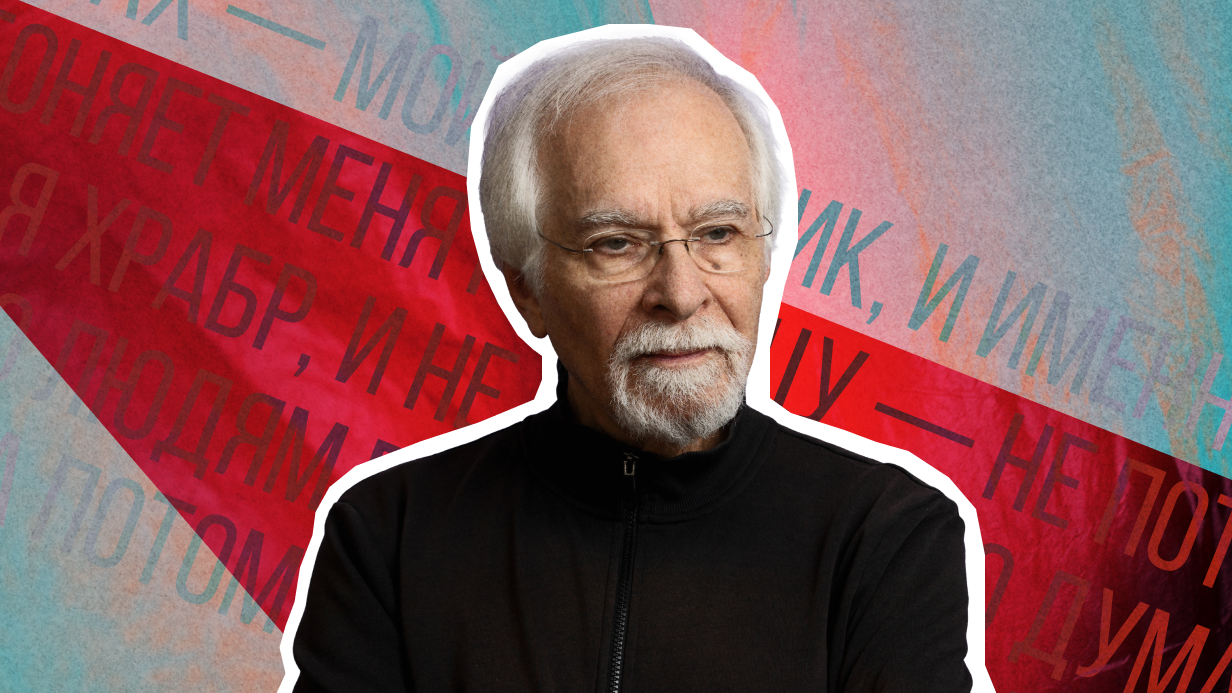
What do American professors owe their country when democracy and the rule of law are under threat? Why is it crucial to study law not merely as a craft for practicing lawyers, but as a liberal art—akin to history or religious studies? In what ways does the crisis of the death penalty expose deeper fractures in society? T-Invariant sat down to discuss these questions with Austin Sarat. Over a half-century-long career at a prominent American college, he has pioneered the transformation of legal studies into a vital humanistic discipline, emerging as one of today’s most formidable critics of the abuse of law in America.
ABOUT AUSTIN SARAT
Born in 1947. He holds a B.A. from Providence College (1969), a Ph.D. in political science from the University of Wisconsin–Madison (1973), and a J.D. from Yale Law School (1988). Since the mid-1970s he has taught at Amherst College, where he holds the William Nelson Cromwell chair as Professor of Jurisprudence and Political Science. Sarat is widely regarded as one of the architects of the modern study of law in the humanities. He founded Amherst’s Department of Law, Jurisprudence and Social Thought (1992), co-founded the Association for the Study of Law, Culture and the Humanities, launched several scholarly book series, and served as president of the Law and Society Association, which named an early-career prize in his honor. He is the author or editor of more than ninety books, chiefly on capital punishment, law and violence, and the cultural life of law, and writes regularly for Verdict, The Contrarian, and Inside Higher Ed.
T-invariant: I would like to start with the 1960s as a formative period of your life. You finished college in 1969 and then went straight into graduate school at Wisconsin, which at that time was one of the epicenters of the era. What did those years mean for you — as a scholar, as a person, as a public intellectual? What thinkers, what movements, what events shaped you most?
Austin Sarat: Life in college in the 1960s in the United States was complicated, to say the least. Alongside doing the work you were supposed to do, you also had to deal with events in the world which seemed at that time to be quite unspeakably bad — in this case, the war in Vietnam.
I went to a Catholic school, where the college did not want the world to penetrate. When I arrived at Providence College in the 1960s, it had a dress code. It regulated the length of your hair. That was the kind of environment I experienced in college.
I loved my college experience. I fell in love with my teachers and imagined myself at some point doing what they were doing. A couple of them took a special interest in me and really mentored me and wanted me to go on to graduate school and get a PhD. Their ambition was that I should go to Yale to get a PhD. Alas, Yale didn’t want me. So I went to the University of Wisconsin, largely drawn by the presence of Michael Lipsky, who at that time was a leading figure in the study of cities and urban politics. I arrived in Madison in the fall of 1969.
Madison was the opposite of Providence College. Where Providence College wanted to keep the world at bay, at Madison you couldn’t follow this principle. There were frequent demonstrations. The University’s Arts and Sciences campus was built on a hill and there were frequent demonstrations there. The presence of the National Guard, the use of tear gas — those things marked my experience as a graduate student. Looking back, as bad as the situation was with the war in Vietnam and the political situation, it was for me a time of hope — I thought people like me could make a difference in the academy and maybe in the world. But truth be told, my heart was more in the academy at that point than it was in the world. I loved political science and imagined that my greatest contribution would be from inside the academy, leading the career of a teacher and a scholar.
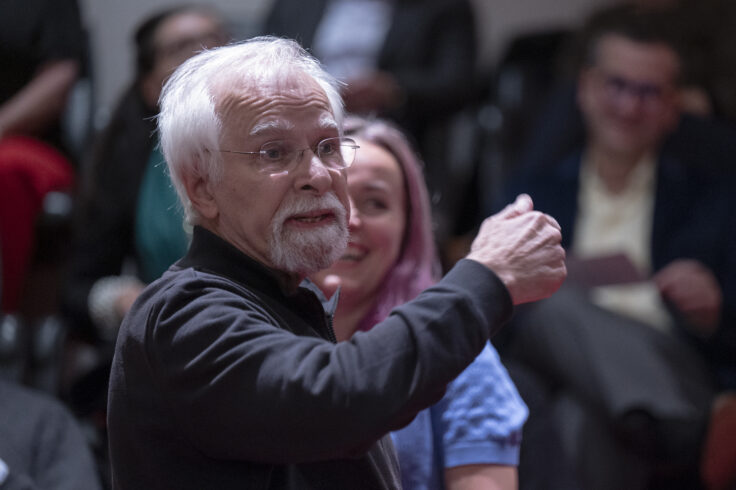
T-i: As far as I understand, you came to your study of law “sideways”: you first became a political scientist, and only much later earned your degree in law. How did that background and that path shape the way you see law?
AS: When I did a postdoctoral year at Yale Law School, I saw a broader vision of what the study of law could entail. But I was still very much in the thrall of the way political scientists studied law: they took the blood and flesh off the subject. And I was quite comfortable with that at the time.
I came to Amherst to teach American politics and only had the idea of going to law school a decade after I started to teach. I went off to law school in 1985, and only there my vision broadened and changed.
My intellectual life turned because of an article written by a Yale law professor named Robert Cover. The title of the article was “Violence and the Word.” And from then till now, I’ve been imagining a conversation between myself and that article.
To study law, to be involved with law, is to have an opportunity to confront those two realities: the reality of language and its meanings, and the reality of violence and its uses.
T-i: In some of your courses and publications you say law consists of three components: moral argument, interpretive traditions, and the social organization of violence. For a reader who does not specialize in law, how could you explain how these three elements hold together?
AS: Most legal systems seek to articulate and reflect the moral values and political beliefs of the culture and country in which they are situated. And in most countries, legal disputes are developed on the terrain of arguments about what is right or just in accordance with the law.
But legal systems and legal institutions are not simply philosophical debating societies. Law is always articulated in language — codes, statutes, court decisions, orders. That means both citizens and scholars are called to attend to the way in which words are used and meanings are assigned in the articulation of laws and judgments. And in the United States and in the Anglo-American world, the way in which language is used in law is governed by its own set of rules.
There is no law without the possibility of enforcement. Otherwise, law is like a birthday card: it carries no more weight than a wish or a greeting. What gives law its weight is the deployment of violence. And legal systems deploy violence in a variety of ways. They punish people and authorize others to use violence.
To make sense of the world of law that surrounds us, we have to understand that we’re going to make arguments about what is right and fair. Those arguments should be made in ways that are recognizable to legal officials. We have to speak this language and follow these distinct traditions and to be aware that there is a lot at stake. When the poets are finished with their argument about what things mean, they go home. When the legal arguments are done, people lose their property, liberty, or in some cases even life.
T-i: For many years, the problem of capital punishment has been the focus of your research. Why has it held you for so long? And what do you think about the development of attitudes toward the whole issue in the United States — do you see it as part of a slow abolition, or of entrenchment?
AS: To study capital punishment is to have an opportunity to see the way in which the legal system — in my case, in the United States — seeks to legitimize the right to take the lives of citizens.
When I started to study capital punishment, I was less interested in its survival than in seeing through capital punishment to broader issues in the culture and the society. I thought this practice crystallizes our attitudes toward justice and mercy, our beliefs about deservedness, our horror at the crimes that in theory warrant capital punishment.
Over time, and somewhat to my surprise, I’ve come to live in two different worlds. One is the old world, where I studied the death penalty not to advance the cause of abolition. I am publishing a new book, and that’s not going to help abolish the death penalty.
But then I have this more public side. I write, and I’m now on the board of Massachusetts Citizens Against the Death Penalty.
And I think the practice of capital punishment is a moral horror. The United States is in a period of national reconsideration of capital punishment. I believe that the United States is on the road to abolition of the death penalty. The abolition is not going to come smoothly — there’ll be ups and downs.
But maybe not in my lifetime — certainly not in my lifetime — but in the lifetime of my thirty-year-old son, I would not be surprised if the death penalty died in the United States.
T-i: Why is it so important to study the new methods of capital punishment and to assess them?
AS: For the last several decades, arguments about the death penalty have shifted a little bit away from its morality and toward an examination of the way it works. You can be in favor of the death penalty in the abstract but against executing the innocent or against executing people because of their race or the race of their victim.
It’s my belief that the death penalty system in the United States is broken from beginning to end. Innocent people get convicted and sentenced to death row. You’re more likely to get a death sentence if you kill a white person than if you kill a person of color. Those are, in my view, easier problems than the cruelty of the method itself.
Because in theory the innocent who are condemned are innocent — they’re like you and me, they haven’t done anything — and people who get death sentences because of the race of their victim are clearly the subjects of injustice. But when we’re inside the execution chamber, we’re mostly dealing with people who “deserve to die,” if anyone ever deserves to die. It’s harder — and, in my view, more important — to focus on the fate of the guilty than on the fate of the innocent.
I don’t think there’s any method of execution, or any practice of execution, that can be considered anything other than cruel. I want to focus attention not just on the suffering of the people being condemned, but on the question of who we want to be. The way we punish is as much about those who punish as about those who are punished. What animates the people who do this?
The United States has been on this quest for a method of execution that would be safe, reliable, and humane. I think it’s a fool’s errand. There’s no method of execution that is going to be humane, even if we could find one that is “safe and reliable” — and we haven’t been able to, and we’re not going to be able to.
T-i: You created something unusual at Amherst — one of America’s most selective liberal-arts colleges. The department you founded there, Law, Jurisprudence and Social Thought, was among the first programs anywhere to teach undergraduates to study law as one of the humanities rather than as pre-law training. I know that when the college formally reviewed the program, an outside committee of experts judged it “superior to every other undergraduate program of its kind in the country.” How did the idea first emerge, and who stood with you as you built it?
AS: I’m going to mention Robert Cover again — “Violence and the Word.” I went to law school and had this intellectual revelation with Robert Cover; it was like deciphering the Rosetta Stone. I came back to the college, and soon the Mellon Foundation was soliciting grants from liberal arts colleges under the theme of “fresh combinations.” I picked up the phone and called my colleague Thomas Kearns from the philosophy department. I said, “Tom, we’re a fresh combination. Let’s see whether we can put together a program at the undergraduate level in law that’s the equivalent of studying religion. We have theology schools — that doesn’t mean we don’t teach undergraduates about religion. We have law schools — why can’t we teach undergraduates about law?”
Kearns and I got support through this Mellon initiative. We developed new courses that didn’t fit comfortably in political science or philosophy or history or anywhere else. And we were doing jazz more than symphony, because there were few, if any, models for us. The first course taught was called “The Fate of Law.” We didn’t want to do “legal studies”; we wanted to do what people had done in the study of religion — to study this thing in its social, intellectual, and cultural context.
LJST was founded on a kind of conceit: that we were going to revolutionize the study of law. We were going to set a model, not just for Amherst, but for the world of undergraduate education. We started a book series. I created new professional associations — all inspired by the idea that law is a subject in the liberal arts. And you don’t have to do it our way; you can have your own church. But at least recognize that law is a subject in the liberal arts: you can look into the way moral argument plays out, understand the play of language, confront the reality that people’s lives are on the line.
And our little college was a perfectly hospitable place to do it, because it’s a liberal arts college. It was easy intellectually and hard logistically, because this was not something the college needed to do, and people in political science were very threatened by this; in part, I think, because they thought it was going to kill the discipline of political science — everyone was going to go study law. The program was voted by the faculty in 1992. We did it differently than I think anybody else has ever done. Generally, when you adopt a new program, you first adopt the program and then the program articulates its curriculum. We did the reverse: we had a whole curriculum lined up, so that people knew what they were buying, so to speak, if they voted for the creation of LJST. The curriculum has changed since, but there it was.
T-i: If you were founding this program today, in the current political climate, would you do it differently?
AS: Throughout most of my career as an intellectual, I have not wanted students to know what I think.
I don’t go in and try to persuade them. If they want to be in favor of the death penalty, then I would leave them to be in favor of the death penalty. But the present moment — the last decade or so in the United States — has occasioned in me a little bit of a rethinking. I still don’t want students to know what I think about most subjects, but I want them to understand the depth of my commitment to democracy and the rule of law.
So, in the face of the current moment — we can disagree about abortion, or environmental policy, or whatever, and that’s fine; I’m not going to tell you what I think about those things. But the ground norm for the work that we do, you and I, is democracy and the rule of law.
The original impulse of LJST was critical of the rule of law — as ideology, as mystification. And it’s a nightmare, in a way, to look back at all the things we wrote, and to hear similar lines now being articulated by the current President of the United States — “Oh, it’s just political.” In fact, just yesterday we were drafting a job description for a visiting professor, and I said, “How about we include in the job description someone who’s interested in the virtues of the rule of law?”
If I were founding it today, the three pillars would still be the same. But I think the orientation would be to a different kind of relationship to the practices of law in the world. Eighty million Americans voted for the current President of the United States knowing who he was. If you’re going to save democracy and the rule of law in the United States, you need to connect those things to what people care about — how they live, how their children live. Otherwise, why should they care?
T-i: In the recent year and a half, you have written a lot about what you call the weaponization of law against the rule of law. Where, for you, is the line between aggressive but still lawful executive action and what you would define as an actual assault on the rule of law? Has the American state already crossed that line?
AS: The answer to your last question is “yes.” We’ve had many powerful executives; we’ve had many presidents who stretched the limits of presidential power. Franklin Roosevelt used the power of the presidency, but I don’t think it was in the name of aggrandizing himself. This one is different. It’s not just that he’s a powerful executive. His conception of politics is messianic. It’s not just that he’s corrupt or egotistical. What’s his slogan? “Make America great again.” What did he say? “I alone can fix it.”
That’s what we must understand: whatever the peculiarities of his psyche, the politics is illiberal because it’s so personalistic. Whenever I talk about Trump, here’s what I try to say: you can call him names, but my guess is that when he looks in the mirror in the morning, he says to himself, “I’m going to save this country. And anything that gets in my way — what do I care about? Law? A few legal niceties? I’m on a mission from God.” And that’s what I think we need to understand.
We — the American academy — have spent too much time patting each other on the back and making sure we were using the right pronouns. We, the American academy, at a time when we are reviled, need to look outside, to try to understand why millions of people say, “I don’t care about any of that; he’s going to reduce inflation,” or “I don’t care about any of that; he’s going to put a stop to political correctness.”
I used to criticize public intellectuals for fancying themselves of some significance. Now, every day when I come into the office, what I’m likely to do is write something that has no audience in the academy. Every week for the last year and a half I’ve organized a protest — we stand on the corner and stand up for democracy. I’ve organized a network of alumni called the “Stand Up for Democracy Network.” I’ve organized things on campus and helped create a student organization called “Amherst Students for Democracy.”
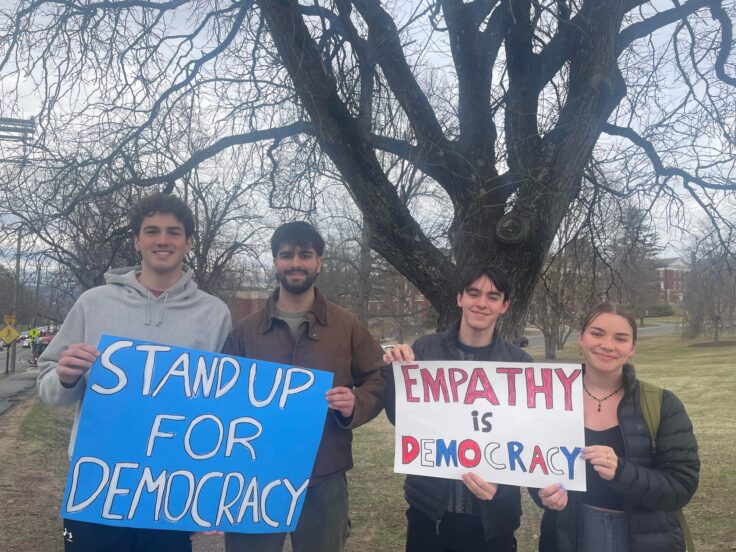
I don’t write, or demonstrate, or organize, imagining that I’m going to convert the hardcore Trump supporters. I don’t have time to do that. When I was complaining, “Oh, I’m not converting anybody,” one of my former students said, “You don’t understand how much it means to people who are on the front lines that people like you are writing.” I regard my writing as cheering on my side. I regard my writing as bearing witness. I regard my public activity as exemplifying what someone can do when they are terrified all the time. Fear is my friend, and it gets me out on the street — not because I’m courageous, and not because I think they care about me, but because if I don’t stand up, who will?
T-i: At this moment, what is the role of a scholar of law? What can such an expert do to help prevent the abuse of law?
AS: As an expert, I can claim the attention of legislators developing legislation. I can claim the attention of judges, if I’m asked to testify. When I write something for the public, I can do it as an expert: I know these things, and I want to tell you these things. But the real question is: what is the demand for my expertise, and to whom am I lending it? As a person who thinks for a living, do I see things that others might not see, or see them differently than others might?
I think our obligation emerges from our privilege — to be an intellectual, to be able to teach and write. I regard that as a privilege; I just mean, I’m glad I have a job. And with privilege, according to John Kennedy when he spoke at Amherst College in 1963, comes responsibility.
I tell everybody that if you ask the following question — namely, “What will work? What will work to preserve the rule of law? What will work to preserve a constitution?” — it’s the wrong question, because no one knows what will work.
Nevertheless, we need to do three things. The first thing we as citizens and residents of the United States need to do is put out the fire, in whatever way we can: demonstrate, protest, write, organize. The second thing is that we need to commit ourselves to a program of reform that is really oriented to dealing with the despair among large segments of the population.
Go to the emergency room at a public hospital and wait for seven hours. Call your cell phone provider and try to get decent service. Go to Stop & Shop and pick up feta cheese and look at the price: “It’s ten dollars?” Do I need to be an expert to know about those experiences? No, I don’t. Even if you can put out the fire, it’s only going to reignite if we don’t attend to the desperation that leads people to say, “I’ll choose him.”
The third thing is that we need to practice what I call thinking democratically. It means that I should tell the truth as I know it, but I need to tell it in a way that can be heard by someone who doesn’t already agree with me. It’s not enough to say, “You’re a racist, you’re a sexist” — nobody’s mind is going to be changed. To think democratically, you must speak less and listen more. American democracy in many ways failed long before Trump. Trump is a symptom.
You must be curious. You must practice empathy before judgment. You can do that alone; you don’t need to be part of a movement to do it. We not only need to rebuild the infrastructure of democracy — we need to rebuild a culture of democracy.
I’m committed to a program of reform when the time comes — and that will mean people like me live a little less well, so that others can live a little better.
T-i: What’s happening to American higher education under Trump’s presidency, in your view?
AS: American higher education was in trouble long before Donald Trump came on the scene. Now, to talk about American higher education is to talk about apples and oranges and tomatoes and broccoli — the community colleges, the state universities, the research universities; it’s a different thing in each case. What I know best is Amherst College and similar liberal arts colleges.
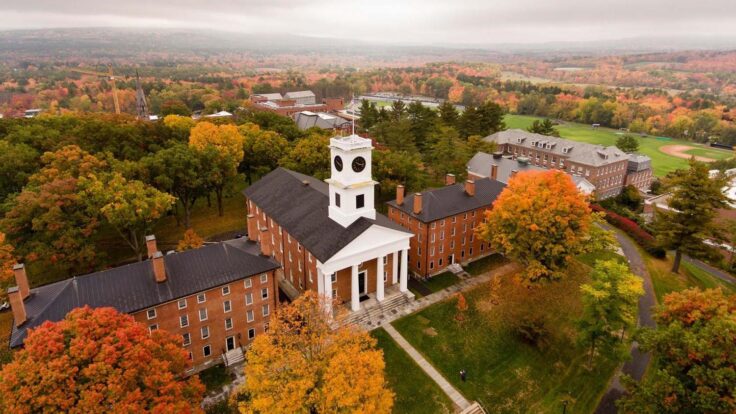
In many ways, places like Amherst had lost their way, but they didn’t know it. If you wanted to talk about racism, Amherst was a fine place for you, long before Trump. If you wanted to denounce capitalism, Amherst was a fine place for you, long before Trump. If you wanted to talk about the white working class, Amherst was not such a fine place for you — because you’d have to look long and hard for people who cared about the white working class.
American higher education, even small colleges, is hierarchical. Colleges and universities in the United States were much more collegial than they are now. I’m not talking about a golden age when everything was great, but let’s be honest — teaching is undervalued in most places. You want to get a job offer? No one’s going to give you a job because you’re a terrific teacher. They’re going to give you a job because you wrote something. That’s fine, but it speaks to a certain kind of values.
So, we were ripe for the picking. And then Trump comes along. What could be better to have as a target? His brand of politics is so interesting, because he targets the powerless — immigrants — and the powerful — he goes after law firms and prestigious universities. What he’s done to American higher education is both dreadful and a kind of slap in the face that may have helped higher education in the United States.
The horrors are unspeakable. But before Trump, if I asked most of my colleagues to explain the difference between academic freedom and freedom of speech, they could not do it. Now, at least, there’s a conversation about what academic freedom is and how to protect it. My hope is that out of the crisis will come something good — a renewal, a regeneration, a recommitment, a recentering of values. How’s that for optimism?
T-i: What can be done, at both the national and the local level, to minimize this harm?
AS: We need alliances, not enclaves.
I’ll give you an example. I was very involved in getting the college to add something to its commitment to academic freedom. The commitment to academic freedom has been, in effect, “The institution won’t punish me.” I said, “That’s fine, but I’m not worried about the institution. I’m worried about threats from the outside.” And the college changed its statement on academic freedom.
It’s the same thing as we think about rebuilding democracy. If you say, “Oh yes, we’re the pure, we’re the just, we’re the righteous.” Why should anybody come to the rescue of American higher education if the attitude is, “Well, what have you done for me?” The next thing I wanted to do was to get the faculty to vote on a democracy resolution. It’s not that we stand for something only when it benefits us. Democracy is essential to education, but our commitment to standing up for democracy is not just so that we’ll live more comfortably. The more that all of us can be seen to be committed to things that don’t just benefit us, the better off we’ll be.
T-i: Why do you think the motivation toward building alliances is still so low?
AS: In the United States this has been going on for a decade, and many people are just beaten down. Others are afraid. Others just want to turn off the noise and take their kids to the skating rink or the library. We know the way this works, and Trump has been pretty good at it. It’s like when your roof is leaking — but it’s leaking from nineteen different places. You put a bucket over here, and then it leaks over there: you are tired of moving your bucket around the house.
I think politics at this moment requires navigating between fear and faith: fear in what I see, faith in what I cannot yet see.