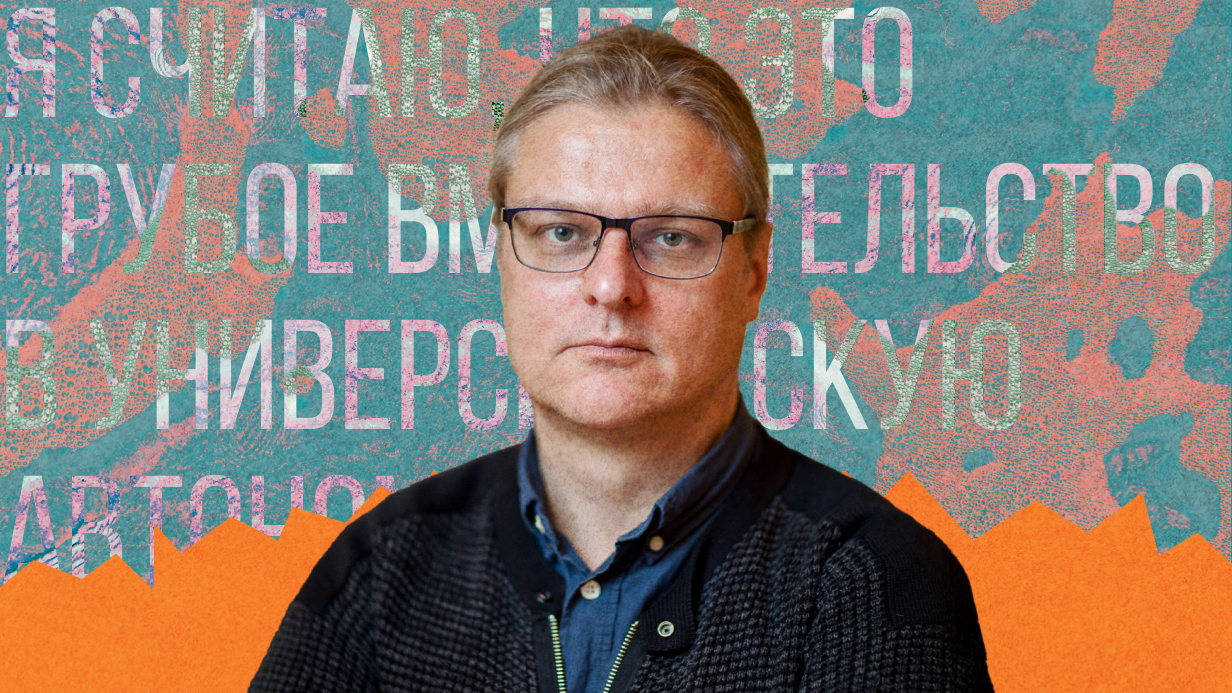
The DEI (diversity, equity, and inclusion) policy and Trump’s actions to eliminate such initiatives are sparking heated debates among scholars. Some see DEI principles as the politicization of science, a form of censorship, and a violation of meritocracy. Others strongly disagree. T-invariant spoke with sociologist and historian Dmitry Dubrovsky about how DEI mechanisms worked in the United States, why they face so much criticism from the academic community, whether inequality still exists in academia, and what Trump’s policy on inclusion and diversity will lead to. We also discussed why Russian scholars need support in Europe and what difficulties they encounter.
Editor’s note
Recently T-invariant published an interview with Gamow Prize winner, Professor Anna Krylova of the University of Southern California. Among other things, she said that DEI policy reminds her of Marxist methods and that instead of fighting discrimination it creates it. The interview with Dmitry Dubrovsky is largely a response to those claims and a polemic with them.
T-invariant: What is your attitude toward Trump’s policy on DEI?
Dmitry Dubrovsky: I consider it a crude interference in university autonomy. It is direct pressure and the use of federal financial levers against American universities — something they had hardly experienced since the McCarthy era. Even then, the pressure was of a different kind: the endless search for communists in the university environment.
T-INVARIANT REFERENCE
Russian historian and sociologist, Candidate of Historical Sciences. Research fellow and lecturer in the Boris Nemtsov Academic Program for Russian Studies at Charles University in Prague, research fellow at CISRUS (GWU), and professor at the Free University. Research interests include academic human rights, human rights in authoritarian countries, freedom of speech, and hate speech. He is also chair of the European Committee of RASA — the Russian-American Science Association.
I believe Trump’s policy will harm not only the universities themselves. The xenophobic message embedded in Trump’s policy toward universities is clearly read by people who identify with minorities within them — any minorities that previously enjoyed DEI protection: women, LGBT communities, African Americans, Native Americans, and so on — as aggressive and directed against them. This is already affecting, and will continue to affect, their level of activity and academic engagement, that is, the atmosphere that is extremely important for any university and for any scientific institution in general. At its core, DEI was about creating a comfortable, supportive environment that encourages and develops human diversity in academia.
Why DEI principles were necessary for the academic environment
T-i: There is an opinion that the fight against DEI does more harm than the excesses of DEI in the form in which it was implemented.
DD: A common explanation for what Trump is doing is that it is a response to DEI excesses, as if responsibility lies with both sides. To me, that idea looks strange; it vaguely resembles the notorious rapist excuse “she was asking for it by wearing a short skirt.” When talking about DEI, we must remember that it exists in different forms and is embedded differently in the system of modern American and European universities. People who talk about it often, it seems to me, are poorly familiar with the overall situation in American universities — that is, they know one particular university well, but not the big picture.

The principles of DEI in their modern form were implemented into the existing system relatively recently. This implementation began in the 1980s–1990s, with the specific case heard by the U.S. Supreme Court in 1978 — the Allan Bakke case. The famous Justice Lewis F. Powell Jr. ruled that race should be taken into account in admissions to educational institutions, but only as a limited factor, as one factor, and that setting specific quotas was unacceptable. In other words, as early as then, quotas — selecting people according to certain racial, ethnic, or other characteristics — were declared illegal. In short, it is simply incorrect to accuse DEI of promoting quotas as policy.
EARLIER ON T-INVARIANT
Selection of the Best vs. Academic Equality: Why DEI Practices Do Not Take Root in Germany (in Russian)
Not Only DEI and DOE: How Trump’s Policy Is Destroying American Science (in Russian)
From that moment, several forms of DEI implementation in universities emerged, depending on the type of ownership — public university, private, and so on. Roughly speaking, until 2023 the situation was as follows: the more state participation in a particular university, the more state bureaucracy there was. The more state bureaucracy there was, the greater — shall we say — the bureaucratic zeal in implementing various policies, including DEI.
According to colleagues’ estimates, bureaucratic requirements regarding DEI were significantly inflated. When real policy is replaced by various kinds of tokenism and bureaucratic simulation, it can and should be criticized, and the question of the effectiveness of certain practices has always been discussed. But, you see, you can’t throw the baby out with the bathwater. The idea of the effectiveness of specific actions is not identical to claims that all these actions and the entire policy toward which these quite legitimate actions are directed are a priori wrong.
For a significant number of conservatives, even before 1978, the very idea of helping underrepresented groups seemed a violation of meritocracy. It’s not even about DEI — it’s that they fundamentally believe everyone already has equal rights. But that is simply not true.

Still relatively recently, in the 1950s, African-American Clyde Kennard, a Korean War veteran, tried to apply to a college in Mississippi. He was not only denied but had a criminal case fabricated against him. Only in 1964 was the Civil Rights Act passed, which formally — legally, not factually — prohibited racial discrimination in educational and other institutions. The first African-American children attended white schools under the protection of the U.S. National Guard because many racist-minded parents protested. That is why we must remember that today’s students are the children of those children — only the second or third generation.
We must clearly understand that critics of DEI fail to take into account that, for both women and ethnic minorities, there exists inherited inequality, including in access to higher education.
According to Russian studies, having parents with higher education significantly increases the chances of university admission. This can partly be explained by the fact that higher education is “inherited” as a habit and value, as something taken for granted. In the U.S., the gap in access to education is exacerbated by the “racialized poverty”: for a long time, being poor and belonging to the African-American community were simply synonymous. This is still strongly felt, for example, in the different levels of school funding in different districts. In this situation, one cannot say that everyone has equal conditions for university admission.
In Russia, a similar situation would arise if we assumed that children from low-income families in a small regional town and children of high-earning parents in Moscow have the same chances of entering MSU. They do not. A person from the regions has to invest in tutors so that the child reaches the required level of knowledge, while a student at a good Moscow school does not need that. It’s just that in the U.S., this situation is exacerbated not so much by regional as by racial inequality. In 2023, the U.S. Supreme Court ruled that race should not be taken into account at all in university admissions, even if the factor plays a limited role. In particular, discussions expressed the opinion that equality has supposedly been achieved and that previously approved measures, including by the Supreme Court, are no longer needed. In public universities, DEI programs were rolled back, partly because the Trump administration threatened to withhold funding. Many private universities retain this practice; they consider it important, for example, in evaluating faculty competence. At the same time, in most cases it is not and never has been decisive.
Top news on scientists’ work and experiences during the war, along with videos and infographics — subscribe to the T-invariant Telegram channel to stay updated.
Yes, in some universities the DEI statement was a mandatory document that was reviewed before moving on to professional qualifications. Thus, at the University of California there was a situation where this document was requested even before reviewing the academic dossier. This sequence provoked strong criticism, with which one can agree. Obviously, this is wrong — in this case, the cart is put before the horse. Such an approach can lead to discrimination against those who, for example, believe that their personal history is irrelevant to hiring or university admission. However, completely excluding the importance of multicultural experience and possible inequality on this basis alone also seems wrong.
At the same time, such a situation did not exist in most universities. There, academic achievements were evaluated first and only then DEI. Moreover, these diversity preferences were often related not to ethnic affiliation but to a person’s skills and experience. For example, they worked with underrepresented groups or in Asia or Africa. This would be a plus to other achievements that would be calculated by the HR committee. That is, in most cases the DEI statement was one of the factors taken into account along with the others. There is logic to this: if we want to see diversity in the university, it should employ different people, as well as people who have experience working with different communities.
DEI is not a single practice implemented in all universities; it looks different in different institutions. Moreover, DEI was not directly related to hiring; these departments did not participate in it. What did they do? For example, together with HR they developed guidelines for HR committees. Suppose certain requirements for their composition — it is logical that if there are only white men over 50, questions arise about how much they themselves, as a committee, value diversity. They also worked on recommendations on how to write job advertisements so as not to discourage candidates from groups that are underrepresented. That is, we are talking only about elements of what is called affirmative action, positive discrimination. This does not negate the criteria of scientific qualification. There were no documents stating that 20% of these, 10% of those, and so on should be hired. That is not true. Simply, all else being equal — and this is the most important thing — diversity factors were also taken into account. A person was not hired just because they were African American.
But if two people with absolutely identical academic metrics apply for a position — which is rare — the one who belongs to underrepresented groups gets an additional plus. I have experienced this in several projects. Of course, I was upset, but on the other hand, I understand the fairness of such decisions. Because, all else being equal, the person who achieved the same success with initially fewer chances certainly deserves greater support.
The current situation is bad because, on the one hand, it interrupts a process that, despite all its limitations, was going quite well. DEI was criticized, but we are not talking about mere excesses but about bureaucrats hijacking the agenda. That is always bad: if you want to ruin a cause, give it to bureaucrats — they’ll manage that. On the other hand, it is a clear message to people in American universities — both faculty and students — about exactly how the current government perceives them.
There is no need to demonize DEI, to equate it with Soviet party committees, and so on. When people compare DEI with Marxist-Leninist ideology, I can only smile because these are different things. There is a term Reductio ad Hitlerum — when something is discredited by comparing it to Hitler’s or the Nazi regime’s actions. This is Reductio ad Soveticum — when people equate DEI with practices that existed in the USSR and then attack it with fervor.
T-i: Why is DEI policy not at all like the practices that operated in the USSR?
DD: The Soviet Union didn’t give a damn about real equality. True, representatives of minorities were allowed by quota to enter certain groups, but inequality in vertical mobility was obvious. The Russian language was the default main language, and Russians were the privileged nation. To pretend that this was not the case and that there was equal competition is simply to lie. And Soviet universities had their own priorities. Of course, they accepted people on assignment from Soviet republics, but mainly on the direction of party committees and other quota groups that were considered priority for Soviet society. Comparing DEI with Soviet practice is incorrect at every level, not to mention that the U.S. is still not the USSR: there is no authoritarian apparatus, no repression. There were no legally sanctioned racial quotas in the U.S. after 1978, as I said above.
To a certain extent, the assault on DEI is not so much ideological action — although it is ideological too — as the implementation of the general conservative-liberal agenda called “we are already equal.” There is formal equality, and everything else is communism; that is, any help or support for people who are initially in an unequal position is equated with it.
T-i: How relevant today is the issue of discrimination in science against members of various groups — for example, women or ethnic minorities? There is an opinion that it no longer exists and that more pressing problems need to be addressed.
DD: In 2023, when Trump effectively declared DEI a violation of justice, racists and misogynists, of course, howled with joy. And people who had problems perceived it completely differently — that the state authorities and the U.S. Supreme Court don’t care about reality. And the reality is this. Regarding gender equality in the U.S., the situation is really not so bad, but the vertical gap remains. That is, at the level of faculty and students the gender ratio is fine, but the higher we go, the fewer women there are. In Europe such a situation is impossible — there is no such vertical gap. There are many female deans and rectors. But in the U.S. there are dramatically few. Why? If you ask a conservative, he will say, “you know, they’re men, they’re so skilled and smart.”
I also looked at the latest figures for other groups, and they really impressed me. I’m not talking about LGBT — the situation there is completely bleak, because actual persecution have already begun, similar to those in Russia. But it is assumed that with cultural diversity in the university there should be the same cultural diversity in the faculty. But that is not the case. I worked at Columbia University for three years and met only one African-American professor there. I do not believe this reflects any deficiency among African Americans. Not at all. This gap is the biggest problem.
Overall, the number of students and faculty from underrepresented groups has increased since the 1980s — then it was no more than 25%, now up to 50%. At the same time, among faculty alone, for example, African Americans are only 7%, and underrepresented groups overall are 23% of the total number of faculty. This does not look like a situation of real human diversity. Nor does it look much like the situation that conservatives constantly write about — that universities are in the hands of “wokeists” and poor whites are “discriminated against.” I would describe such statements as “modest racism” [Rus. скромный расизм; a notion partly akin to colorblind attitudes. — T-invariant]. Yes, it is modest racism — to claim that white men have no privileges at all, they are just “such great guys,” and others “objectively can’t measure up, what can you do.” That is, conditions are created in which equality is understood as a situation “here and now,” for example, on an exam. And a person’s background, social experience, and potential are not taken into account. Not to mention that in some cases the modest racists are precisely the members of admissions committees who influence candidate selection, not necessarily on the basis of objective criteria. As a result, potentially talented students are left out.
DEI principles were a way to slightly correct this situation, and they worked — of course, not always and far from as effectively as we would like. The other question is that in such cases one must act carefully, under control, and in some places the “bureaucratic enthusiasm” should have been moderated. But that in no way means that the idea itself should be killed, and by methods that can only be called an assault on American universities.
With DEI policy, it was possible to increase the number of students from underrepresented groups. It is difficult to get into universities from bad schools; in the U.S. there are programs that, through DEI, help students reach the required level. But once inside the university, there are not enough programs. For example, the PhD is a very tough system; for 6–7 years before completing the dissertation a person lives on pennies and works multiple jobs. This requires significant support, and the candidates themselves must understand that they have a future. But they look around and see that people from their group do not become professors. DEI departments also provided assistance to people with mental health issues, language difficulties, and so on — a kind of social support service for people with different needs. And they really helped, as far as I know.
T-i: And how are things with programs similar to DEI in Europe?
DD: The U.S. in this regard is moving strongly away from general trends; in Europe all these institutions are becoming ever more entrenched, and nobody is planning to abolish them. That is precisely why Trump and his fans accuse European countries of human rights violations. In Europe everything is a little different: the focus is on gender equality, powerful anti-discrimination legislation implemented, among other places, in the higher education system. There it works not through the logic of equality but through the logic of anti-discrimination, which also includes what is called positive discrimination. European communities are actively working not only to support diversity but also to maximize the equalization of opportunity.
Up-to-date videos on science during wartime, interviews, podcasts, and streams with prominent scientists — subscribe to the T-invariant YouTube channel!
There is nothing wrong with these tools if they are used carefully. Europe’s experience clearly shows this, for example, how effectively gender policy works there — we see much greater representation of women at all levels. And this has in no way worsened either the quality of science or the quality of education — on the contrary, it has certainly strengthened it. In my view, this is exactly how meritocracy can and should be combined with a more just and diverse modern society.
Meritocracy Principles Must Be Combined with Justice, and Science Should Work for Society
T-i: How does DEI align with principles of meritocracy in science? You believe that meritocratic principles should be combined with justice, and that DEI is not a way to bypass merit. Many disagree with this.
DD: It is curious that my opponents are mostly people from STEM. I may be wrong, but that is my observation. Perhaps it is natural, since they are often also people trained in the Soviet system who went through both the Soviet Union and the crucible of the American system. It sounds like: “I walked through the jungle with predators, no one helped me, and now they are paving the road for those people.” They are right; the only difference is that no one hindered them either. At that time, Soviet scientists, especially those who left for the West, were rather treated with sympathy — which in no way negates the difficulties and challenges that wave of scientific emigration faced. It also seems to me that in STEM it is easier with strict evaluation criteria; in the humanities and social sciences the situation is different. It seems to me that in most cases we are dealing with a conflict that still astonishes me between “physicists” and “lyricists” [It is quintessential Soviet-era intellectual divide, so reminiscent of C.P. Snow’s “Two Cultures.” — T-invariant] They have largely split into camps, with the former more often opposing DEI and the latter supporting it. Apparently, people from STEM believe that strict, clear, scientific criteria should apply everywhere — exclusively. In my view, this is unfair. Perhaps if it were not for more than a hundred years of fighting for women’s rights, they would be saying that only men can do physics.
For example, in Russian schools there are still teachers who work only with boys in mathematics and physics, and no one is outraged to the degree they should be. And then we see that physicists and mathematicians are mostly men. The problem is not that women have a different kind of brain; it is simply the result of exclusionary selection. That is, only someone like Sofya Kovalevskaya can make it through such a filter, breaking through walls and glass ceilings.
I believe that meritocratic principles should be treated as important but not the only ones. Science exists in society and for society. In this sense, the participation of all social groups in science is not simply desirable but a mandatory condition. Hence, it seems to me, our difference of opinion. I have the feeling that a significant number of people from STEM do not see how their work connects to society, at least in this part. They believe that their main task is the search for truth, and for this the best people are those rigorously selected according to clear rules that seem fair from their perspective. For the social sciences it is quite obvious that society is heterogeneous, that people are not equal to each other. Those who study this society see its diversity and its inequalities, the numerous existing hierarchies, formal and informal.
Ignoring informal inequalities that we observe empirically is precisely what leads people to think that everyone already has equal rights. At the same time, even after many years of DEI work, it is clear that effectiveness varies in different places. For example, in Europe it is part of general and state policy. Everyone who applies for a grant must fill out a Gender Equality Plan and ensure equal representation of men and women. Many also consider this Marxism-Leninism. But no, it is simply that society requires proof that a person is working to promote social values, not just their own scientific work. I will say more: in a certain sense, for me science — including STEM — exists not for the search for objective truth, but for a more just and humane society. I am not sure that the search for scientific truth in itself makes sense, especially when it comes to the injustice of human lives. For example, in medicine there is strict ethics; no one will allow doctors to conduct any experiments on people. Although earlier there were objections that it was “for the good of humanity.” But that is not how it works, so such experiments are prohibited. And now no one says that this is a restriction on research freedom. Because it follows from rules that the scientific community did not establish immediately, but did establish. I think that part of the sharp reaction of part of the scientific community, both in Russia and abroad, to DEI is simply due to the fact that the rules are changing. The general agreement between the academic community and society as a whole is also changing — the academy must better meet the goals that society wants to achieve.
Meritocracy is undoubtedly important because it is the professional component, but it should and can be complemented by what is aimed at achieving more just representation of different groups. And behind this are the fates of specific people, including students, scientists, and teachers.
From my point of view, justice lies in equalizing chances in real time. For example, if a person studied in Harlem and at the meritocratic level achieved the same as a person from a good private school, it is still a big question whom it is fairer and more effective to accept from the point of view of science. They reached the same result from different starting points: the first jumped from a place from which it is difficult to reach, the second did it without much strain. Perhaps it is more reasonable to take the person from Harlem, since they initially had fewer chances. I will emphasize again that in reality there has been no quota system in the U.S. since 1978. Moreover, taking into account the social history of a particular person because of racism remains a problem. Discrimination remains a problem. Harassment remains a problem. Gender inequality persists in quiet forms; for example, on average women’s salaries are 80% of men’s in the same positions. We can talk about justice when that justice actually corresponds to the social problems that, in my opinion, the academic community’s activities should be aimed at solving.
T-i: To what extent will Trump’s policy roll back DEI initiatives?
DD: It has already set them back, but the destruction of departments has not destroyed the practices themselves. Overall, there is nothing good in such actions, even for DEI as such. The worst news is that it turns out the federal government can press a university, and the university will start doing what the federal government wants. For most American professors this is a shock, because it never occurred to anyone — even the most conservative Republicans — to put such direct pressure on universities as Trump is doing. To applaud his actions, even if one supports the goals themselves, means undermining the principles of existence of American universities. Their success — along with British institutions they are the best in the world — is largely based on autonomy from state power.
In Europe, too, pressure and influence from national governments and ministries are significant. But in the U.S. this did not exist; they rather suffered from internal bureaucracy, not external. Now, for the first time since McCarthyism, they are facing a direct attack from the government. Supporting this part of the anti-intellectual wave from within universities is shooting oneself in the foot. DEI can and should be criticized, but supporting Trump here means engaging in the destruction of the American educational dream.
The second part of this intervention is the Arab–Israeli conflict. Trump’s actions exacerbate the confrontation, because now the federal government together with the administration is on one side, and students with faculty are on the other. This is a political split. A strange thing is happening. While fighting against politicization, Trump is doing everything to make it grow and radicalization worsen. If on one side of the conflict there is state power and police, and on the other side there are students, we will get student demonstrations and another 1968, when protests were worldwide.
I have a lot of complaints about how the other side behaves; there have also been numerous violations of the principles of academic discussion, and, frankly, even calls for violence. But this does not justify interference in university autonomy, which Trump is legitimizing. American universities have always stood out for being a field of political diversity, and they must remain so.
Trump’s actions are a gross violation of the First Amendment to the United States Constitution. He declares one political position correct and protected by the state. But in this case both political positions have an equal right to exist. Protests against Israel are not calls for genocide; support for Palestine is not equivalent to justifying terrorism. This is precisely Reductio ad Hitlerum.
DEI Has Never Been an Intervention in Science
T-i: In your opinion, to what extent can the state intervene in science in general? Where is the line? For example, the Trump administration suspended several thousand grants — is it acceptable for the president’s apparatus to decide which scientists get funding and which do not? And who should decide this?
DD: Everything here is quite clearly spelled out. There is a legal boundary, the legal framework established by the Supreme Court for academic activity. And there is self-determination, self-regulation within universities. It is based, among other things, on the 1940 Statement of Principles on Academic Freedom and Tenure of the American Association of University Professors (with 1915 origins and 1940 amendments). It states that there are limitations to academic freedom in research. For example, if research is conducted with funding, the conditions for using the results are determined by the funder. And if the state considers something secret, you will have to sign an NDA and not tell anyone. In everything else, intervention in science should be minimal.
At the same time, it is difficult to consider DEI an intervention in science. There are reproaches that this policy has led to a bias or greater focus on research in the field of diversity, discrimination, etc. But the fact is that there simply used to be few such studies. In a situation where there are few studies of a certain kind, if money and opportunities suddenly appear to conduct them, of course there will be more of them. Roughly the same can be said, for example, about genetics — why are there suddenly so many studies in this field? Because new areas appear and many want to work in them.
Suspending scientific grants by President Trump, a man who confuses “transgender” with “transgenic” mice, can hardly be justified. If someone believes that certain research is not scientific but ideological, this should be evaluated by the independent academic community, not the State Department.
Usually that is exactly what happens. But Trump is destroying the national institutions that handle grants, putting strange people there who cut funding for everything containing the word diversity, and it looks like they are simply searching the database for the word. It is hard to even call this bureaucratic evaluation — it is an assault, a blacklist of certain words, an ideological reprisal. Here it has come, and it has nothing to do with DEI. Trump, on the grounds that he is supposedly correcting “this damned wokeism,” is engaging in the most genuine ideological repression against scientists.
T-i: Indeed, one often encounters the opinion that research related to DEI has nothing to do with science. How close is this to the truth?
DD: Most often this is again said by colleagues from STEM, and this also surprises me. Let me say that research in theoretical physics is not scientific; it is pure speculation and a game of the mind. I have every right to say so; it will be my opinion, but it has nothing to do with physics. The same applies to the opinion of STEM colleagues on research in social relations outside their area of professional competence. Research related to DEI can be different, like any other. One can find bad ones with poor design — any trend has unpleasant consequences, and a certain number of people will cut corners. But this is a matter of professional evaluation, not ideological.
No one has ever evaluated article texts on ideological grounds; this is done from the point of view of professional quality. For example, a study claiming that all African Americans are less intelligent than whites will not be accepted not because of ideology or ethics, but because of the author’s professional incompetence, since such a result could not emerge from a study with proper design. If a person is a historian who says the Holocaust did not happen, they will be fired not because of ideological differences, but as a failed scientist. This is already a propagandist or an amateur with inadequate training, but not a scholar-historian. For example, colleagues once sent me an article that was retracted from a chemistry journal. It claimed that any DEI is inherently a violation of meritocracy. The authors considered the retraction censorship, but any opinion must be proven, and there was no evidence or analysis there. In a science-communication article a person can express an opinion, but in a scientific one there must be weighty arguments. I had a different question — how did it even pass peer review for publication in a chemistry journal? If it had been sent to a social-science journal, I think it would not have been published at all. This does not mean that there were no abuses in DEI-related research — in public debate they are inevitable. But this should be regulated by the professional community, as it was before, based on professional criteria. And opinions should be published in popular-science journals devoted to controversial issues.
Political Climate in Universities and the Culture of Consequences, Not Cancellation
T-i: Data from some surveys show that in the American academic environment there is an imbalance toward left-wing views, and a large part of professors are located in the radical part of the left spectrum. How reliable are the data from these surveys? And if so, why did this happen and how should it be evaluated, in your opinion?
DD: The dominant logic of American universities is undoubtedly left-liberal. It seems to me that one of the reasons is that any intellectual thought is critical of the mainstream. And universities are a place for critical reflection on everything that happens in the world, including politics, society, and culture. American society has long been — and to a large extent remains — conservative-Christian. To evaluate it, one must distance oneself from it, be a liberal, preferably of the secular type. For example, anti-racist policy also originated in universities when racism was dominant in society. The main people who stood in its way have always been university intellectuals. I think that in the late Soviet Union, for the same logic, most faculty had anti-communist sentiments. American science has always been in conflict with someone; in the nineteenth century mainly with the church. Now in some schools evolution cannot be taught again because there is creationism. In some Trumpist states that, like Russia, fight for traditional values, abortions cannot be taught in medical schools.
Overall, the main creators of legal practice in the U.S. related to academic rights and freedoms were communists. Their persecution in the 1950s turned into the first case in the Supreme Court — Sweezy v. New Hampshire in 1957, when the question was whether a professor could be punished for refusing to talk about his political views and party affiliation. This is where the paradox of American freedom comes from — in the U.S. there is a logic of separating the professional from the ideological. The professional from the civic, if you will. If a person’s ideological views do not interfere with his work, no one will fire him from the university. For example, at Northwestern University there is an electrical engineering professor who is a Holocaust denier — and he works. Outside the college he writes endless books claiming the Holocaust is a fiction, but he does not discuss it in lectures and sticks to his subject. There were attempts to dismiss him, but they were unsuccessful — because his personal activity in this case has nothing to do with teaching. This is not the situation where a historian denies the Holocaust, which directly concerns his professional activity. Here the U.S. differs greatly from Europe, where this electrical engineering professor would have already lost his job.
In America there are norms that allow separating the position of a citizen from the position of a scholar or teacher. It seems to me that such norms should be basic. I am now also speaking in a personal capacity — I started speaking that way and continue; I’m speaking strictly in my capacity as a researcher, no other.
For conservatives, the left-liberal dominance in American academia has long been pretty uncomfortable. For example, the well-known political scientist Pippa Norris published an article in 2023 on what self-censorship looks like among conservative faculty in American universities. Their opinion is unpopular, they are afraid to express it. Not because they will be fired immediately — that is not true.
There simply exists what is called the spiral of silence, when a person adjusts their views or tries not to express them if they see that the overwhelming majority of people around them think and speak differently. There is nothing good in this; we need to find a way to encourage freedom of speech. But fighting it the way Trump does is uprooting any diversity of opinion. There is a difference between self-censorship caused by the spiral of silence and the hammer of the state crashing down on universities.
T-i: There is an opinion that the views of the academic community should reflect the views in society. If society is more centrist, then there should be no leftward bias in universities. Do you agree?
DD: Society in a normal state should not be polarized, and a university, as I believe, should be a place of more forthright positions. This is important for science because it allows testing boundaries, evaluating and re-evaluating arguments. Overall, I think academic freedom should be broader than freedom in society. Here I actually disagree with DEI departments, because they react quite sharply to things related, for example, to hate speech on campuses. Moreover, critical thinking does not imply ideological indoctrination. As conservatives see the situation: if a professor has left-wing views, he educates students with left-wing views. This is not true. From my many years of experience, students do not reproduce the beliefs and logic of professors. They are independent. They may accept it, reject it, or accept it partially. One cannot think that students are a tabula rasa: whatever is put in their head, that is what they think. This is a very right-wing picture of the world, where people are deprived of any agency. But people are independent and have agency.
I am close to the view of Henry Reichman, which he set out in his book on academic freedom. He writes that freedom from indoctrination is based on established professional standards and on the fact that the professor presents different academic perspectives on the subject. By the way, this has nothing to do with political views. There are people who adhere exclusively to one scholarly school and do not mention others. These are simply bad teachers. A good teacher must say that there are different points of view, different approaches, there is debate. There is no subject that can be taught as a single, uncontested narrative; nothing like that exists in any science. There are always disagreements, bifurcation points, different interpretations. This is the essence of science — the constant clash of points of view, arguments, research. The question is what we qualify as such a point of view. The opinion that “the Holocaust does not exist” is not part of scholarly debate. There are things that have become professional standards. This is not about ideology; it is simply bad science.
T-i: If the U.S. really maintains that separation between personal beliefs and professional roles, then surely cancel culture doesn’t actually exist?
DD: There are terms that are pejorative in themselves, and discussing them that way further affirms their legitimacy. I would call it a culture of consequences, for actions that the majority interprets as unacceptable. If a professor harasses students, at some point he may get hit for it.
This is not cancel culture; it is precisely a culture of consequences that did not used to happen but now do. Conservatives love to refer to the law, to the statute of limitations. These people think that everything outside legal procedures does not exist: either there is a crime or there is nothing. But what about ethics? The rules are changing: what used to be allowed is no longer allowed. We have to start living with that.
Professors who previously allowed themselves the unacceptable now complain about cancel culture. And those who experienced it remember how unpleasant it was; some even left academia. Now the culture of consequences is part of the overall policy to prevent such things. But even 20 years ago, when I just started working at a university, I knew that this should not be done, although I had not signed anything anywhere. However, there were a significant number of colleagues who thought differently and, by the way, continue to think so, assuring that relationships between students and professors are “relationships between adults.” Again, in most cases this does not mean that the person is expelled from the profession. There were a few exceptions in the art world, and in academia it is mainly about not allowing them near students. But the person can continue to do research.
On the question of public benefit — a teacher’s talents are not as important as the climate in the university. The university must be an additionally protected place. The world is not very safe, to put it mildly, especially for women. In a university a person should feel safe: to think about science, they should not be afraid that someone will make advances to them. If that thought exists, it prevents women from working in science and higher education, and especially from advancing upward. The university is a zone free from hatred, harassment, everything that exists outside the campus. It cannot fix the outside world, but it can certainly provide the most friendly and safe environment inside. For this, a talented professor can be fired if he combines talent with harassing women students. Here the public benefit from his dismissal is higher than from his work.
Why the European Committee of RASA Was Created
T-i: You are the chair of RASA. Tell us about its goals and objectives.
DD: Now I start speaking as the head of RASA. Everything I said before is exclusively my personal opinion. RASA is one of the surviving and transformed fragments of academic groups that left Russia after the revolution. Most of these groups disappeared. In America they survived, encountered a new wave of emigration, and created an organization that would connect Russian scientists of Soviet and later Russian origin with their homeland. For a long time that was the case, but when the full-scale war with Ukraine began, RASA rethought its role, especially in Europe. The European Committee was created for the same purpose for which the organization was created a hundred years ago — to help Russian scientists, to improve life or ease the difficulties faced by departed professors and students. Accordingly, to continue scientific and educational activities. We also engage with national governments regarding the restrictions that exist for Russian scientists in the modern European academic world.
Here I unexpectedly become a kind of Russian academic nationalist because I believe in the Russian language as a language of science and higher education. I disagree with handing it over to Putin on the grounds that it is the language of aggression and war. Of course, preserving it outside Russia is difficult because it is not the language of science and higher education in Europe and will not be in the near future. Nevertheless, we are working with several projects. We invite people to join us, we try to communicate not only with those who came recently but also with that part of the scientific emigration that has been here for 20 years or more. These are accomplished people with scientific careers; their departure was not related to politics.
T-i: Are many scientists currently leaving Russia? How open is Europe to them now? Is there discrimination against Russian scientists in European countries?
DD: I would be more cautious with this term in relation to the situation. Here it is rather not discrimination but the blanket application of sanctions and the failure to take academic migration into account as special. There is a story about how Napoleon, during the Egyptian campaign, which included scholars because he wanted to study the region, when the Mamluks attacked, commanded: “Scholars and donkeys — to the center.” So scholars and donkeys need to be protected. But EU bureaucracy and European national legislation do not consider scholars as a special group that should have privileges for obtaining visas unavailable to other Russian citizens.
There are special humanitarian visa systems for politicians, LGBT activists, civil activists. But scholars do not fall into this list, except for those who are also civil activists, like me. In a situation where a scholar wants to leave only because it is difficult for him to do science in Russia, it is difficult to do so. There is a war, there are sanctions, they are completely legitimate, but not always reasonable in terms of how they are applied and what they are aimed at. I am against blanket norms, when the logic is: we will not give multiple-entry visas to Russian citizens because there is no need or because spies use them. But spies also use airplanes, trains, cars. Let us ban all that.
The combination of sanctions and securitization, and in some places academic boycott, such as at the University of Tartu, which does not accept Russian students — although Estonia in general does not issue visas to Russians now — complicates the situation. I believe this is a strategic miscalculation. For example, not allowing students to study in the Nemtsov Master’s program in Russian studies will in no way help Ukraine’s victory, but it will hinder the reproduction of scientific and professional personnel for a future independent Russia. This is what we are trying to do, and such logic directly undermines it. It must be said that not all states agree with this. For example, Germany and France issue educational visas. But there are countries that believe this is a threat to their security. This, it seems to me, is a misstep.
T-i: There is an opinion that the emigration of scientists from Russia and their integration into Western science is practically the only way to preserve Russian science.
DD: I would say this is an exaggeration. The entire regime is to a certain extent targeted: both repression and ideology are pinpoint. Problems in science are too. That is, they are global, for example, in terms of funding, but this does not mean that science cannot be done. In terms of science policy the regime can be called hybrid. Yes, it wants to bend higher education as much as possible. If a person is a professor in the humanities and social sciences, it is a big question how to survive there. But if a scientist is doing something unrelated to the war and not of interest to the regime, he will most likely have only financial problems. Unless, of course, he walks the streets with anti-war posters — then there may be repression as a citizen, but not as a scientist.
Yes, inside there are many initiatives with which the state is actively trying to involve scientists in the war, to smear everyone with blood, but so far a significant number of people manage to officially dodge this. Post-Soviet citizens have great experience in this, passed down from Soviet scientists and professors.
In addition, there are many islands — not of freedom, but at least of autonomy — in which one can hide. And they still work. There is no total control. The authorities have neither the strength, nor the means, nor the desire to establish it. For total control a mobilized society is needed. And a mobilized society is a completely different prospect; they do not want to mobilize it. They are satisfied with activists who run around the university shouting something in support of the war. Of course, one cannot respond to them or one will get an article. Some areas cannot be properly studied: gender studies, human rights, twentieth-century history. But semiotics, theoretical linguistics, cognitive research, and so on — can be. Everything that does not concern the state’s ideological project and the war.
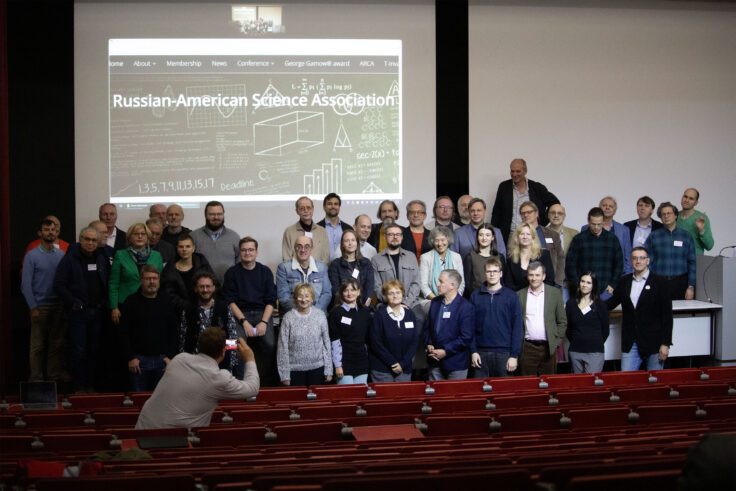
T-i: Recently the first European RASA conference took place. What is the importance of such conferences besides exchanging experience?
DD: The importance is that we looked at each other, saw one another in person, made sure how different we are. We are a community with quite different ideas, interests, and values, which is wonderful because we are a real model of academia. We have exactly that diversity. We also manage, thanks primarily to our senior colleagues, the founders of RASA, to maintain respectful dialogue on topics where we disagree. We are also beginning to develop an agenda, because for RASA this is the first European conference.
Finally, we looked at how we see ourselves. It was a kind of self-definition of the community. Our conference was a little about the success of Russian scientists. And we see that, overall, we are successful. We do not even need much help; the main thing is not to constrain us. Although help would not hurt, given the circumstances in which many find themselves in Europe on short academic positions with no future. Despite this, judging by our conference, we are quite successful and accomplished researchers from different fields: both STEM and humanities/social sciences. Scientists who have been in Europe for 10–15–20 years can already call themselves European scientists. But we cannot yet; we are Russian-background scientists working in Europe, and for us communication with Russian colleagues and mutual support in these difficult circumstances are important.