
Twenty-seven-year-old Moscow mathematician Semyon Krasotkin is accused of high treason. Investigators allege that he sent paid reactions worth a total of 2,200 rubles to Ukrainian and Russian opposition Telegram channels. According to Krasotkin’s relatives, FSB officers beat him and tortured him with electric shocks after he was detained. His is not the only such case: human rights defenders are already aware of 11 criminal prosecutions over Telegram Stars. T-invariant tells Semyon Krasotkin’s story and examines how ordinary reactions in a messenger app can become grounds for criminal prosecution.
The main news about the lives of scholars during the war, videos, and infographics are available on T-invariant’s Telegram channel. Subscribe so you don’t miss anything.
“Who Are We to Argue with the Men in Masks?”
The outlet Vot Tak was the first to report on Semyon Krasotkin’s case. In the summer of 2026, he took leave from the Institute of Control Sciences of the Russian Academy of Sciences, where he worked as a mathematician. He had completed his degree at the Moscow Institute of Physics and Technology and enrolled in graduate school. He decided to use the last few days of his vacation for a trip to Kyrgyzstan.
“He has this sort of cultural fascination with Kyrgyzstan. For some reason, he had always dreamed of seeing Issyk-Kul. It is a very long way from Bishkek — several hundred kilometers — and he spent an entire day making the trip. It was purely a tourist visit,” Semyon’s relative Dmitry (name changed for security reasons) tells T-invariant.
On August 17, Semyon returned to Moscow. In his last message to his family, he wrote that border guards at the airport had taken him aside for additional screening. After that, he disappeared. When Semyon did not come home, his parents and friends began looking for him, calling the Border Service and the Domodedovo police department. Each time, however, they were given contradictory information.
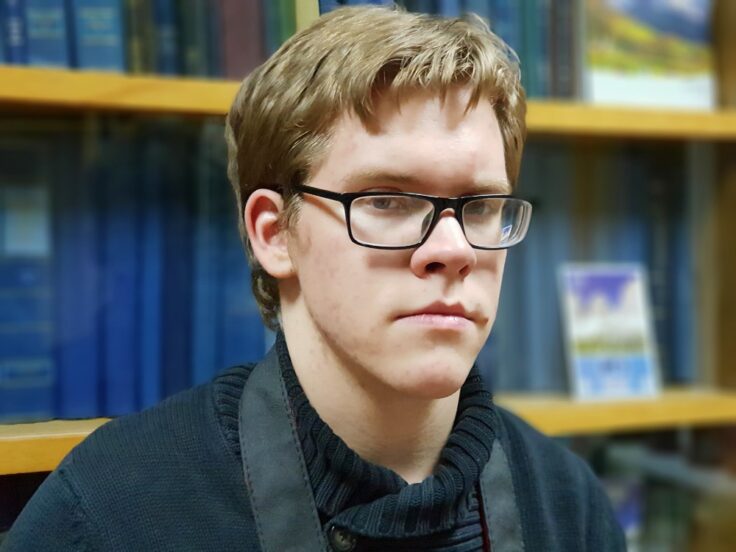
“At first they said he was waiting to be checked, that there was a long line of disabled people and pregnant women who were being let through first. Then they said he had finished everything long ago and gone home. But Semyon never made it home,” Dmitry recalls.
Semyon later told his relatives that at Domodedovo his phone had been connected to special software to inspect its contents.
“They threatened to torture him — to hook him up to electricity, break his fingers, humiliate him in various ways — but at that point they had not actually tortured him yet. They tried to force him to incriminate himself, made him record confessions in Ukrainian, and forced him to sing the song Matushka-Zemlya,” Semyon’s friend Alexander tells T-invariant.
Semyon was taken to the Severnoye Butovo police department.
“They woke him at two in the morning and threatened him into signing an administrative-offense report. The next morning he was taken to court, where Judge Svetlana Bobyleva ignored all his arguments and found him guilty of an administrative offense. Semyon was sentenced to 15 days in detention,” Alexander says.
The stated reason for the arrest was that Krasotkin had allegedly used obscene language and behaved aggressively in a public place. Fifteen days later, as Semyon was leaving the detention facility, his lawyer, parents, and friends were waiting for him. In front of them, FSB officers put him into a car and drove him away to an unknown location.
“Semyon later said that as soon as they shoved him into the car, they handcuffed him and put a sack over his head, tightening something around his neck. He began to suffocate and scream, so they loosened it slightly. They took him somewhere out in the open, attached some kind of device to his fingers and shocked him with electricity while striking him on the head with something. The entire time they kept asking: who is your handler, why did you photograph a bridge while traveling with your mother and where did you send the pictures, did you hack computer networks? Complete absurdity. Apparently the Stars were not enough for them, and they wanted to find something else. But because he had nothing to do with any of that, he could not give them anything to build a story around. It was extremely painful; he lost consciousness several times, they gave him smelling salts and then tortured him again. None of this leaves any marks, so there is nothing a medical examination can document,” Dmitry says.
For several days, Semyon’s relatives had no idea where he was. They found him at the Konkovo police department only after information about a new administrative arrest appeared on the Moscow City Court website. Another report had been drawn up against Krasotkin there.
According to Semyon’s friends, he was brought to the police station with a sack over his head. Once inside, the sack and his glasses were removed, leaving him practically blind: because of his poor eyesight, he cannot see even at arm’s length.
“And without his glasses they made him read the report and sign it. The report contained obvious errors and incorrect dates. When Semyon pointed this out to the officers, they replied: ‘Who are we to argue with the men in masks?’” Dmitry says.
That was how Krasotkin ended up in the Sakharovo administrative detention center. Only on the third day were his parents able to send him a new pair of glasses.
On September 19, Moscow’s Meshchansky District Court ordered Semyon held for two months. He is now in Moscow Pretrial Detention Center No. 3. On October 14, the Moscow City Court rejected an appeal against his detention. The judge also denied all defense motions and declined to consider the materials submitted — including a video that, according to his relatives, shows masked men bringing Semyon to the police station.
On October 18, a criminal case on charges of high treason was opened against Krasotkin. The maximum penalty under the article is life imprisonment.
A Doctor of Biology in the Next Cell
For now, the investigator is not allowing Semyon visits or phone calls. He communicates with relatives and friends by letter.
“The prison is in a very fancy part of central Moscow, right next to Zvenigorodskaya station on the Rublyovo-Arkhangelskaya line — the name alone says it all — and near Delovoy Tsentr, where all those Moscow skyscrapers, Moscow City, are. The prison is surrounded by expensive new apartment towers, while Semyon has, as it were, managed to settle in this elite neighborhood for free, in a historic building. He is now on the third floor, cell 313, on the upper bunk by the window. He writes that all day long he watches us rushing around in our daily bustle — pouring out of the metro, going to Dixy, living our lives day after day,” Semyon’s father, Alexander Krasotkin, wrote on social media.
According to his father, Semyon is in a 12-person cell with nine other prisoners.
“Everyone around him is decent, charged under similarly serious articles. He writes that they were treated even worse; their stories shocked even him. On the prison roof there is a covered exercise yard. There is some equipment, like pull-up bars and parallel bars. There are even table-tennis tables, and people invite him to play — he is pretty good. On walks he met another mathematician, then a physicist, and it turned out there was a doctor of biology in the neighboring cell. Such ‘dangerous criminals’ are not allowed into the gym,” Krasotkin wrote.
Semyon is trying to keep his spirits up, but he has run into a serious problem with books: without them he cannot continue his scientific work.
“The library is not operating, and they do not accept books in hand-delivered packages. Books that arrive by parcel are not given to him. The specialized stores that have latched onto the prison system do not carry the books he needs. I honestly do not know what to do, let alone how to make this work on a regular basis,” Dmitry says. “Semyon wants to do mathematics, continue his research, and even keep studying in graduate school, but without books that is impossible. And it is not clear how any of this could be arranged — whether the university would agree, whether his supervisors would, whether the detention center administration would allow it. So if anyone has ideas, they should try to make them happen or tell us what can be done.”
Mathematician and Wikimedian
Semyon was born on July 13, 1999. He worked as a mathematician at the V. A. Trapeznikov Institute of Control Sciences of the Russian Academy of Sciences and, over the past three years, became a co-author of 15 publications.
“Broadly speaking, he worked in pure mathematics,” Dmitry recalls. “He also administered and served as lead developer of an internal scientometrics project at the institute. For his thesis, if I understood correctly, he planned to work on the problem of complexity in artificial-intelligence tasks. He had previously applied AI to cybersecurity problems at one of the companies where he worked, and there were even registered inventions associated with that work. He wanted to pursue pure theoretical science — research, mathematics.”
Current videos about science during the war, interviews, podcasts, and streams with prominent scholars are available on T-invariant’s YouTube channel. Become our subscriber!
“Semyon was one of the leading journalists, a managing editor, and an administrator of Russian Wikinews. He has thousands of his own news items, reports, and interviews published under his main pseudonym, as well as thousands of pieces by other journalists that he reviewed and published. He also had his own bots that automatically imported stories from other outlets distributing their material under open licenses. The site largely ran on him. The Wikimedia Foundation shut down Wikinews at the beginning of this year, so no one works on it anymore,” Dmitry says.
Semyon also writes and performs rap in a group he formed with friends.
Semyon’s father, Alexander Krasotkin, was also an editor at Russian Wikinews. The young man’s grandmother is Ukrainian children’s poet and primary-school teacher Nadezhda Krasotkina.
A Dangerous Currency
Telegram Stars appeared in August 2024. They are the messenger’s internal currency, allowing users to support channel creators by sending paid reactions to posts or gifts. Stars can also be given to friends and exchanged for cryptocurrency.
Paid reactions have one important feature: by default, information about the sender is visible to other users. When someone sends Stars, their profile is automatically added to a public leaderboard. To prevent this, the user must manually uncheck “Show me among top senders” each time.
This means that FSB officers need only examine public Telegram channels, where the “Top Senders” section shows the names and profiles of users who have sent Stars, notes Sergei Davidis, head of the Memorial project Support for Political Prisoners.
“These Stars can be visible without anyone gaining access to the device. The catastrophic problem is that the compromising information is publicly available. No special tricks are needed — not even access to the device — to document something that can later become grounds for criminal prosecution,” Davidis says.
According to human rights defenders, 11 criminal cases involving Telegram Stars are currently known. The first appeared in September 2025. Investigators allege that Yelena Bulgakova, a 65-year-old pensioner from Vladivostok, sent 451 paid reactions to 74 posts on the Freedom of Russia Legion channel. In total, she spent 1,160 rubles and 57 kopecks on the Stars.
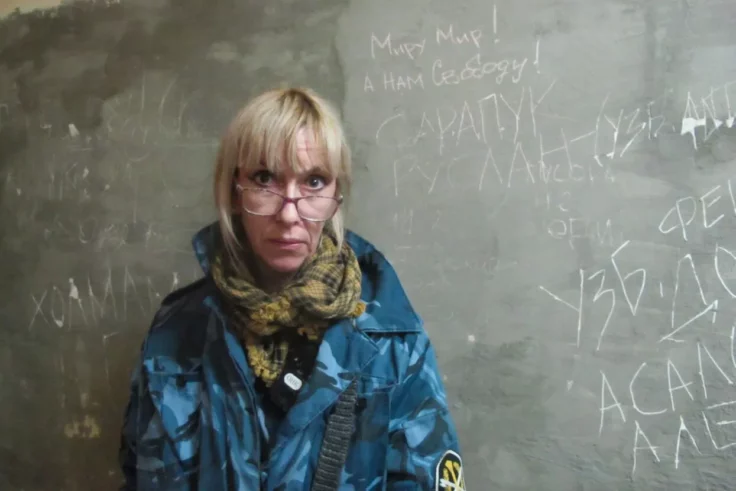
“First she wrote online, ‘Eternal memory to the hero Ildar,’ on the day Ildar Dadin was killed while fighting on the Ukrainian side. She was arrested over that and accused of justifying terrorism. Then, once they had her phone, they began searching through it. They found that she had sent Stars under some posts by the Freedom of Russia Legion. And this poor woman, a pensioner, was sent to prison. She has been there a long time now and is losing her eyesight. It is all very grim. Two more cases were opened against her — for high treason and for financing terrorism. So she is now facing three separate charges, and her prospects are extremely bleak,” says Anna Karetnikova, a member of the Memorial project Support for Political Prisoners.
On July 16, 2026, 17-year-old Dmitry Skripkin from the Kemerovo region was sentenced to four years in a juvenile correctional colony for paid reactions under posts on the Telegram channel of an unspecified “banned organization.” Because Skripkin is a minor, he received the minimum sentence under the article on financing terrorism, Karetnikova notes.
Eight Years for 292 Rubles
There is no direct relationship between the amount spent on Stars and the length of the sentence. For law enforcement, what matters is the very fact that a paid reaction was sent.
Galina Umyarova, a 60-year-old pensioner from Domodedovo outside Moscow, is accused of financing terrorism for sending 100 paid reactions worth a total of 219 rubles.
“It is the kind of case where it is hard to imagine that the woman deliberately put these Stars under political posts, because nothing in her background points to that. She kept a huge number of cats, raised quail, looked for discounts on social media. And she really did have these Stars — she liked everything,” Karetnikova says.
Mikhail Antonovich from Tyumen was sentenced to eight years in a maximum-security penal colony for sending paid reactions worth 292 rubles and 99 kopecks to opposition Telegram channels.
According to the prosecution, Antonovich was an active participant in Telegram channels including NEVZOROV and Nakipelo. Michael Naki, which investigators claimed engaged in “terrorist propaganda and media support for terrorist organizations.” Investigators treated the Stars he sent as financing terrorist activity.
“He put Stars under completely ordinary posts on Michael Naki’s channel that had nothing to do, for example, with fundraising for the Ukrainian Armed Forces. But that did not stop law enforcement at all. The Antonovich case showed us how they interpret this: if a channel publishes anything of that kind at all, then a user who sends a Star under any post is presumed to be trying to help terrorists. That is deeply troubling, because if you simply send a Star to a channel you like, you do not read every one of the millions of posts that have ever appeared there. This is dangerous, and it is reasonable to expect the practice to spread,” Karetnikova says.
Human rights defenders say the number of criminal cases over Telegram Stars will only grow.
“There will be more cases. There is absolutely no doubt about that. These cases are much easier to investigate. They do not even have to get into the phone. It is enough to open some banned channel and see who left a reaction,” Davidis says.
“That is how the system works: they need to put someone in prison until they are told to stop. The target is whatever number was caught last year. If three opposition supporters were caught in some Chukotka Autonomous Okrug last year, then three have to be caught this year too. If you catch only two, you will be punished. So they will have to invent a third one somehow — find someone, provoke someone,” Karetnikova says.
According to Karetnikova, the Freedom of Russia Legion and the Russian Volunteer Corps disabled paid reactions in their Telegram channels after the first criminal cases appeared. The feature remains available in other channels.
At the end of September, human rights defenders addressed an open letter to Telegram founder Pavel Durov, asking him to make the sending of Stars anonymous.
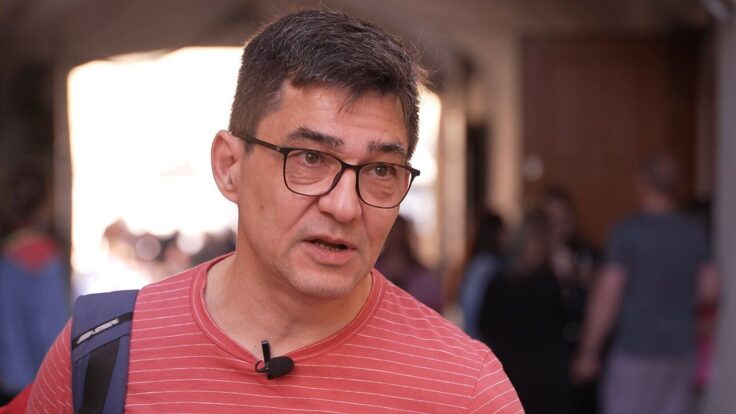
“It is possible to make these Stars anonymous. Or at least to do so in certain regions. Channel owners could be given the right to enable anonymity in their channels, or users themselves could be allowed to make all of their Stars in a channel anonymous. There are many options. And because people have already made donations in the past, it is important to give them — or channel owners — a way to hide that information retroactively. These are a set of technical ideas. There may be others as well,” Davidis says.
At the time of publication, Telegram had not publicly responded to the human rights defenders’ appeal.