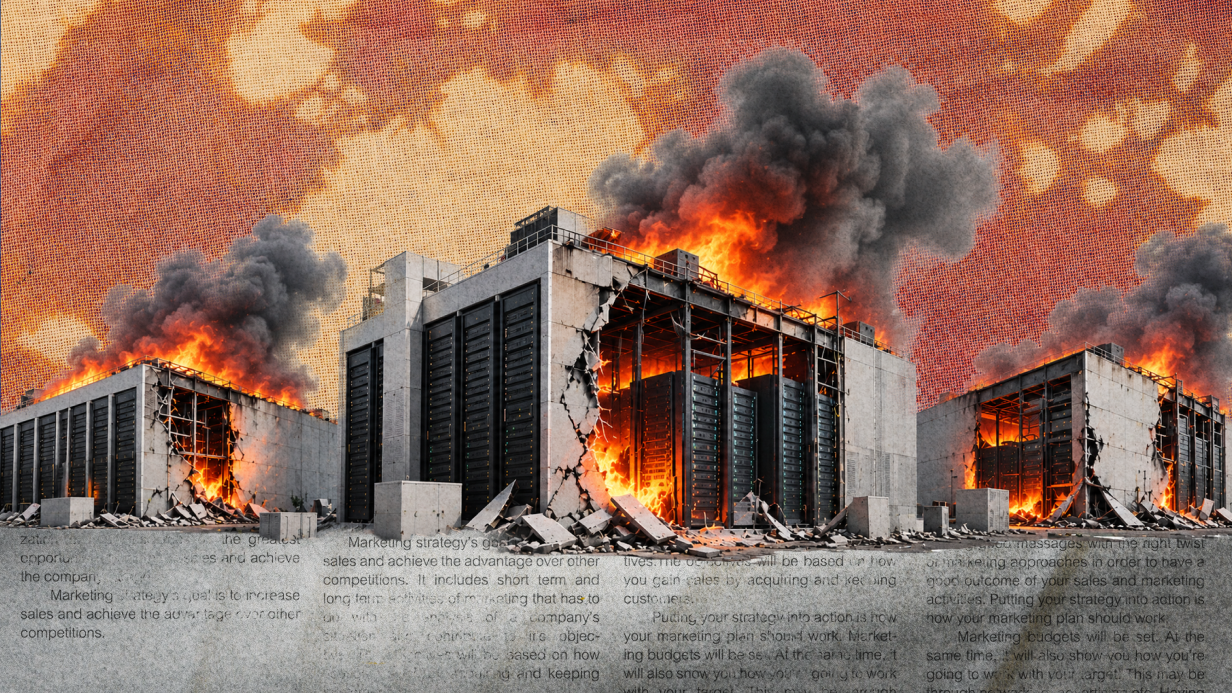
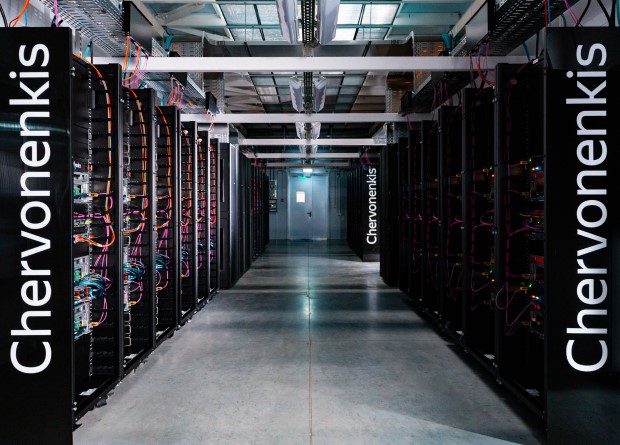
The “forced digital detox” delivered by Ukraine’s Armed Forces has hit the most profitable part of Yandex’s business: search and AI. The long-term fallout from the attacks on the company’s data centers has yet to be assessed, but supercomputing experts consulted by T-invariant are confident that all three of its supercomputers — Chervonenkis, Lyapunov, and Galushkin — were badly damaged by fire and smoke. Soot and ash may have reached the machines’ microelectronics through their direct free-cooling systems, which use outside air. In the best case, cleaning them will take many months; in the worst, Yandex will have to buy new, extremely scarce NVIDIA chips or their equivalents, which will take years. The company owns Russia’s best supercomputers, which, according to its financial reports, had recently become key drivers of its growth. On the eve of the full-scale invasion of Ukraine, Chervonenkis ranked 19th on the global Top500 list of supercomputers, competing with leading systems from the US, China, Japan, and Germany. After the Ukrainian drone strikes, Russia risks falling behind Kazakhstan in the performance of its top supercomputers as early as November.
Top news on scientists’ work and experiences during the war, along with videos and infographics — subscribe to the T-invariant Telegram channel to stay updated.
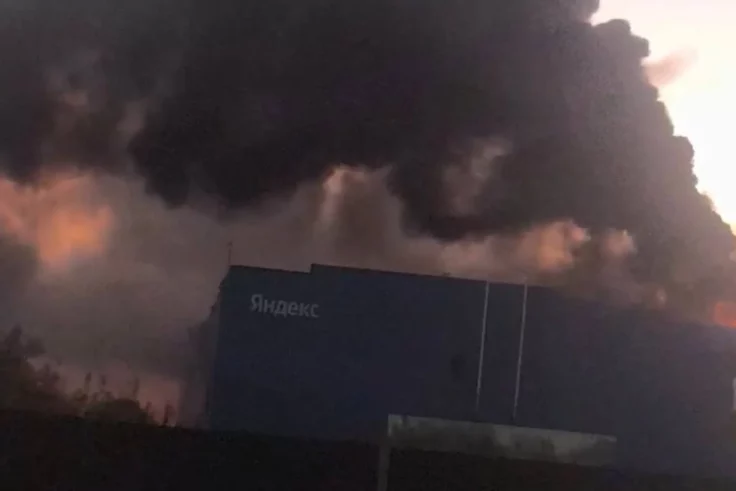
All three of Yandex’s supercomputers have been knocked out of service indefinitely by drone strikes on the company’s data centers. The first attack came overnight on October 8 in Sasovo, in the Ryazan region. That site houses Chervonenkis, the IT giant’s flagship machine and the most powerful of Russia’s publicly listed supercomputers, as well as Lyapunov, the third most powerful. The following night, Ukrainian forces struck the data center in Kaluga — Yandex’s largest and one of the biggest in Russia. Overnight on October 11, a data center in Vladimir, home to the Galushkin supercomputer, came under attack.
Four specialists interviewed by T-invariant are confident that the company’s computing capacity has suffered serious damage. In their view, the main reason the equipment was so vulnerable to the drone strikes and the fires that followed is the direct free-cooling system, which cools the equipment with outside air (supply fans push the air through filters, and it then flows through the server racks).
Even if the fire didn’t spread to the supercomputer racks directly, air laden with soot and ash could have reached the server boards, and the finest particles could have settled on the board substrate (a lot also depends on the condition of the filters). Carbon conducts electricity. Because the traces on the boards are packed so densely, these particles can act as conductive “bridges” between contacts, causing widespread short circuits and burning out motherboards. What’s more, combustion byproducts can corrode conductors and contact joints.
In the summer of 2026, Yandex announced that it was starting to roll out liquid cooling. “To integrate the technology into existing data centers that operate on free-cooling principles, the company’s engineers developed a specialized solution: sidecars. The sidecars are additional racks fitted with liquid-to-air radiators. They make it possible to introduce liquid cooling without large-scale, costly renovation of the buildings. The hybrid of air and liquid systems provides efficient thermal management for high-load racks and speeds up the adaptation of the infrastructure to the needs of internal services and external partners,” the company said. However, according to the experts interviewed by T-invariant, although liquid-cooled components fare better in a fire, the company is unlikely to have finished this retrofit at all of its data centers.
One of the experts, who works at a global AI tech giant, was skeptical of the technology Yandex uses to cool its supercomputers. “Nobody in their right mind has used free cooling for ages,” the source told T-invariant. Most operators rely on liquid cooling systems (which is what NVIDIA uses), and, less often, on immersion cooling.
According to the specialists, cleaning smoke, soot, and grime off the supercomputers’ components could take up to six months. And if parts need to be replaced — including expensive and, above all, scarce NVIDIA chips or their equivalents — getting the machines fully back up and running could take one to two years.
Up-to-date videos on science during wartime, interviews, podcasts, and streams with prominent scientists — subscribe to the T-invariant YouTube channel!
Yandex has not commented on the condition of its supercomputers after the attacks. T-invariant asked leading Russian supercomputing specialists — both those working in Russia and those who left to work for global AI giants — for a detailed assessment of the situation and of all the threats and challenges facing Yandex (all of them asked to remain anonymous).
Why the Fate of the Supercomputers Matters Most
The strike on Russia’s IT leader had a digital blast radius far beyond its data centers. For more than a week now, Russian users have been dealing with outages in services run by Yandex’s many cloud customers and other B2B clients. They have also been hit by outages in Yandex’s own services — above all, Yandex Disk and Yandex Pay. The Russian internet is flooded with videos from users who have lost access, possibly only temporarily, to their data or their money.
T-INVARIANT BACKGROUND
How Many B2B Clients Depend on Yandex’s Services
According to the company’s financial results for Q2 2026, Yandex Cloud’s total client base grew to 64,000. AI and information security services remain the key growth drivers: they are already used by 37% and 53% of large clients, respectively — up 10 and 9 percentage points from a year earlier. Consumption of commercial tokens via the API on the Yandex AI Studio platform reached 398 billion tokens in Q2 2026 — double the figure for the first quarter and 70% more than in all of 2025. Yandex 360, the company’s cloud office suite, keeps growing: it now has more than 117 million users and 185,000 organizations. At the end of Q2 2026, Yandex 360 had a total of 8.9 million paid accounts, 2.4 million of them at large companies.
Yet the main problem for Yandex itself after Ukraine’s strikes on its data centers is the partial or total loss of computing capacity. And there are at least two reasons why. Yes, the disabled data centers will weigh on Yandex’s market capitalization, but something else matters more: these problems could stall the development of its AI, on which the company’s core business depends, for months or even years.
After the first drone strikes on Yandex’s data centers on October 8 and 9, many investors remained cautiously optimistic about the company: the cloud accounts for only a small share of revenue, and workloads can be redistributed among data centers. The share price dipped by a few percent at the time. The third attack, and the likelihood of further Ukrainian drone raids, made financial forecasts gloomier.
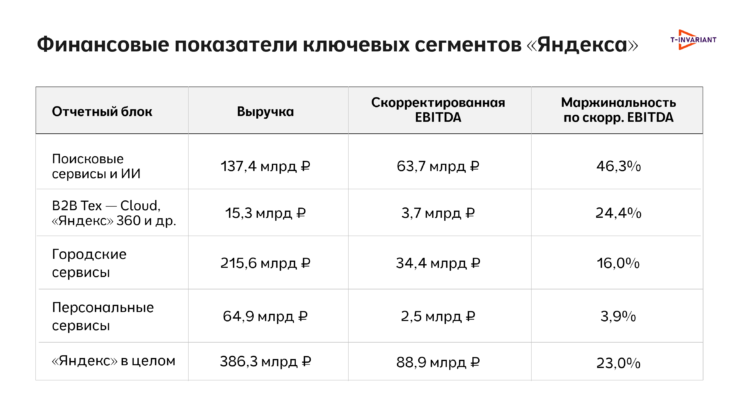
Yandex does not break out AI figures in its financial reports, so one has to go by the Search and AI Services segment. It has the highest adjusted EBITDA margin of all the segments Yandex reports. In Q2 2026, that margin was 46.3%, and for the first half of the year, 44.8% (by comparison, the City Services segment had a margin of 16%, and the contribution of the entire B2B segment, including Yandex Cloud, is far smaller than that of search and AI). The Search and AI Services segment also generated the largest adjusted EBITDA in absolute terms.
The reports also show that AI is already making a measurable contribution to advertising revenue growth: according to the company, its ARGUS recommendation technology accounted for almost half of that growth in Q2 2026. And although Yandex doesn’t disclose the profitability of its AI products separately, its reports make clear just how important AI is to the company’s financial health.
“Yandex remains one of the world’s first companies to expand its experiments with AI-based promotion formats for businesses — in Alice AI, both within Yandex Search and on its own website and app. These formats take a fundamentally new approach to audience targeting. The algorithms take into account not only the query but the entire context of the conversation with Alice AI. This makes it possible to identify a user’s potential interest even before they formulate a specific query. Promotion on AI surfaces is already showing measurable results: the cost of customer acquisition is comparable to that of promotion in Search. In chats with Alice AI, the ad system has already displayed ads from more than 460,000 advertisers — three-quarters of all advertisers on the platform. Alice AI remains the most popular AI assistant among Russians. In the second quarter, the number of weekly users who turn to Alice AI for tasks and conversation grew 39% quarter over quarter to 33.2 million. The number of monthly active Stations with Alice [Yandex’s smart speakers — T-invariant] rose 31% year over year to 22.5 million. More and more users own multiple devices: the number of people who own two or more Stations grew 44% to 4.7 million,” Yandex’s report states.
Clearly, the main risk concerns AI. It is these three supercomputers at two data centers that power the development of the company’s neural networks and other parts of its AI ecosystem. If the computing capacity has to be shut down so the equipment can be cleaned after the fire and smoke, the infrastructure behind almost half of the growth in ad revenue will sit idle for months. If the supercomputers are damaged even partially, development will be set back by years. First, sanctions restrict deliveries of NVIDIA A100 accelerators to Russia. Getting around them is extremely expensive and difficult, as shown by the cloak-and-dagger operation to build MSU-270, a closely guarded supercomputer at Moscow State University (see T-invariant’s investigation). Second, there is a global shortage of cutting-edge NVIDIA chips: orders are booked two to three years in advance, as confirmed by a T-invariant source at NVIDIA and by another specialist at a global AI giant who asked that the company not be named.
As a result, the development of YandexGPT and Alice AI is effectively on hold indefinitely — even as demand for them is growing explosively: according to Yandex B2B Tech data cited by the financial portal Finam, token consumption in Yandex AI Studio grew 18-fold year over year in the first half of 2026. Yandex’s service status page currently lists Yandex AI Studio as unavailable.
Why Yandex’s Data Centers Weren’t Ready for War
“Yandex built its data centers and its supercomputers in peacetime, for peacetime. Everything was designed for normal life; it never even crossed anyone’s mind that drones would come crashing through the roof. The Ryazan, Kaluga, and Vladimir regions don’t get earthquakes or other natural disasters, so nobody even thought about investing in physical protection for the buildings,” explains one of the supercomputing industry experts T-invariant spoke to.
Yandex’s public descriptions of its infrastructure (in particular, a post the company published in 2020) reveal the logic behind its design: low energy consumption, redundant power, simple and cheap cooling, and the ability to shift workloads between sites.
According to a BBC source, Yandex regularly practiced taking one data center offline and shifting its load to the others. But the successive loss of several large sites was probably never rehearsed. The BBC’s source also says that Yandex’s services may have treated two separate buildings in Vladimir as backups for each other: losing both at once was considered impossible.
“In Russia, data centers are usually built as fairly basic ‘boxes’: no serious walls, no fencing, nothing like that, almost no liquid cooling, no sophisticated fire suppression systems — even though advanced technologies exist, including Russian-made ones. All of that is considered insane capex by Russian business standards. Nobody could afford it. On top of that, there’s the extreme centralization. About 70–80% of all data centers are located around Moscow and St. Petersburg,” explains the supercomputing expert.
The first public calls in Russia to improve data center security came literally a couple of days before the first attacks. The BBC cites examples: “One of the main tasks now is how to move computing capacity, how to move all the useful IT load out of Moscow, St. Petersburg, and the Moscow region somewhere farther away… somewhere beyond the Urals, where, fortunately, things aren’t landing yet,” Deputy Minister of Digital Development Yevgeny Filatov said on October 6 at the Digital Solutions forum. And on the evening of October 7 (a few hours before the first attack), RBC published a report that representatives of the IT industry and the Ministry of Digital Development were discussing the possibility of placing AI data centers in “friendly countries” [the Russian government’s term for countries that have not imposed sanctions on Russia — T-invariant].
The BBC also points out that by then Russian forces had already been striking data centers in Ukraine. From September 23 to 28, they damaged at least six such facilities. The attacks left people without internet access and disrupted TV broadcasts. The Russian Ministry of Defense even posted an image on its social media channels that read “Digital detox… by force.” As early as October 4, two days before Filatov’s remarks, Volodymyr Zelensky warned of retaliatory strikes: “Do they really think we won’t respond?”
Other striking examples — in every sense of the word — emerged in 2026, showing that data centers are among the top-priority targets in wartime. Civilian data centers were also hit by drones and missiles during the conflict between the US and Iran. Amazon’s data centers in Bahrain and the UAE were attacked several times after Washington launched its bombing campaign against Iran. Amazon advised customers to move their data to sites outside the region, since there was no telling when the facilities would be back online. Iran’s Islamic Revolutionary Guard Corps (IRGC) also threatened to completely destroy OpenAI’s Stargate data center in Abu Dhabi.
“In Germany, I took a close look at the Leibniz Supercomputing Centre near Munich. It’s a windowless cube with a moat around it, so nobody can ram it with a car. The entrance is a small suspension bridge. The cube itself is essentially a building within a building, a Faraday cage [an example of architectural radio-frequency shielding — T-invariant]. So they’ve literally put serious physical and other protective measures in place. And that supercomputer ranked below Yandex’s Chervonenkis on the Top500. Still, the Germans invested very seriously in protection. That kind of protection won’t stop ballistic missiles, but against drones it works just fine. We also know of incredible underground data centers in Norway and Finland. Then there’s Alibaba’s supercomputing center in China. Almost all the Top500 leaders don’t skimp on capex; they install sophisticated liquid or immersion cooling systems. Russia’s IT leaders cut corners on all of it,” the expert explains.
T-INVARIANT BACKGROUND
In Norway, Lefdal Mine Datacenter houses its data halls in a former mine, about 700 meters in from the entrance to the mountain. It combines a sheltered location with cooling by cold fjord water. Some of the supporting infrastructure, including the generators, remains above ground.
The Finnish data center The Rock, located in the Pori area, uses nine tunnel halls originally carved out for military use. The underground facility, covering about 8,500 square meters, combines the natural protection of solid bedrock with segmentation into security zones and specialized engineering infrastructure, including direct liquid cooling.
Who Ultimately Gets the “Forced Digital Detox”
Of Russia’s six largest supercomputers, only the two belonging to the banking giant Sber are located at a site relatively well protected from drone attacks. Christofari and Christofari Neo are housed in Skolkovo, which has better air defense coverage. GROM, the supercomputer owned by the telecom operator MTS, is in Lytkarino, outside Moscow. Yandex’s remaining data centers are also in the Moscow region, in Mytishchi and Ivanteyevka. All of these towns near Moscow regularly come under massive Ukrainian drone raids.
“Restoring supercomputers of this caliber just isn’t going to happen, not now and not anytime soon. And it’s not even about having the money. The main problem isn’t even sanctions, it’s the shortage of chips and other components: there’s a huge waiting list for them worldwide. That said, gray- and black-market imports are very costly, too. So things are pretty Sucksovo these days [a pun on Sasovo, the town where Yandex’s flagship data center was hit, and the Russian slang verb sosat’, ‘to suck’ — T-invariant],” says a supercomputing specialist who spoke with T-invariant.
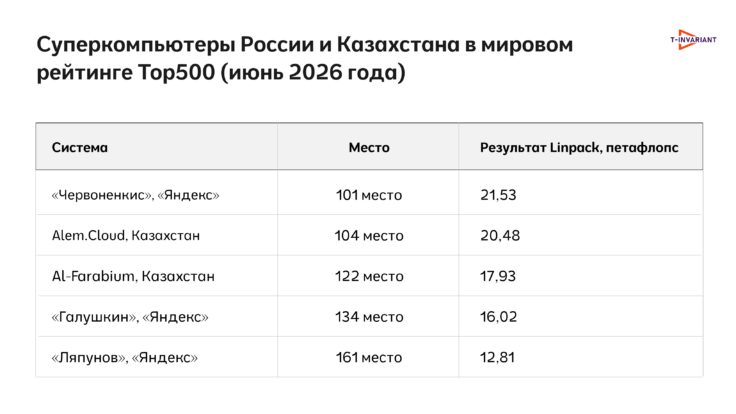
The next update of the global Top500 list of supercomputers will be published in November. Chervonenkis currently ranks 101st, and Kazakhstan’s Alem.Cloud is 104th (Kazakhstan’s second machine is 122nd, ahead of all of Russia’s other supercomputers). The experts T-invariant spoke to have no doubt that Ukraine’s retaliatory “forced digital detox” will push Russia’s leading supercomputers below Kazakhstan’s on the Top500 as early as this fall. Competing with the US, China, and Japan is out of the question altogether: Russia already lags behind them by two orders of magnitude.
As T-invariant reported earlier, the Netherlands is among the countries ahead of Russia on the Top500 list. Two machines registered to the Netherlands belong to Nebius, the company led by Yandex co-founder and former CEO Arkady Volozh: ISEG (which ranked 16th when it debuted) and ISEG2, with a combined peak performance of about 425 petaflops. According to the government’s Concept for the Development of Mathematical Sciences through 2036, Russia’s five machines on the Top500 together deliver less than 100 petaflops of peak performance. In other words, Arkady Volozh’s company alone has more computing power than all of Russia’s Top500 systems combined.