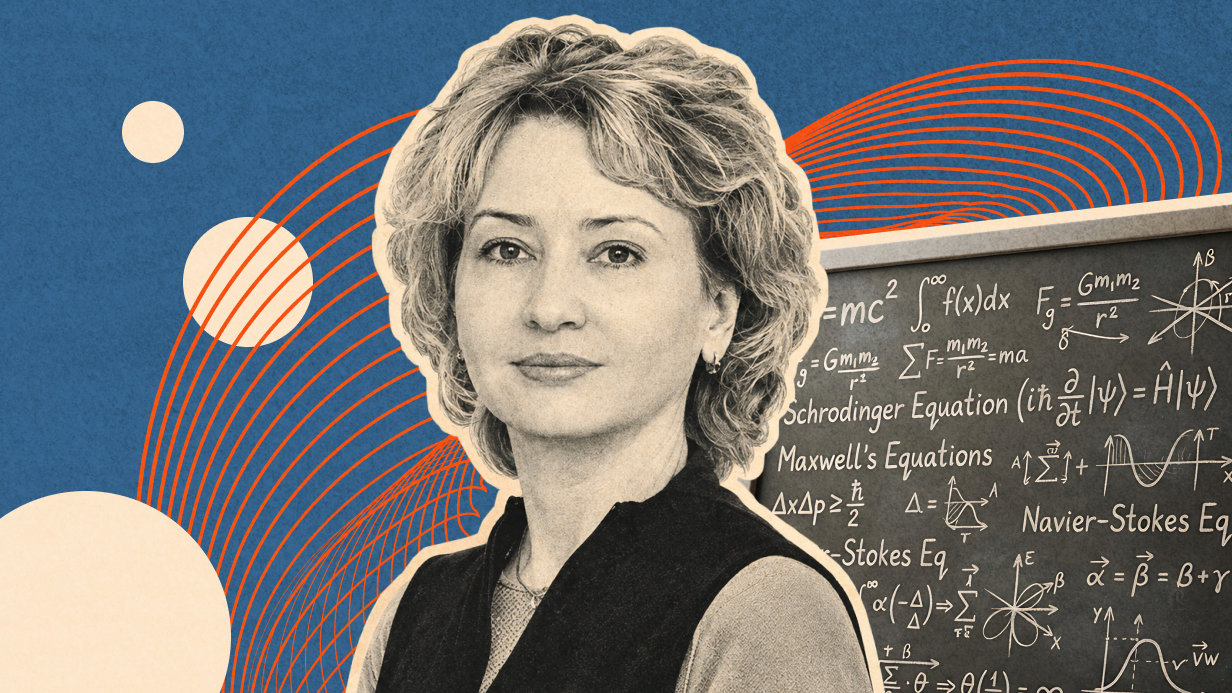
On November 7, the George Gamow Award was presented in Chicago at the 17th RASA* conference. This year’s laureate, Natalia Berloff, a mathematician and professor at the University of Cambridge, makes quasiparticles solve hard problems — and considers sanctions against science shortsighted and harmful to both science and the world. In a conversation with Alexander Sergeev, she talks about how mathematicians are living through the crisis that artificial intelligence has plunged them into by changing the very value of mathematical discovery, and why it’s worth working on a quantum computer even if one may never be built. She also explains how the American Physical Society’s Committee on International Freedom of Scientists, which she chairs this year, stands up for colleagues in trouble — from Russia to America itself.
Part 1. “I Lie”: Popularization and the Two Cultures
T-invariant: More than ten years ago, back when she was still on Russian television, Olga Orlova asked you on her show Gamburgsky Schet [a science interview program on the Russian public channel OTR; the title is an idiom for an honest, no-favors judgment — T-invariant] how you explain your work to family and friends. And you answered: “I lie!” Because it’s impossible to explain it to nonspecialists.
Natalia Berloff: It’s not that it’s impossible. But you’re always caught between two options: either you go too deep and lose your audience, or you give a superficial answer — and then the specialists come after you.
I had a funny moment back before I had a British passport. I was entering the UK, and it turns out border officers are supposed to ask two questions, and the second has to follow from the first. I was asked what I do. I said, “I’m a mathematician.” Pause. He was clearly trying to come up with a follow-up question based on that, but couldn’t, and just said, “I suppose that’s usually where the questions end for you?”
T-i: You come up in connection with quantum physics and quantum optics. So are you a mathematician or a physicist?
NB: I’m an applied mathematician. I’m interested in physical phenomena from the standpoint of the mathematics that can explain them. I’m not trying to write the most accurate formula for a phenomenon; I want to understand it and find the minimal model that explains it. That model can then be carried over to other systems. That’s why I’ve modeled many different physical systems rather than just one, as is often the case. This is physics-inspired mathematics, not engineering solutions for experimentalists.
T-INVARIANT BACKGROUND
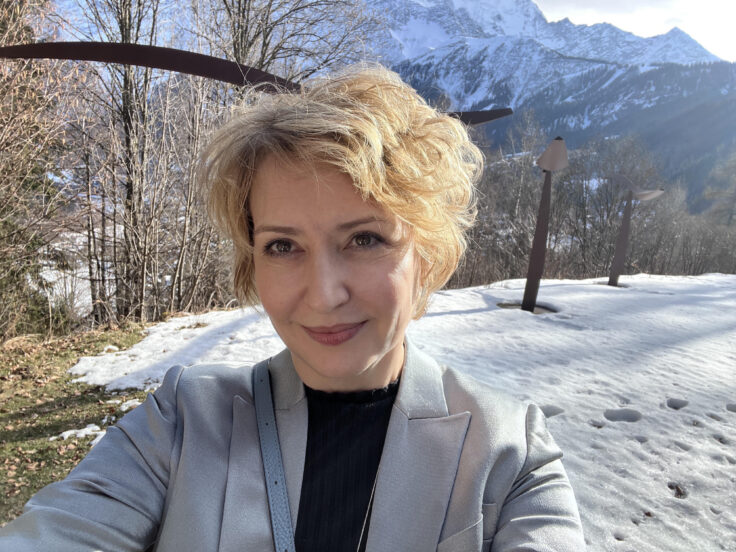
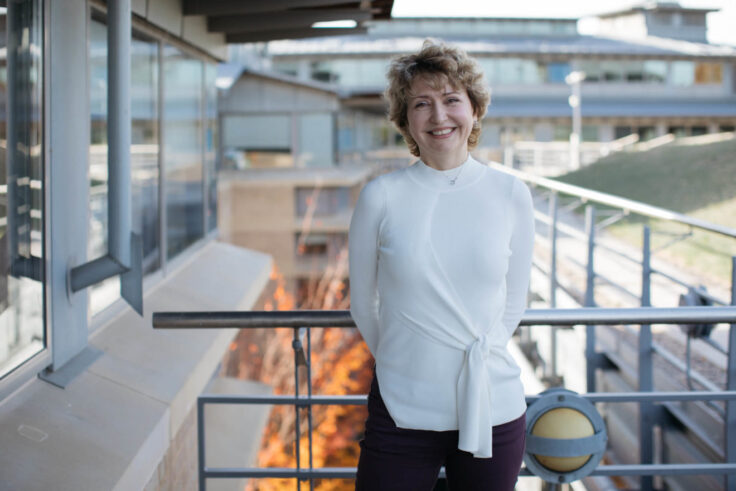
Natalia Berloff is Professor of Applied Mathematics in the Department of Applied Mathematics and Theoretical Physics (DAMTP) at the University of Cambridge and a Fellow of Jesus College. She was born in 1968 in Orenburg. She graduated from the Faculty of Computational Mathematics and Cybernetics at Moscow State University (1991) and received her PhD from Florida State University (1996). She worked at the University of California, Los Angeles, and has been at Cambridge since 2002.
From 2013 to 2016, she led the photonics program at Skoltech, and in 2021–2023 she was a visiting researcher at Microsoft Research. She studies coherence in nonequilibrium quantum systems: superfluidity and Bose–Einstein condensation of atoms, excitons, and polaritons. Her group was among the first to propose using polariton condensates and other optical systems as physical simulators and optimizers. She leads the π-computing group and is co-director of NeuroSYNC, a UK interdisciplinary neuromorphic center.
She received the Pilkington Prize in 2005. In 2026, she chairs the American Physical Society’s Committee on International Freedom of Scientists. That same year, together with philosopher Mikhail Epstein, she received the George Gamow Award.
T-i: Mathematics is one of the most abstract sciences. How do you get the meaning of its abstractions across to people? George Gamow wrote a series of popular science books about Mr. Tompkins, but they were about physics. Is it possible to popularize mathematics in a way that goes beyond an introduction for beginners?
NB: Popularization is a very hard thing, and I haven’t done it. But there are wonderful people who come up with vivid allegories and examples. Quantum mechanics is full of astonishing things that can’t be explained in everyday language. But write down the equations — simple, linear ones — and everything becomes clear. And it seems to me that tying things too closely to everyday experience sometimes does more harm than good. It’s better to understand just a little of the math — and everything falls into place.
T-i: And yet for most people…
NB: …“that’s usually where the questions end.”
T-i: Back in the 1950s, C. P. Snow showed in his famous lecture “The Two Cultures and the Scientific Revolution” how physics and mathematics break away from the broader culture and become incomprehensible to nonspecialists. I’m afraid that if math can’t be avoided, this divide becomes unbridgeable.
NB: If you explain without math, you’re bound to lie, as I said in that old interview. Oversimplification sometimes washes away the essence of a phenomenon. That’s why it’s important for people to have some basic knowledge of math, physics, chemistry, and biology — so they can dig a little deeper.
T-i: I sometimes talk about “popular science discoveries” — radical simplifications that let you reason sensibly within certain limits. It seems that quantum physics and mathematics are sorely lacking in them.
NB: Yes, but that’s a separate pursuit. Working scientists rarely get around to it. That said, we’ve started talking about this more because of the crisis that artificial intelligence has brought to mathematics. Our role as scientists will probably change too: our main function will be not so much producing new knowledge itself, in collaboration with AI, as explaining that knowledge to colleagues, to society, and sometimes to ourselves.
T-i: Popularization for specialists…
NB: For our own people. Though society’s demand is growing too. Public outreach — how well you’ve explained the value of your research to the public — is becoming increasingly important in evaluations of universities and departments. Any scientist who hasn’t been doing this will have to start.
The George Gamow Award was presented to Professor Natalia Berloff “for outstanding contributions to quantum hydrodynamics and physics-based computing methods, as well as for the exceptional breadth of her interdisciplinary research, which links fundamental theoretical advances with their experimental realization and practical applications in logistics, financial technology, pharmaceuticals, and data management.”
The award is given to members of the Russian-speaking scientific diaspora in memory of the outstanding Russian-American physicist and cosmologist George Gamow. The award ceremony took place at the 17th annual RASA* conference, held November 7–8, 2026, at Northwestern University in Chicago and dedicated to Andrei Sakharov — an outstanding physicist, Nobel Peace Prize laureate, and enduring symbol of intellectual courage and integrity.
Part 2. Math in Reverse: How to Make Physics Compute
T-invariant: Let me hold you to that and ask you to explain the wording of your Gamow Award citation, which mentions quantum hydrodynamics and computing with physical systems. Hydrodynamics is about liquids, isn’t it? How can a quantum system be liquid? And what does “computing with physical systems” mean?
Natalia Berloff: “Quantum fluid” is an umbrella term for phenomena in which quantum effects become important. I’ve worked on various systems, starting with liquid helium and the mathematical description of its superfluidity. But there are many quantum fluids: cold gases, for instance, and condensates of quasiparticles such as exciton-polaritons.
T-i: We were taught that real particles are electrons, protons, and neutrons, and that atoms are built from them — atoms are composite. So how should we think about quasiparticles?
NB: Imagine a tiny trap for light: two mirrors with very thin layers of semiconductor between them. We shine light in. By absorbing a photon’s energy, an electron jumps to an excited state and leaves behind an empty spot — a hole. The electron and the hole attract each other and can form a bound pair — an exciton. That’s already an example of a quasiparticle: an excitation of a medium that is convenient to describe as a separate particle.
Now comes the most interesting part. The exciton can give its energy back to the light. The mirrors keep the light trapped inside, allowing it to interact with the semiconductor again. If the coupling is strong enough, the light and the exciton manage to exchange energy many times before the excitation dies out.
This exchange changes the very excitations of the system. Hybrid states emerge in which the light and exciton components are inseparably linked. In the language of quantum physics, this is a superposition of photon and exciton states. We call this joint excitation an exciton-polariton. It has a character of its own: thanks to its light component, it travels easily, and thanks to its exciton component, it interacts with other excitations of the same kind. The result is a quasiparticle that combines the properties of light and matter.
T-i: And these quasiparticles, which are described mathematically by roughly the same equations as ordinary particles, form a liquid inside matter?
NB: Yes. By modulating the light, you can create these quasiparticles by the thousands at different spots on the two-dimensional plane of the semiconductor. Because they are only partly matter (electrons) and partly light, they are very lightweight: their effective mass is 4–5 orders of magnitude smaller than that of electrons. As they interact with one another, they flow like a liquid, forming clusters of these particles — chunks of this quasi-matter.
Top news on scientists’ work and experiences during the war, along with videos and infographics — subscribe to the T-invariant Telegram channel to stay updated.
The first move toward using these physical systems for computing came when we were working here, in the nanophotonics lab, with experimentalists — Jeremy Baumberg’s group. They were building lattices and graphs out of these quasiparticles. The particles themselves behave like tiny oscillators: they have an amplitude and a phase. And we noticed that their phases started to synchronize across different parts of the system.
The question was: how does this synchronization happen? We started digging and realized that the phases adjust so as to minimize a certain quantity. And finding its minimum is a universal mathematical problem, solved by finding the phase differences between the elements of the system. That’s already computation.
T-i: I’m frantically searching for simple images… Someone once explained the essence of an analog computer to me with a bundle of spaghetti. How do you find the longest strand without measuring? Tap the bundle on the table to even it out — and take the one sticking out at the top…
NB: That’s exactly what makes physical systems so good: they can quickly find an optimal state, such as an energy minimum, or, in a specially designed system with pumping and dissipation, a minimum of losses. If you set up the pattern of interactions between parts of the system and then let them go, the system will solve a problem of its own. That’s where the mathematician comes in: I need to describe my specific problem in the language of interactions between the components of a physical system and then let it find the solution.
The spaghetti is a good example, but there are many like it, and analog computers existed long before digital ones. Take Gaudí, for instance, and how he designed his arches. A string with small weights was hung up, it took on an equilibrium shape, and then that shape was turned upside down — and the role of the weights was now played by the load on the arch.
T-i: So it’s math in reverse: instead of looking for equations that describe physics, you build physical systems that match the math you need.
NB: Yes, and here’s another example. There’s the Steiner tree problem: given a set of points, find the shortest graph that connects them all. You’re allowed to add extra nodes, as long as the total length of all the connections is as small as possible.
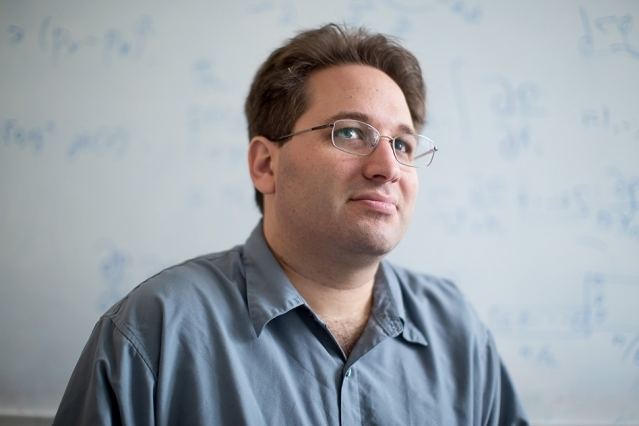
Scott Aaronson — director of the Quantum Information Center at the University of Texas at Austin, a computer scientist, and the author of wonderful books — tried using a soap film to solve this problem. After all, a soap film tends to minimize its surface area. He joined two sheets of glass with matchsticks at points corresponding to the nodes of the graph. Then he dipped this frame into soapy water and watched how the film stretched. For small graphs it worked very well, but for large ones the result was usually less than perfect.
T-i: And in the realm of quantum phenomena, do you get models that can’t be simulated efficiently on classical analog or digital computers?
NB: Not necessarily. There’s a separate field — quantum information and quantum computers. There the goal is to run specific quantum algorithms, such as Shor’s, Grover’s, and so on. But the architecture of a quantum computer involves applying elementary operations — quantum gates — one after another.
We do something different: in our systems, we don’t even know whether quantumness is helping us. During formation, as the system is being populated with exciton-polaritons, we rely on quantum effects: spontaneous scattering and bosonic stimulation. But once each state contains many particles, the system is well described by a classical field. Our hypothesis is this: during the search for a solution, quantum fluctuations act as a resource that lets the system try out a vast number of options before it settles into a steady state. And when the search is over, it delivers the solution to a classical problem.
This is an analog approach through and through. There are universal models, such as the Ising model or the XY model, in which the elements of a system are coupled to one another in a particular way. We know how to map a specific hard problem onto such a model. The entire problem is then encoded in the couplings between the elements, and it’s precisely these couplings that we program.
T-i: But the system can probably get stuck in some local minimum far from the optimum. Can such solutions be trusted? AI has the same problem: sometimes it gets sucked into some bizarre train of thought, and there’s no pulling it out — the chat is poisoned, and you have to start a new one.
NB: Yes, with hard problems a physical system often ends up at a less-than-optimal solution. There are many ways to deal with this. One of them is annealing. Incidentally, it also came out of experiment and later migrated into heuristic algorithms for classical computers.
It’s a two-way street. On the one hand, we take optimization algorithms for classical computers and think about how to implement the same trick in a physical system, given its constraints. On the other hand, once we understand how a physical system finds a solution, we can apply that method in a program for a digital computer.
T-INVARIANT BACKGROUND
The Ising Model and Annealing
The Ising model is the simplest model of a magnet. It consists of a set of “spins,” each of which can point only up or down; pairs of spins are coupled by interactions of varying strength and sign. Finding the arrangement of spins with the lowest energy for arbitrary couplings is an NP-hard problem (see the box on complexity below), and many optimization problems — from logistics to finance — can be reduced to it. In the XY model, a “spin” can rotate to any angle in a plane, like the hand of a clock. That is exactly the role played by the phases of polariton condensates.
In metallurgy, annealing means heating a metal and then cooling it slowly: the atoms have time to rearrange themselves into a more ordered, lower-energy structure. In 1983, Scott Kirkpatrick and his colleagues proposed a computational analog: simulated annealing. Random “thermal” jumps are added to the search for a solution and are gradually reduced. This helps the system escape from local minima.
T-i: It seems that in your field quantumness plays roughly the same role as it does in a digital computer: the computer itself is classical, but its transistors couldn’t work without quantum phenomena.
NB: Yes, but that’s also where the limitation lies: we’ve already reached quantum scales. Moore’s law is breaking down: there’s nowhere left to shrink transistors. Everything turns into heat, and other purely quantum limitations appear. In our systems, the potential gain comes primarily from interacting elements working in parallel. Whether quantum effects provide an additional advantage remains to be seen.
T-i: Digital technology rests on the universal use of logical operations: AND, OR, NOT. Can your systems perform other operations that are slow and tedious to do digitally?
NB: Exactly! The whole computing architecture changes. For example, in a conventional computer, memory is separate from the processor. And that’s a terrible bottleneck — constantly shuttling data to memory and back. In some analog architectures, memory sits right where the computation happens. On top of that, a physical system naturally performs all its computations in parallel: its different parts make decisions locally, responding to their immediate surroundings, but they can also be connected to other parts. This automatic parallelism greatly speeds up the solution of many problems.
I mentioned the condensation of exciton-polaritons. The typical time for a condensate to form can be around a hundred picoseconds (10−10 s). But fully solving a problem also requires configuring the system, reading out the result, and sometimes repeated runs. How this time scales with problem size has to be checked separately.
Of course, other problems come up there — such as how to tune the interactions between the parts precisely — but the search for a solution itself is very fast. The price is the precision of the answer: the computation is analog, after all. But we already understand that in many tasks — for example, in artificial intelligence, machine learning, and neural networks — a bit of precision can be sacrificed.
T-i: It sounds as if you’re working to lift the curse of von Neumann, who separated memory from the processor and thereby made programming comprehensible to the people of his time. And now we’re going back — and for some problems, efficiency increases dramatically.
NB: Absolutely. That’s exactly what it’s called: non-von Neumann architecture.
Part 3. The Queens Problem: Taking the Roundabout Route
T-invariant: Let’s illustrate how such a computer works with a specific problem, so the conversation doesn’t get too abstract.
Natalia Berloff: There’s a beautiful, though at first glance not very practical, problem: the N-queens problem.
T-i: Placing them on a chessboard so they don’t attack each other?
NB: Yes, you need to place N queens on an N-by-N chessboard so that none of them can attack another. There are many solutions even for a standard 8-by-8 board. Exactly how many such solutions there are as the board gets bigger is a separate, very interesting problem in the complexity class #P. For large boards, it’s already known roughly how the number of solutions grows, but counting them exactly remains hard.
T-i: Well, you can’t fit two queens on a 2-by-2 board.
NB: Right, the minimum size is 4 by 4 (not counting the trivial 1-by-1 case), but after that, as the board grows, the number of solutions shoots up very quickly.
Now imagine that queens can’t be placed on certain diagonals. Such constraints can sharply reduce the number of solutions or make a valid placement impossible. This variant of the problem is NP-hard. No algorithm is known that is guaranteed to solve every instance in polynomial time. Especially hard instances can require enormous computing resources.
T-INVARIANT BACKGROUND
P, NP, and the Queens Problem
In computational complexity theory, class P consists of problems that can be solved “easily” — in polynomial time. That is, the number of steps grows no faster than some power of the size of the problem — the amount of input data, such as the size of the chessboard.
Class NP consists of problems for which a proposed solution can be checked “easily.” It is still unknown whether P and NP are the same — that is, whether the ease of checking a solution guarantees the ease of finding one.
Most experts believe that P ≠ NP. Proving or disproving this conjecture is one of the Clay Mathematics Institute’s seven Millennium Prize Problems, each of which carries a million-dollar prize.
NP-hard problems are at least as hard as any problem in NP. A polynomial-time algorithm for even one of them would prove that P = NP. And class #P comprises problems of counting the number of solutions — and these can be harder still.
The eight queens puzzle has 92 solutions. For an N-by-N board, solutions exist for every N except 2 and 3. In 2017, it was proved that the problem of completing a partial placement of queens is NP-hard, and that counting its solutions is one of the hardest problems in #P.
The problem also has some practical applications: for example, how to position satellites so they don’t interfere with one another…
T-i: …I’m still amazed that Musk’s satellites don’t take each other out in orbit…
NB: …lots of related problems of placement and constraint satisfaction in a great many fields. But the problem is also beautiful in its own right.
How do we apply our computer to it? As it happens, we have a paper coming out soon in which we solve this queens problem using a spatial photonic Ising machine (SPIM). In this machine, light helps compute how good a proposed placement is. Based on the measurement, the algorithm changes the configuration and repeats the check. In this way, the optical computation works hand in hand with the search procedure. Imagine that I put a clock on every square of the board, and its hand can point only to 12 or to 6. A kind of limited clock. Then I set up the interactions between the clocks so that in every row and every column exactly one hand must point to 12. On any diagonal, there can be no more than one such hand. On the forbidden diagonals, all the hands must point to 6. Then I let the system go and wait for it to find a configuration that meets the requirements.
Most likely, the system will get stuck in some state that doesn’t satisfy all the conditions. In some places there will be no queen at all; in others there may be two. But it’s no longer possible to change a clock’s reading in response to what its neighbors are doing: moving even a single hand always raises the energy. Other analog schemes use one more trick: during the search, the system is allowed to pass through intermediate states. By analogy: at the start, the clock hand has zero length — pointing neither up nor down…
T-i: But such states aren’t allowed as final ones?
NB: Right, right. But now the system has room to choose and sometimes to rearrange itself. If certain other conditions are met, it can eventually lead me to a result in which the clocks point to 12 only where a queen should go.
T-i: So we step outside the allowed final states, let the system wander around in a fourth dimension, so to speak, and when it comes back from there, it finds the state we need.
NB: During the search, we allow the system intermediate states that don’t appear in the final answer. In our analogy, the hands can change both length and direction. This opens up additional paths for rearrangement. Then the result has to be brought back to the two allowed states: queen or no queen. This trick can help the search, but again, it doesn’t guarantee that a solution will be found.
Part 4. The Quantum Computer: The journey matters more than the destination
T-invariant: Still, let me ask you about the “real,” universal quantum computer. The hype around the idea took off 10–15 years ago, but in recent years it has been fading in the shadow of artificial intelligence. There are also skeptics who believe that building a universal quantum computer is technically impossible. Are they right? Or are we running a very long obstacle course, which is why the payoff keeps getting pushed back by decades?
Natalia Berloff: I’m probably something of a skeptic on this too. But let me say right away: the universal quantum computer, quantum computing, quantum information — that’s a completely different field, not the one I work in. And I have to admit it’s probably the most beautiful idea of the past 30–40 years — ever since 1994 and Shor’s algorithm.
Up-to-date videos on science during wartime, interviews, podcasts, and streams with prominent scientists — subscribe to the T-invariant YouTube channel!
And because so much effort went into this pursuit, a great many interesting systems and quantum materials emerged. There was always the argument: we can use this for quantum computing. In fact, the community did something remarkable here: it came together, presented a united front, and managed to push a narrative about why this matters — all the security protocols will fall, we’ll solve such-and-such problems.
There really has been enormous progress in this field. I’m not sure anyone will manage to build a large fault-tolerant quantum computer with a reasonably wide range of practical applications. But the research along the way has already produced many valuable results. That happens a lot: what matters is not so much that a theorem gets proved as what gets done while people are trying to prove it.
T-i: Artificial intelligence is a parallel case. A working technology appeared long after the basic idea.
NB: Yes, and it had its skeptics too. At some point it all collapsed there as well, and people said: no, it’s impossible, never. So it’s quite possible that quantum computing also needs some additional ingredient. For now the problem is that it’s very hard to keep the system in the required states; everything falls apart very quickly. Maybe that really will be solved. The other question is which problems will actually yield a practical advantage. Besides Shor’s algorithm, quantum algorithms have been developed for simulating quantum systems and molecules, but their advantages need to be assessed separately. Clearly, even if the factorization problem that underlies RSA encryption gets solved, then everyone will…
T-i: …switch to a different kind of encryption.
NB: Switch to a different kind of encryption, yes.
Part 5. Freedom for Scientists: Against Sanctions, Fear, and Bureaucracy
T-invariant: Let’s go back to that long-ago TV conversation with Olga Orlova. At the time, you were involved in the Skolkovo project, where the Russian Quantum Center was gaining momentum — a public-private research institute built on the model of the world’s best innovation centers. As a science journalist, I worked with the center, helping prepare its public materials and annual reports. Today the RQC is under sanctions. At T-invariant we have looked into how sanctions are hitting Russian science, and I was struck that it is precisely the quantum technology research centers that are almost entirely covered by sanctions — more tightly than missile makers, aviation, or AI. Why is this particular field getting so much attention?
Natalia Berloff: Because there are quantum methods of encrypting and transmitting secret information. It’s a new technology, and politicians are terrified of missing it. So that no one can blame them for it later.
I once talked with people from IBM. They told me that all the money had gone into quantum computers based on superconducting qubits — that is, into one specific physical system. I asked: why that one? Why not ions, or some kind of topological Majorana fermions? The answer was: we did a study, most people are betting on this technology, so we decided it was safe — nobody would criticize us for it. You might be wrong, but at least you were going with the crowd.
Or take our photonic analog systems. They are already solving concrete problems. But the investment in photonics is far smaller than in classical computing technologies, because so much has already been invested there. It’s a closed loop, and to break out of it you have to tunnel through barriers: show that you are much better — in energy efficiency, for example — or solve some especially important problems.
Why are the sanctions aimed at quantum research in particular? It’s about playing it safe. Then again, the quantum community itself created this aura: that something very important is coming, something that could change everything completely.
T-i: Victims of their own success… But how productive are sanctions in science these days, anyway? I compare it to 1939, when cooperation and coauthorship with German scientists were strictly forbidden. Today there are serious restrictions, but they are nowhere near that level. Is that because it’s unnecessary, because it doesn’t work, or because it would even be harmful? In today’s world, how should one treat the science of an aggressor state so as not to do serious damage to research, including in the countries standing up to the aggression?
NB: Oh, you’re making me point out that I can speak in two capacities: for myself personally and as chair of the American Physical Society’s committee that defends scientists. Let me first speak for myself.
I am categorically against any sanctions in science, against any restrictions. In some ways, scientists are the most influential professional group there is. In many countries, a significant part of society trusts scientists. They are also people who interact with colleagues from other countries, so it’s a very international group. Most of them know how to think critically. That’s why they can genuinely influence what happens in their own country. When the full-scale war against Ukraine began, it was scientists in Russia who signed a letter against the war — it has almost 8,500 signatures. Imposing sanctions on Russian scientists after that letter is shortsighted.
The American Physical Society issued a statement against boycotting scientists on the basis of nationality, citizenship, place of birth, or residence. But that is not the same as rejecting all restrictions on technology transfer.
In 2022–2023 there were many cases in which Western universities and research organizations removed Russian scientists from author lists or restricted their participation in collaborations. There was one particularly outrageous case in Europe. A HADES paper lists 21 colleagues from Russian institutes whose contributions are acknowledged, but who were left off the author list by decision of the collaboration board. That is, of course, really, really ugly.
Incidentally, something similar is now happening in the States. We recently looked into a case in which the leadership of Idaho State University wrote to the editor of the journal Foundations of Physics demanding that their professor be removed as a coauthor of a paper because another coauthor is from Fudan University in China, which was put on a Pentagon blacklist this summer. And this even though the paper had been submitted back in December of last year.
T-i: At T-invariant we follow closely what concerns Russia. But there is a sense that, worldwide, the freedom of scientists from different countries to work together is eroding. Is that so?
NB: Yes, without a doubt. There are export controls. When you apply for grants, you often have to state whether you will be working with scientists from certain countries. And if so, they will talk to you and look into it. I had a case where students from Moscow were supposed to come visit me. I was required to report it, since I work on artificial intelligence. And when I asked whether I could host them, I was told: “We can’t forbid it, but we will look into who these students are and what they’ll be doing. Then such-and-such an agency will come in, then another one. It could take up to a year.” After that you think: let’s just not do it. In other words, the bureaucratic procedure itself can shut down opportunities. That’s wrong. Of course, there is security and there are sensitive topics. But the restricted areas should be defined much more narrowly.
T-i: That’s a real sore point right now, because in Europe you increasingly hear: we don’t have time to figure out who this scientist with a Russian passport is — we don’t have the resources for it.
NB: If you don’t have time to figure it out, then you should just let it go — that’s my view. We do our work and publish it; nobody keeps their results secret or secretly passes that knowledge on to some agencies. Especially now, with AI, the distance from an idea to a publication — at least on arXiv — has shrunk dramatically. Restrictions like these are fairly pointless and, again, serve mostly as cover: we did something, we took care of security, we’re safe. But all of it creates problems for specific people, takes a toll on science, and has nothing but negative consequences for the world as a whole.
T-i: You mentioned that you can also speak as the committee chair. Tell us a little about the American Physical Society’s Committee on International Freedom of Scientists. In the 1980s, the committee is known to have actively supported Academician Andrei Sakharov during his internal exile.
NB: And we also have the Sakharov Prize, which is awarded every two years.
T-i: The committee’s website says it has only nine members, on a rotating basis. How much clout does the committee have? What is it able to accomplish?
NB: Not very much, I’ll say that up front. The committee simply makes recommendations to the leadership of the American Physical Society. We track incoming information and draw attention to cases that are serious from a humanitarian standpoint. Sometimes this results in an open letter about a particular injustice in which the freedom of scientists, physicists, or mathematicians is under threat. As you may remember, two years ago we wrote letters in defense of Kabov and Abramov. This year there have already been joint letters with the American Mathematical Society in defense of arrested mathematicians.
T-INVARIANT BACKGROUND
Committee on International Freedom of Scientists
The American Physical Society’s (APS) Committee on International Freedom of Scientists (CIFS) grew out of a subcommittee that began work in 1976 and has operated as an independent standing committee since 1980. During the Cold War, its focus was on the Soviet dissidents Andrei Sakharov, Yuri Orlov, and Natan Sharansky. The committee’s mandate covers the rights of scientists around the world, not only physicists and not only APS members.
The committee has nine members, and its chair changes every year. Since 2006, the APS has awarded the biennial Andrei Sakharov Prize for outstanding achievements by scientists in defending human rights; the first laureate was Yuri Orlov. In 2024, the American Physical Society sent letters to the president of the Russian Academy of Sciences (RAS) and to Russia’s science minister in defense of RAS corresponding members Sergey Abramov and Oleg Kabov, who were facing criminal charges. In November 2026, the American Physical Society and the American Mathematical Society appealed to the president of the RAS to ensure the safety of mathematician Azat Miftakhov, who, according to human rights advocates, has been tortured in a penal colony.
T-i: Do these letters actually help? Does anyone notice them?
NB: That’s hard to say. I’d like to believe so, but the main thing is that we did no harm. At least neither Kabov nor Abramov is serving an actual prison sentence. It seems to me that the main effect of these letters is to show people that they are not alone. Kabov’s wife said at the time how important it was to receive support from the American Physical Society. Even though her husband wasn’t even a member, the society stood up for him and asked that attention be paid to the fact that he really is a very strong scientist.
But open letters are rare. Usually we try to work through our ties with similar societies in other countries, so that they can apply pressure through their own government contacts — for example, to get a scientist permission to travel to another country. So a lot of this work may be invisible from the outside.
T-i: So essentially it’s help for individuals?
NB: Yes, we never make political statements or try to take sides. It’s specifically about helping with what is happening to particular people.
T-i: Where in the world do these problems arise?
NB: All sorts of places: Africa, scientists in Gaza, Russia, Ukraine. Various organizations provide us with information, such as Scholars at Risk. That includes information about what is happening in America itself.
T-i: So America falls within your mandate too?
NB: Yes, among other places. Our mandate covers the rights of scientists around the world. But we are, after all, the Committee on International Freedom of Scientists. We focus more on the problems of foreign scientists, whether in America or beyond it. For example, you wrote about the situation with Fulbright scholars. They were helped not directly by the American Physical Society, but through the organization Liberty Forward.
Part 6. AI and Mathematics: The End of the Age of Superheroes
T-invariant: At the start of our conversation, you mentioned the crisis that artificial intelligence has brought to mathematics. Let’s return to it. Can we already say that AI is an established technology that has delivered on its promises? Are we really living in a different reality now?
Natalia Berloff: Yes, absolutely. Look at what has just happened with solving math problems: first Navier–Stokes, then the hundreds of problems whose solutions OpenAI released. Among ourselves we say it was probably the most important day in the development of mathematics in a century. It really is a breakthrough, and it’s real.
T-i: How does this change professional work? It used to be that when a problem came up, you picked up a pen and tried to derive something. And now? You open a chat and ask the AI: why don’t you try applying such-and-such a technique?
NB: AI can find correlations in extremely high-dimensional spaces. That lets it find proofs. People started reading closely through what OpenAI released — and in a number of cases these are genuine proofs. And some scientists had worked on one of the solved problems for twenty years. For them, this is a crisis. People invested themselves, worked their way toward solving these problems, and suddenly they see all these solutions ready-made.
In some cases counterexamples have been found: people believed in certain conjectures that hadn’t yet been proved, and now it has been shown that they are false. In pure mathematics, some conjectures haven’t been proved yet but are used to build other results. We study what conclusions follow from these hypotheses, and the assumption that they are true is stated explicitly. For example, most people believe that P does not equal NP. The mathematical edifice is built on that premise. If it suddenly turns out that one of the bricks has cracked, the building may sag — and in places even collapse.
When you look at AI-generated proofs, you often see that methods have been applied in very interesting ways. Sometimes they are borrowed from other fields — that is, the mathematician who worked on the problem may simply not have known them. AI finds these connections and uses them as part of its reasoning. But that’s in the realm of pure mathematics.
I’m an applied mathematician; I’m more interested in understanding the world. But artificial intelligence has become an essential part of my work too: you can quickly test any hypothesis. Say I think a certain equation should show me a particular phenomenon. Claude Code can compute it right away, then I can tweak something, and it immediately shows me how the new model behaves. It can already prove some very simple things. It makes mistakes, yes. But the arguments or the papers from other fields that it brings up, saying they are probably important — that’s priceless.
T-i: When a person solves an extremely hard problem, we call them a genius, an intellectual superhero. Mathematics was perhaps the last science in which a lone individual could still make a breakthrough — almost everywhere else, teams took over long ago. What is left for mathematicians when AI turns out solutions to such problems by the hundreds?
NB: I have an analogy for this. I begin my course on complex analysis with a lecture on the history of complex numbers. After all, they are the foundation of the universe: all of quantum mechanics runs on principles described by complex numbers and functions. But why did a group of Italians suddenly introduce this concept in the 16th century? Complex numbers appeared as a way to solve cubic equations. Such equations can have ordinary real solutions, but to find them, mathematicians had to start using square roots of negative numbers and figure out what could be done with them. And out of that, complex numbers emerged.
In the early 16th century, a mathematician’s worth was determined in a kind of duel. You could challenge a mathematician to a contest in which each side had to solve a set of problems. Very often these involved finding the roots of cubic equations. Constructing such equations is easy if you know their roots, but finding the roots is a nontrivial task. Each mathematician developed his own methods, suited to particular combinations of coefficients.
Del Ferro, the best-known Italian mathematician of the early 16th century, derived formulas — mostly from geometric considerations, and there were many of them, for different cases — that allowed him to solve cubic equations. He never published his formulas and showed them to no one. According to one legend, only on his deathbed did he reveal his methods to his student Fior, but Fior remembered only part of the secret. Later another mathematician, Tartaglia, figured out how to derive these formulas and beat Fior in a duel, 30 to 0.
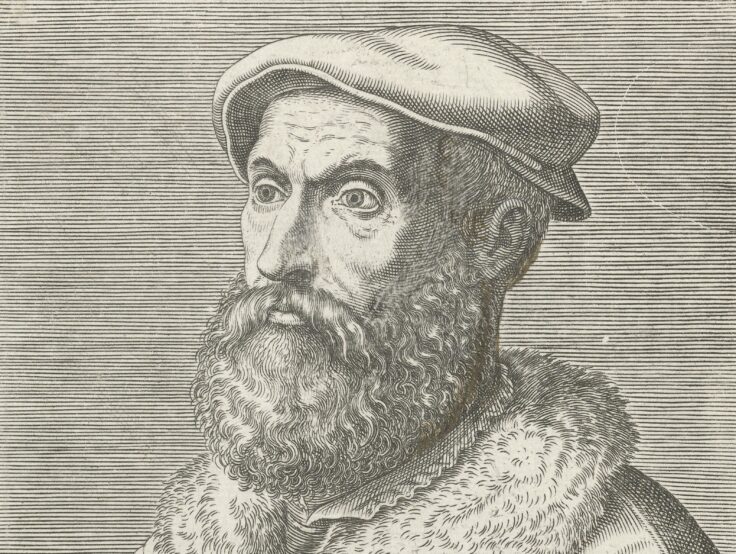
Tartaglia didn’t publish the formulas anywhere either; he kept taking part in duels and was considered the best mathematician in his part of Italy. But then he shared them with Cardano — and today we know them as Cardano’s formula. Cardano promised him that he would never publish these solutions. Together with his student Ferrari, he continued the work and figured out how to solve equations of the fourth degree. But that required knowing the roots of a cubic equation — in other words, using Tartaglia’s formula. So they traveled to the city where the first of these Italians, del Ferro, had died, found his relatives, asked for his notebooks, found the formulas there — and only then published them.
In doing so, they destroyed what made the mathematicians of that time valuable and practically wiped out an entire subculture of mathematical duels. But complex numbers, a by-product of solving cubic equations, gave rise to something much bigger — an entirely different image of the mathematician.
When a closely guarded professional secret becomes a publicly available method, what gives a mathematician an edge changes. Values shift. And today too, it seems to me, the value of mathematical knowledge is changing: it probably no longer lies in proving some theorem. Even before AI there was a saying: “Good mathematicians prove theorems, better mathematicians formulate theorems, and brilliant mathematicians formulate definitions” — that is, they create new fields.
Part 7. Hybrid Intelligence: A Bridge Between the Two Cultures
T-invariant: The way I describe AI’s arrival in the world to myself is this: we are moving from a society that values know-how — knowing how to do something — to a society that values know-what — knowing what to do. But surely that must greatly change how young scientists and graduate students approach their work?
Natalia Berloff: Listen, yes, that really hurts. Because right now you’re rethinking every aspect of the work. Normally you want young people to solve something, understand it, get a feel for a system, figure it out, and only then start asking questions. You build an intellectual environment in which a person gradually begins to understand what they want, where to go, which problems are interesting and which aren’t. Some of that, of course, carries over into the age of AI, but now it can happen much faster: you can get an answer to your question not in a year but in a single day. That’s both good and bad.
I’m afraid this undermines the process of engaging deeply and thoughtfully with a subject. The engagement becomes superficial. And, what is a real pity, you lose the emotional joy of knowing that you did this — you thought about it for a long time, and it worked. There’s a wonderful documentary about Andrew Wiles and his proof of Fermat’s Last Theorem in which he calls that moment of insight the most important moment of his professional life — and then breaks off his next sentence, overcome with emotion. And that sense of labor, of work, of conquest has, in some ways, certainly been taken away from us.
But something else has appeared. We really should turn this crisis to our advantage: the possibilities have expanded. I’m learning all the time. AI tells me: read this, and this is relevant to your work too. A huge amount of information is coming at you now, and you have to absorb and process all of it. My only worry is that this processing will be more superficial than if you had suffered your way through it.
T-i: Maybe the strategy is to build your own hybrid intelligence with AI?
NB: Absolutely. Getting what’s necessary and important, filtering out what’s uninteresting and unimportant — a dialogue with AI is very good for that — crystallizing the direction you want to pursue right now, immediately trying to rule out dead ends. It’s amazing!
T-i: People say that unlike the computer revolution of the 1990s, for which young people, even schoolchildren, were better prepared than the older generation, the situation now is the reverse: young people lack the depth of knowledge to ask AI worthwhile questions, so they get little out of it.
NB: Yes, that came as a huge surprise to me. There I am, all excited: guys, look, this is so great! And I can tell they don’t embrace it right away; some are even very negative about it: “No, I only use it for emails. I want to come up with all of this myself, to figure it out on my own. I don’t need it, this is my own little problem, I’m working on it. I want to do it myself.” On the one hand, I completely understand that this is a defense against brutal, unwanted changes to established ways of working. But on the other hand, how much easier it would be to solve the problem with AI and move on. And the fact that it lets you glimpse the future is, of course, an enormous help.
But young people really are a bit lost. Everything has been turned upside down, and it’s unclear what will be valued when they go looking for jobs later. It used to be that if you proved a theorem, that was it: you had a result. But now there will always be a question behind that solution: how did you get it? What role did AI play? Where are you in this, and where is it just skill with the tools?
T-i: There’s a lot of debate right now about what can and can’t be entrusted to AI. It makes mistakes — but so do people. They say it can’t be a coauthor because a machine can’t bear responsibility. I sense an element of Luddism in this: keep the hunk of metal off human turf. But if we close the doors, we won’t be able to go where we otherwise could.
NB: Well, closing the doors won’t work anymore anyway. You solve the problem on your own, someone else solves it with AI, and that person will get ahead of you.
T-i: But is it really worse if someone solves a problem with AI? If the result is better than what you’d come up with, what difference does it make?
NB: That’s why the roles are changing. Even when you work with AI, you still have to get a real feel for the problem and put it in terms that let other people see why the result matters. In a sense, the scientist becomes something of a science communicator.
T-i: Over the summer I did an interview with the mathematician Misha Verbitsky. He said the result itself isn’t all that important. What matters is the understanding we gain along the way. Are mathematical results really valuable only to the extent that humans have grasped them, and not simply because they’re true?
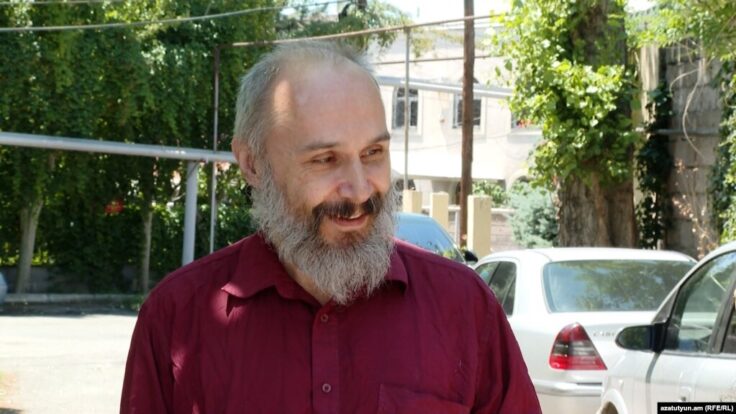
NB: There’s no simple answer. These days even top mathematicians often rely on theorems without going into the details of how they were proved. For us, what counts is simply that the result exists: someone else proved it, some other community has presumably checked it — and you can use it.
T-i: Like standard subroutines?
NB: Yes, they’re building blocks you use while drawing your own patterns. So the bare fact matters too. But at heart, I think, what drives a scientist is still the desire to understand something about the world around us. If AI helps you with that — wonderful.
T-i: I suspect scientists are finally about to feel what it’s like to be in everyone else’s position relative to them. Knowledge is emerging that we can’t understand — or that takes a special effort to explain.
NB: But that’s where AI comes to the rescue again, because it will explain everything to you. If you’re patient enough, it will break it all down step by step. It often spits out things where I have no idea what it’s talking about. So I say: explain it to me the way you’d explain it to a final-year math student. It explains, and I still don’t get it. We keep going until we reach “explain it to a ten-year-old” — and from there we work our way back up.
T-i: But that’s wonderful: you end up with a continuous scale of understanding, which offers hope of bridging the gap between science and the humanities that C. P. Snow wrote about — if we start working with AI to build those bridges.
NB: Yes, exactly. Science, after all, also has its schools and fields. We’re like a hedgehog whose quills grow in all directions, and in places they’ve drifted very far apart. Now, with AI, we’re slowly starting to fill in all the space around the quills. Soon we’ll have some kind of soft, fluffy animal. Because between the narrow areas people have been working on, there’s a huge amount of interesting stuff. There’s no end of work to be done here. AI can bring together information from two very different quills to fill that space. Or even from three or four. It’s incredibly exciting!
T-i: How would you set the agenda for new researchers, for the next generation? Should they try to fill in those spaces? Or head in some other direction?
NB: You know, it varies. Usually young people, grad students, come to you, you give them problems and discuss them together.
I’ve even done this: I have a group of postdocs, and I tell them, “Guys, a box of chocolates to whoever gets so-and-so hooked on their problem.” Everyone presents their problems, and I propose a few of my own. And now, for the first time, I’m getting young people who say, “Well, yes, I read all that, but I want to do this instead. I talked it through with AI, and it says it can be done like this.” And I say: wonderful!
You see, it’s very rare for a first-year grad student to show up already knowing exactly what they want, with ideas of their own that they want to develop. They’ve already ruled some things out with the help of AI, zeroed in on others, and they tell you: I think if you combine this and this, you’ll get that. Brilliant!
And yes, now that I’m saying it out loud, research very often really does work this way: let’s combine this with that, a hedgehog with a kangaroo — something along those lines.
* * *
T-i: Finally, let’s turn to the occasion for our conversation: the George Gamow Award, which honors members of the Russian-speaking scientific diaspora. Practically the only science prize that gets broad media coverage is the Nobel. Yet there are many other scientific awards besides. What role does this system of recognition play in science? After all, there are academic degrees and titles, academy memberships, and, of course, the h-index. Aren’t those enough?
NB: Look, we have so little to celebrate, so few occasions when anyone notices us!
Seriously, though, to the general public none of this is very meaningful. Take what you mentioned: the h-index or the number of publications. It all depends heavily on the field. If only five people work in it, there won’t be many publications and the h-index will be low, however brilliant the papers are. Mathematicians usually have a low h-index. A mathematician’s contribution might consist of a single solution to a long-standing open problem. Its significance isn’t necessarily reflected in the number of publications or the h-index. Chemists and biologists, on the other hand, have huge communities and far more citations — and high h-indices. So it’s not a very clear-cut metric. Membership in learned societies is also good and important, but once you’ve been elected, that’s the end of the story.
So scientific prizes are what suddenly make it possible to see the person. Here we are talking, and you’re asking me about what I do — and I really appreciate that.
* Designated an “undesirable” organization in Russia