
Exactly 80 years ago, on November 25, 1946, Phystech was founded. Now known as the Moscow Institute of Physics and Technology (MIPT), it came to occupy a special place first in Soviet and then in Russian science. Closely tied to the defense industry, in the post-Soviet decades it managed to integrate into global science and became a talent pipeline for leading tech companies. The war and sanctions have put this model at risk. Phystech is losing researchers and international ties, but it is not giving up on its ambitious development plans. MIPT Rector Dmitry Livanov, a former minister of education and science, intends to carry out the “Big Phystech” project, which will include the university’s own technology valley in Dolgoprudny. T-invariant looked into how the legendary university is trying to preserve its exceptional status amid war and scientific isolation, and what resources it is counting on.
In 1946, Academician Pyotr Kapitsa wrote to Joseph Stalin arguing that the USSR needed a new type of higher education institution. The country faced two colossal tasks: its space and nuclear programs. Both required specialists capable of working at the intersection of cutting-edge science and engineering.

Drawing on his prewar experience at Cambridge, Kapitsa proposed four core principles for organizing education: careful selection of gifted students, the involvement of leading scientists in their training, an individualized approach, and engaging students in research from their very first years of study.
In November 1946, a Faculty of Physics and Technology was established at Moscow State University (MSU), and in 1951 it became the basis for the Moscow Institute of Physics and Technology (MIPT). Kapitsa’s principles formed the foundation of the famous Phystech System and largely determined the institute’s strategic importance for the country. From its earliest days, the university was closely tied to military projects while remaining one of the leading centers of fundamental science. Over the years, its faculty has included eight Nobel laureates and some two hundred full and corresponding members of the Russian Academy of Sciences.
From Survival to Flourishing
After the collapse of the USSR, Phystech lost a large share of its state funding. The university faced the threat of privatization, but Rector Nikolai Karlov managed to keep its property from passing into private hands, and in 1992 he won MIPT the status of a self-governing state educational institution.
Top news on scientists’ work and experiences during the war, along with videos and infographics — subscribe to the T-invariant Telegram channel to stay updated.
Defense contracts gave way to investment from private tech businesses. In the late 1990s and early 2000s, Russian and foreign companies began opening their own departments at MIPT (known as joint “base” departments), equipping laboratories, and paying student stipends. Phystech reoriented itself toward training specialists for the growing IT industry.
At the same time, MIPT began integrating into global science. International grants and partnerships with foreign universities helped keep the laboratories in Dolgoprudny running. Alumni who had gone into business or moved abroad also played a major role in keeping the university afloat. At first, they helped the institute piecemeal: buying computers, renovating dormitories, sponsoring individual departments. Later, they built a full-fledged endowment. The support of the Phystech diaspora, which helped the university weather the crisis of the 1990s, has once again become especially important in wartime.
Under Rector Nikolay Kudryavtsev, MIPT developed along two main tracks: cooperation with tech businesses and integration into the international academic community. ABBYY, Yandex, Samsung, and Huawei opened their own departments and research labs at Phystech.
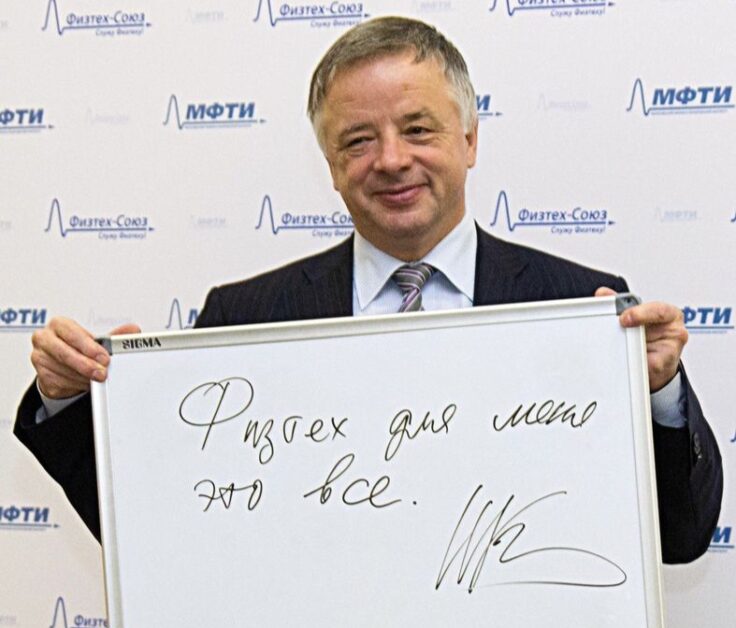
In 2013, MIPT joined Project 5–100, which aimed to make Russian universities more competitive globally. In its first five years in the program, the university received 4 billion rubles in state subsidies. In the QS World University Rankings, Phystech climbed from 446th place in 2013 to 281st in 2021, becoming the fifth-highest-ranked Russian university. From 2016 to 2020, nearly 12,000 research papers with an MIPT affiliation were published, and they have been cited more than 120,000 times.
Phystech developed academic mobility and dual-degree programs and built partnerships with leading technical universities in Europe and the United States. By the early 2020s, MIPT held a unique position among Russian universities: it was at once embedded in the international academic network, trained talent for the global tech industry, and remained a strategically important university for Russia’s defense industry. As relations between Russia and the West deteriorated, these components of its success increasingly came into conflict with one another. The turning point came in 2021, the year before the war.
Sanctioned Before Anyone Else
Phystech was the only Russian university to come under restrictions even before Russia’s full-scale invasion of Ukraine. And that was no accident. As early as 2014, MIPT was developing programs for cooperation between universities and defense enterprises, and in 2017 it won two tenders worth 13 and 36 million rubles to develop treatments for wounded servicemen. In all, the Rostender database lists at least 15 defense contracts won by MIPT.
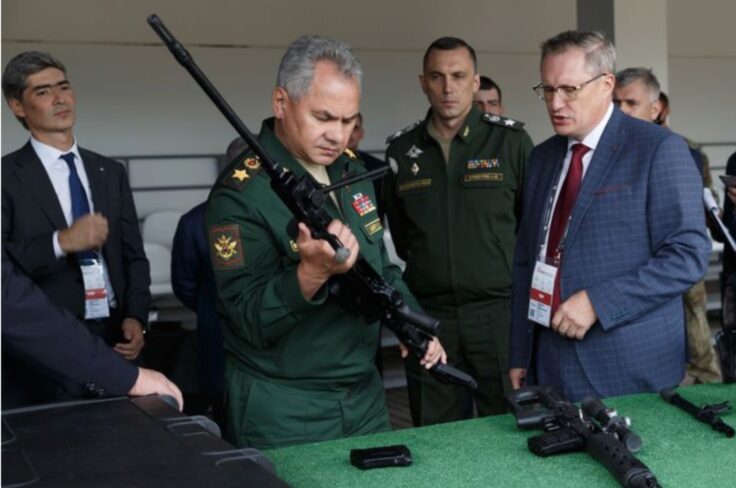
Since 2016, MIPT has taken part at least six times in the Army International Military-Technical Forum, where it showcased its work in military technology. In 2021, Sergei Shoigu visited the Phystech exhibit: Russia’s then-defense minister was shown a domestically made FPV drone. The drone was later named Joker, and today it is used in the war against Ukraine.
In November 2021, the U.S. Department of Commerce’s Bureau of Industry and Security (BIS) added MIPT to its Military End-User List. The agency justified the decision by pointing to the university’s work for military customers, in particular research on dual-use technologies and UAVs. The following summer, after the full-scale invasion of Ukraine had begun, the U.S. Treasury Department imposed restrictions on MIPT. In 2026, the U.S. Department of Defense added MIPT and ten other Russian universities to a list of organizations posing a threat to national security. Besides the United States, the EU, Japan, Switzerland, the United Kingdom, Canada, Australia, and New Zealand have imposed restrictions on Phystech.
T-invariant has reported in detail on MIPT’s active role in developing unmanned aviation technologies. It was projects combining UAVs and artificial intelligence that received special state support: in 2026, the university was awarded the maximum grant for this purpose — 830 million rubles. MIPT received the grant under the Priority 2030 program [a federal program supporting university development — T-invariant], in which it has taken part since 2021. Thus, the very cooperation with the defense industry that led to Phystech’s international isolation also secures it support at home. MIPT ended up under the harshest sanctions regime of any Russian university, yet it has retained its strategic importance for the state. It is under these conditions that the university must carry out an ambitious development program.
CONTEXT
In the article “Scientific Front: Who in Russian Science Ended Up Under Western Sanctions — and Why,” T-invariant reported that by early 2026, 53 Russian research organizations had come under restrictions. The grounds for sanctions included involvement in military research and development, cooperation with the oil industry, and spreading disinformation about the war in Ukraine.
Everybody Gets Mobilized but Me
Phystech’s special position among Russian universities was also evident in how it responded to the mobilization and the subsequent attempts to recruit students for the front. In 2025–2026, campaigns urging people to sign military contracts reached universities as well. T-invariant previously reported on student recruitment at Russian Technological University (MIREA), Plekhanov Russian University of Economics, Kutafin Moscow State Law University, and other universities. Contracts were offered first and foremost to students who were struggling with their coursework. Some universities, such as Sochi State University, promised a bonus of 100,000 rubles on top of Defense Ministry payments. Under the ministry’s instructions, the heads of military training centers were supposed to suggest that students take academic leave and sign a “special contract for a term of at least one year” with the Unmanned Systems Forces.
Defense Ministry recruiters did not overlook MIPT either. Their interest in Phystech students is easy to understand: the army needs specialists who can handle sophisticated military equipment. Recruiters tried to convince students that they would serve exclusively in the Unmanned Systems Forces, far from the actual combat zone. Signing a contract came with a promised payment of 5.2 million rubles or more.
However, the Defense Ministry’s offer did not cause much of a stir among Phystech students. One reason may be anti-war sentiment among students. Moreover, the cash payments the military is using to lure students may be a less compelling argument for future graduates of one of the country’s top technical universities: many of them are already earning good money within a few years of graduating.
According to staff members, the university administration also tried to protect its students and faculty. Andronick Arutyunov, an associate professor in the Department of Higher Mathematics, says that back during the “partial” mobilization of 2022, MIPT’s leadership did everything it could to make sure no one was mobilized against their will.
“I’m not aware of a single case of anyone being forced into the mobilization itself. Naturally, MIPT, like all other academic organizations, acted within the law. If an employer was obliged, on instructions from the military enlistment office, to notify people that they had to report, then the administration did notify them. Otherwise, as far as I know, they arranged deferments and prepared all the necessary paperwork so that people could exercise their legal right to study, work, and so on,” Arutyunov told T-invariant in an interview.
According to him, there is currently no marked anxiety among MIPT students and faculty about a possible new wave of mobilization.
“There’s no objective information about whether there will be a new wave of mobilization. So what’s the mood? People who are mentally healthy don’t think about this mobilization. If you’re right in the head, you don’t worry about it,” says Arutyunov.
More Square Meters, Fewer People
While Phystech has so far managed to maintain its special position at home, the consequences of international isolation are proving a far more serious challenge for the university.
Reforming MIPT and expanding its campus were actively discussed even before Dmitry Livanov was appointed rector and the first sanctions were imposed, but it was under him that these plans began to be put into practice. By 2025, for instance, the university was expected to erect new campus buildings with a total area of 30,000 square meters, develop nearly 32 hectares of land transferred to the university, involve two-thirds of its students in applied research, and increase state investment and funding for research and development. Since 2021, however, Livanov has had to carry out this large-scale project under sanctions pressure and amid an exodus of researchers.
MIPT’s structure has also changed in recent years: the traditional faculties have given way to Phystech Schools. Today the university has fourteen of them. According to T-invariant’s calculations, in 2020–2021 at least 577 researchers, from graduate students to Doctors of Sciences, worked at five of MIPT’s Phystech Schools. By August 2026, 129 of them had moved abroad, and another 158 had stayed in Russia but moved to other research centers. Seven researchers had died, and the affiliation of another 33 could not be determined.
Researchers most often moved to Germany (25), the United States (21), the United Kingdom (17), and Switzerland (16). The outflow hit the Landau Phystech School of Physics and Research and the Phystech School of Biological and Medical Physics hardest: 49 staff members from each school moved abroad. Moreover, the researchers who left show stronger bibliometric indicators than their colleagues who stayed. Almost 40% of researchers still working at MIPT have not published a single Scopus-indexed paper in the past two years. Among those who left, the figure is just 12%. Those who emigrated have higher median citation counts (1,090 vs. 391), publication counts (57 vs. 40), and h-indices (18 vs. 11).
The severing of international academic ties in itself makes it harder to publish research. In MIPT’s case, the situation is further complicated by sanctions imposed directly on the university. According to a former MIPT employee who left Russia in mid-2022, publishers are reluctant to deal with “toxic” universities any more than they have to.
“It’s common knowledge: there are restrictions on publications if you list an affiliation that’s on an American or European sanctions list. That includes MIPT, IKI [the Space Research Institute of the Russian Academy of Sciences — T-invariant], Skoltech, FIAN [the Lebedev Physical Institute — T-invariant], and many others. The restrictions are usually imposed by publishers, not journals. At least, that’s been my experience. But the result is the same — getting a paper published has become much harder,” said a former MIPT lab head who left to work in Europe.
Phystech has found a way to partly work around the problem of its sanctioned affiliation. Its staff began listing the so-called Moscow Center for Advanced Studies (MCAS) in their publications. MIPT documents provide for the use of this affiliation “when it is impossible to list the MIPT affiliation.” As of August 2026, at least 28 of the 250 researchers remaining at Phystech had used this affiliation in their publications.
The first papers listing the Moscow Center for Advanced Studies appeared in May 2023. Yet the center has no website of its own, and there is no publicly available information about its leadership, divisions, or laboratories. Even so, in just over three years MCAS has outpaced several major Russian research and educational organizations on a number of publication metrics. From May 2025 to April 2026, 11 papers in biology, chemistry, physics, and health sciences listing this affiliation were published in journals tracked by the Nature Index. In the Nature Index ranking, MCAS is 22nd among Russian research institutions, ahead of Rosatom and the Sechenov and Pirogov medical universities. And MDPI journals list 224 papers by authors affiliated with MCAS.
Up-to-date videos on science during wartime, interviews, podcasts, and streams with prominent scientists — subscribe to the T-invariant YouTube channel!
The alternative affiliation allows Phystech to partly maintain its presence in the international scientific arena. But it does not solve the university’s other problem — the outflow of researchers.
A Dolgoprudny “Valley” Instead of Silicon Valley
The “Big Phystech” project is meant to be one of the tools for retaining talent. The expansion of MIPT involves more than constructing new academic and research buildings. In May 2025, the government approved the creation of the Innovative Scientific and Technological Center “Phystech Valley” in Dolgoprudny. Formally, it is a separate site with a special legal regime for tech companies: MIPT initiated it, and its management company is an entity whose sole shareholder is the institute.
The project’s official goal is to forge closer ties between the university and tech businesses and to attract startups, corporate research divisions, and pilot production facilities. In this way, the “Valley” is meant to become an institutional extension of Phystech, enabling the university’s graduates and staff to commercialize their research and build businesses right in Dolgoprudny, without leaving for other scientific and technological hubs.
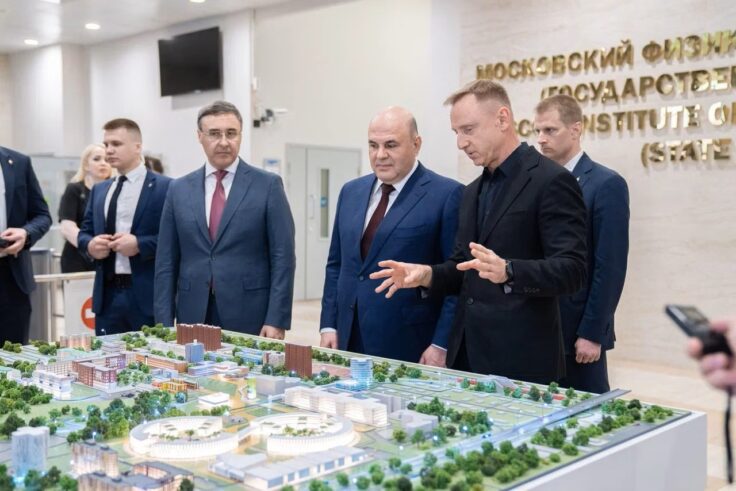
The stated priorities include artificial intelligence, robotics, energy storage systems, photonics and microelectronics, cell and genomic technologies, and a “seamless digital sky” — a label that covers solutions in unmanned aviation.
For MIPT, this is an attempt to solve a long-standing problem of the Phystech model: the university knows how to train specialists for cutting-edge science and industry, but it cannot always keep them in Dolgoprudny itself. Phystech Valley’s special regime is supposed to make it worthwhile for companies to locate research divisions and production facilities there. Participants have been promised tax and customs benefits, including zero rates of VAT, property tax, and land tax. MIPT materials also mentioned a zero corporate income tax rate and simplified hiring of highly qualified foreign specialists.
In essence, Phystech is trying to build on the model of cooperation between science and business that helped it survive the crisis of the 1990s and underpinned its success in the decades that followed. Now, however, this model has to be implemented with limited access to international technology and capital markets, as well as to foreign scientific talent.
Reform in Zugzwang
One resource Phystech can count on even amid international isolation is its diaspora abroad. The university has to find new avenues for international cooperation, talent recruitment, and equipment procurement. To maintain ties with the Phystech community, MIPT’s administration has begun holding alumni reunions abroad. In the summer of 2026, the third such reunion took place, this time in Yerevan. Livanov himself attended. He gave a talk on the “Big Phystech” project and the future of the Phystech community. One aim of such reunions may be to bring into MIPT’s projects specialists who have already found their footing in academic and tech circles abroad.
Yet it remains unclear what resources the creators of “Big Phystech” are counting on. Sanctions severely limit opportunities for cooperation with Western research centers, and the “pivot to the East,” on which MIPT’s administration pinned its hopes after 2022, has yet to produce a network of academic and technological ties of comparable scale.
In the spring of 2023, MIPT tried to make Chinese language study mandatory. Students reacted negatively to the change, and in the fall the terms were revised: Chinese became mandatory only for those whose English is at C1 level or higher. T-invariant was able to find three MIPT cooperation agreements with Chinese universities: with the National University of Defense Technology (NUDT), the Beijing Institute of Technology, and Peking University.
At the alumni reunion in Yerevan, Russia’s war against Ukraine was passed over in silence. According to one participant, who spoke to T-invariant on condition of anonymity, the war and the problems that come with it were barely discussed in informal conversations. And when it did come up in passing, it was treated as just another difficulty that Phystech would be able to handle.
“Phystech lives its own sheltered life, as if in a nature reserve. And if the war creates some problem, people treat it as a given, and the problem gets solved as a matter of routine,” the source said.
Phystech finds itself in a situation where many of its former sources of growth are unavailable and the prospects of finding new ones remain unclear. At the same time, judging by the reunion participant’s account, the war is perceived within the Phystech community more as a feature of the environment that one has to adapt to. Even so, it is hard to imagine the rectors of other leading Russian universities — Viktor Sadovnichiy (MSU), Anatoly Torkunov (MGIMO), Nikita Anisimov (HSE), or Nikolay Kropachev (SPbU) — traveling in wartime to neutral territory to meet with alumni who, for various reasons, do not want to come to Russia, and discussing the next five-year plan with them. This, too, reflects Phystech’s exceptionalism: its corporate culture is largely shaped by yet another principle, one that Kapitsa never formulated: “Everybody dies but us.”
Phystech’s special place on Russia’s university map, the rector’s administrative clout, and its ties to influential and wealthy alumni are the three pillars that keep it standing in wartime. But preserving a special position among Russian universities is one thing; preserving its place in global science is quite another. Phystech’s exceptionalism in recent decades has rested largely on its ability to combine a strategic role at home with openness to the world. Whether this model can be reproduced amid war and scientific isolation is the key question to which the creators of “Big Phystech” do not yet have an answer.