The year 2026 marks the tenth anniversary of Havana Syndrome — a mysterious psychophysiological disorder whose causes, mechanisms, and even very existence continue to divide scientists across disciplines, as well as intelligence officers, journalists, and officials. While Trump speaks of a secret “Discombobulator,” and intelligence agencies quietly purchase devices allegedly capable of mimicking Havana Syndrome, new theories about its origin are emerging, including laser optoacoustic attacks. T-invariant examined why the microwave hypothesis has hit a dead end, how the laser version could help resolve it, and what the consequences will be if this does not happen.
“If Havana Syndrome did not exist, it would be worth inventing,” says Doctor of Physical and Mathematical Sciences, a research fellow at the Nuclear Physics Institute of the Czech Academy of Sciences Alexander Kostinsky. For nearly ten years, it has remained in limbo between science and pseudoscience, this strange phenomenon has attracted many who benefit from it. Some scientists deny the very existence of Havana Syndrome (HS) altogether. Others insist on alternative explanations. Intelligence agencies have for years launched new secret investigations that can be used at any given moment for immediate political purposes. Meanwhile, their employees are suing to obtain compensation for health damage caused by HS. But new incidents suggest that HS a decade ago and the HS of recent years are phenomena of a different kind. At the same time, as Kostinsky notes, its most likely physical mechanism — the laser optoacoustic effect — remains oddly overlooked.
T-INVARIANT REFERENCE
Havana Syndrome is a collective term for a series of cases of the sudden onset of neurological and cognitive symptoms in American diplomats, intelligence officers, and military personnel. HS was first recorded in the fall of 2016 at the U.S. Embassy in Havana. Later, similar incidents were reported in China, Russia, Austria, Poland, Uzbekistan, India, and other countries. The total number of cases ranges from several hundred to more than a thousand people.
Typical picture of the acute phase: a person suddenly hears a sharp sound (heard only by the person), feels severe pain in the head and ears, pressure or heat inside the skull, nausea, and loss of balance. Long-term consequences for some victims include chronic headaches, constant tinnitus, vision and vestibular disorders, cognitive impairments (memory, concentration, information processing speed); in some cases, objective changes are recorded — signs of mild traumatic brain injury confirmed by MRI data.
There is no consensus on the causes of Havana Syndrome. Initially, the acoustic impact version (ultrasound, infrasound) was considered, but it was not confirmed. This was later replaced by the hypothesis of directed microwave radiation, suggesting hostile actions by other states. At the same time, a number of specialists consider HS a psychogenic stress disorder that arises amid alarming rumors about alleged “acoustic” or “energy” weapons, when natural or random triggers launch a cascade of symptoms.
The report of the U.S. National Intelligence Council, published in 2023, states that the vast majority of incidents do not involve the use of weapons. However, recently the HS topic has intensified significantly: since last year, intelligence circles have shown a shift toward recognizing the possibility of hostile attacks, reports have appeared about the possibility of reproducing symptoms similar to HS, and the victims’ chances of success in lawsuits have increased significantly.
The latest surge of interest in HS was fueled by a series of reports. On January 25, 2026, Michael Beck, a former NSA employee who claimed to be the first victim of HS, died. Beck retired in December 2016, still unaware of the first incidents that were occurring at that very time in Havana. By then, he had already been suffering for ten years from Parkinson’s disease, diagnosed at age 45. Beck linked it to the circumstances of his service, sued for compensation, but lost in 2014. After press reports about HS appeared, Beck decided that he had been exposed the same phenomenon back in 1996 during a certain secret mission. Nevertheless, the first officially recognized victim is not him, but a CIA employee known to the press under the pseudonym “Adam.”
On January 24, 2026, Donald Trump stated that the United States possesses a new weapon called the “Discombobulator”, capable of causing symptoms similar to HS and used during the capture of Venezuelan President Maduro. Shortly before that, a CNN report appeared stating that U.S. intelligence agencies had purchased, a year earlier during the Biden presidency, a device for an eight-figure sum that could serve as a source of radiation causing the mysterious symptoms.
Today, the discussion around HS has reached a deadlock. Within the medical community, experts are divided: some specialists insist on the exclusively psychogenic nature of the phenomenon, while others point to the existence of cornerstone cases with objective signs of brain injuries. Physicists try to explain them by the use of a hypothetical powerful and compact microwave emitter, although it remains unclear how such a device could be built and concealed. Political interests are divided as well: labeling the syndrome as psychogenic allows the authorities to avoid drastic measures, and intelligence agencies to reject lawsuits from affected employees. On the other hand, recognition of actual hostile attacks would justify active retaliatory measures. Nevertheless, without a convincing physical model, the investigation has stalled.
A further step in the attempt to find a physical mechanism for HS that avoids the dead ends of the microwave hypothesis came with a preprint by Alexander Kostinsky. In it, the presumed means of attack is a pulsed infrared laser. This solution shifts the discussion away from speculation and guesses about secret developments by unknown adversaries into the realm of explainable physical processes.
The Debate about “Flying Donkeys”
Kostinsky’s preprint prompted T-invariant to contact prominent physicians and physicists who either participated in official Havana Syndrome investigations or have publicly analyzed the phenomenon. We wanted to see whether scientists were ready to seriously consider the laser hypothesis as a viable alternative to the stalled microwave theory. The result was unexpected: only committed skeptics among physicians responded.
Their position was uncompromising: they deny not only the specific mechanisms but the very existence of the phenomenon itself. Professor of Experimental Neuropsychology at the University of Edinburgh Robert McIntosh, editor-in-chief of the journal Cortex, objected to the framing of the question:
“I would strongly caution against accepting the basic premise that there were any such things as ‘Havana Syndrome Attacks’ … To discuss whether microwave radiation could or could not cause these symptoms is already to accord a status of reality to these symptoms. In my view (and this does not require any expertise in physics) the microwave radiation hypothesis is vanishingly unlikely to be true, because it is unlikely that any ‘attacks’ ever took place at all.”
His colleague, Professor Sergio Della Sala, back in 2018 criticized the first American publications on HS, focusing on the “foundation” of the syndrome — data on cognitive impairments in the victims. Della Sala insists that these data resulted from “poor neuropsychology” and methodological errors:
“Before discussing an event, we must make sure that it actually occurred; otherwise, it will be like discussing how donkeys can fly without proving that they fly at all,” Della Sala said in response to T-invariant.
An even sharper response came from the Honorary Senior Lecturer in the Department of Psychological Medicine at the University of Auckland, author of several studies on HS (including the article “‘Havana Syndrome’: A post mortem”) Robert Bartholomew. According to him, “‘Havana Syndrome’ is a social construction that has been created by bad science (a few rogue scientists), bad government (the Trump Administration not doing their due diligence and looking for exotic explanations), and bad journalism (a handful of outlier scientists who get interviewed over and over again)..” In Bartholomew’s opinion, the explanation lies in the “nocebo effect” — deterioration of well-being and emergence of additional symptoms due to negative expectations, fear, or suggestion.
This skepticism is well-founded. The very first “Havana cluster” of cases initially split into two groups — those involving American and Canadian personnel —and then further divided into confirmed physiological (“cornerstone”) cases and all the rest.
Early American studies [Swanson et al., 2018; Hampton, Swanson, & Smith, 2018; Hoffer et al., 2018] concerned American diplomats. Because of the public attention, the studies were conducted hastily and drew substantial criticism [Della Sala and Cubelli, 2018] for methodological flaws (lack of control groups, incomplete testing). And the cases themselves and their explanation by possible exposure to unknown weapons came to be viewed by scientists with considerable skepticism.
Canadian scientists published their results in 2019 [Friedman et al., 2019a, 2019b]: they attributed the cornerstone cases among their diplomats to the neurotoxic effect of pesticides that were massively sprayed in Cuba in 2016 to combat mosquitoes in the fight against the Zika virus [Reardon, 2016]. This explanation was not questioned among scientists: the fact of pesticide spraying was confirmed, and their effect on the brain required no hypotheses about mysterious weapons.
The situation was complicated because until 2018, directed acoustic radiation was often named as the attack tool. Meanwhile, it quickly became clear that this hypothesis was untenable, since the physics of ultrasound is such that it cannot effectively penetrate walls and windows [Golden & Rotella, 2018; Kikoin, 1976, p. 78]. And the audio recordings of the alleged “attacks” were later identified as the mating chirps of Caribbean crickets [Stone, 2017; Stubbs & Montealegre-Z, 2019].
Top news on scientists’ work and experiences during the war, along with videos and infographics — subscribe to the T-invariant Telegram channel to stay updated.
The problem, however, is that subsequently new cornerstone cases began to appear, outside Cuba, where pesticide exposure was ruled out. These incidents were accompanied by medically confirmed physiological signs of neurotrauma that could no longer be attributed to autosuggestion. This was recorded in the report of the U.S. National Academies of Sciences [NASEM, 2020], whose experts stated a combination of acute symptoms and signs of directed impact that is “very unusual and unlike any disorder described in the medical literature.”
As it turns out that the skeptics were right to point to the psychogenic nature of 90% of the cases, but the remaining 10% (today 134 confirmed traumatic cases, according to a systematic review by Ali Asadi-Pooya [Asadi-Pooya, 2023]) require identifying an external physical factor.
The False Microwave Trail
When the topic of “acoustic weapons” fell away, the microwave hypothesis became the leading explanation. One of the first to propose this idea was Professor James Lin of the University of Illinois Chicago, who since the 1970s has conducted experiments with the acoustic effect from powerful microwave pulses (the Frey effect). Independently, this hypothesis was also proposed by Professor Beatrice Golomb of the University of California, San Diego, who remains one of its main proponents. The microwave version quickly became the dominant explanation because it was based on the well-known Frey effect, which can explain “sounds in the head” without external acoustic vibrations.
T-INVARIANT REFERENCE
The Frey effect, or microwave auditory effect, is a reliably established physical mechanism in which very short and powerful pulses of microwave radiation are absorbed by the tissues of the head, causing instantaneous slight heating (by fractions of a degree). Due to the sharp thermal expansion, an acoustic wave forms and travels through the bones of the skull directly to the inner ear (cochlea) and is perceived as a click, buzz, or hum (the specific type of sound depends on the nature of the original pulse and complex internal reverberations). At extreme powers, such an “internal impact” can cause damage analogous to concussion.
To achieve such a traumatic effect, a person’s head would need to be exposed to an energy flux density of 1 J/m2 or 10 MW/m2 with a pulse duration of 0.1 μs [Foster et al., 2021]. Considering beam divergence, absorption, reflection, and scattering, the source power would be on the order of hundreds of megawatts, possibly even gigawatts (in a short pulse).
The microwave hypothesis immediately became the leading theory, since such radiation can penetrate into buildings through walls and glass, which matched the circumstances of many incidents. But here physicists encountered a problem: although the effect is possible, implementing it as a covert portable weapon raises serious doubts. Most microwave specialists recognize that creating a compact “microwave gun” is an almost impossible task. Nevertheless, some experts continue to support this version lacking better alternatives, often attributing technical challenges to possible “secret developments” by Russia or China.
James Lin, unfortunately, did not respond to the T-invariant inquiry, but well-known specialists in high-power microwave radiation reflected this duality. Thus, James Benford, co-author of the fundamental textbook on high-power microwaves (High Power Microwaves, HPM), insists that the existence of microwave weapons of the required power is “plausible,” and their size can vary “from suitcase-size to vehicle scale.” He also refers to Russia’s particular interest in compact devices. In a 2022 CBS interview, he stated explicitly that compact microwave installations are the source of radiation causing Havana Syndrome. Responding to the T-invariant inquiry, he quoted from his recent book (2025):
The principal facts that make this plausible are:
- HPM systems exist that could generate the required stimuli, are concealable can be concealed, have moderate power requirements, can operate repetitively up to high rates and can be made very compact. The size of such devices varies from suitcase-size to vehicle scale. Compact varieties are widely available. They have been made transportable in vehicles. They could be disguised to operate unnoticed on city streets.
- Principal countries in this research area are the United States, Russia and China. Russia has been particularly interested in small-scale devices.
- Russia has a historical interest in the interactions between electromagnetism and the human body. In Russia one can purchase electromagnetic devices which purport to deal with human ailments [probably referring to devices for microwave therapy. — T-invariant].
- There have been Russian experiments at the High Current Electronics Institute in Tomsk on the effects of repetitive pulsed intense microwave beams on animals, mice in particular. These studies at the High Current Electronics Institute in Tomsk have shown that nanosecond repetitive HPM causes a variety of bioeffects from the molecular to cellular levels of the organisms.
Professor Benford’s book and his 2024 review article (2024) describe many methods of generating gigawatt-power microwave pulses using virtual cathode generators, relativistic magnetrons, magnetically insulated generators, and other divices. But which of these could realistically be used in the form of a small, easy to set up, sufficiently lightweight and inconspicuously transportable device that could be used by midlevel intelligence officers (or representatives of criminal structures)? T-invariant asked Professor Benford this key question, but unfortunately he left it unanswered.
Unlike Professor Benford, Professor Kenneth Foster, author of scientific articles on HS who has also actively spoken on the topic in the press, was more skeptical:
“I have been unable to find the characteristics of the ‘backpack’ device that the US supposedly has. Seems unlikely that a backpack-sized device could transmit microwave pulses with sufficient energy to cause the HS. We don’t know what the characteristics of the device are and all I have seen is speculation. I can think of a number of uses for a portable pulsed microwave device aside from attacking people — disrupting communications networks for one, or maybe acquiring signals. Putting a high powered microwave or laser generator in a backpack that could transmit pulses with enough energy per pulse to cause vestibular effects in a target person at a reasonable distance seems unlikely but I reserve judgment given the lack of information.”
These doubts are also supported by fundamental physical limitations that make such systems bulky and its use revealing:
- Beam focusing problem. At centimeter wavelengths, large antennas with a diameter of 1.5 m or more are needed in order to keep the beam narrow. And even with them, the beam at distances of tens of meters would diverge significantly so that only a small part of its energy would reach the target’s head.
- Reflection and absorption. Standard window glass reflects up to 80% of microwave energy. Walls are an even more serious obstacle: brick and concrete not only absorb the pulse but also scatter it, turning it into a diffuse background that fills the entire building.
- Electrical breakdown. To deliver sufficient injury energy to the target indoors, the pulse at the source would need to be extremely powerful. The electric fields it creates are so strong that they preclude the use of ordinary waveguides due to electrical breakdown inside them. So the generator must be connected directly to the antenna, turning the device into a structure that would weigh hundreds of kilograms.
- Lack of concealment. A powerful microwave pulse would not go unnoticed. As it passes through walls, it causes malfunctions in computers and phones in many rooms of the building. In addition, it is easily detected even by basic sensors, since the reflected radiation literally “floods” the surrounding space.
To date, there is no evidence of suitcase-sized devices with gigawatt pulsed power. The real capabilities of microwave technology can be assessed by examining systems currently available on the world arms market.
Up-to-date videos on science during wartime, interviews, podcasts, and streams with prominent scientists — subscribe to the T-invariant YouTube channel!
Military Microwave Systems
High-power microwave devices represent one of the most advanced fields of defense technology. They enable all-weather tracking of any moving enemy aircraft: microwave beams propagate with minimal absorption not only through air but also through dense clouds, fog, and smoke screens.
Around 40–50 years ago, the idea emerged to use extremely powerful microwave radiation to affect aircrafts by creating electrical discharges inside them, on their surfaces, or nearby, disrupting electronic systems or even altering flight trajectories. However, such ultra-high-power radars were not deployed to engage flying targets and have remained for surveillance. This is likely because supersonic aircraft and missiles travel at very high speeds and far from the radars, while microwave radiation is largely reflected by the plasma of its own discharges near the surfaces.
Perhaps the only system to have implemented this idea is the Russian Ranets-E complex. It was presented in 2001 at the LIMA exhibition in Malaysia. This is a system with a peak power of 500 MW (pulse duration 10–20 ns) at a wavelength of 3 cm (see image below). Its four-meter antenna could not realistically be concealed for special operations.
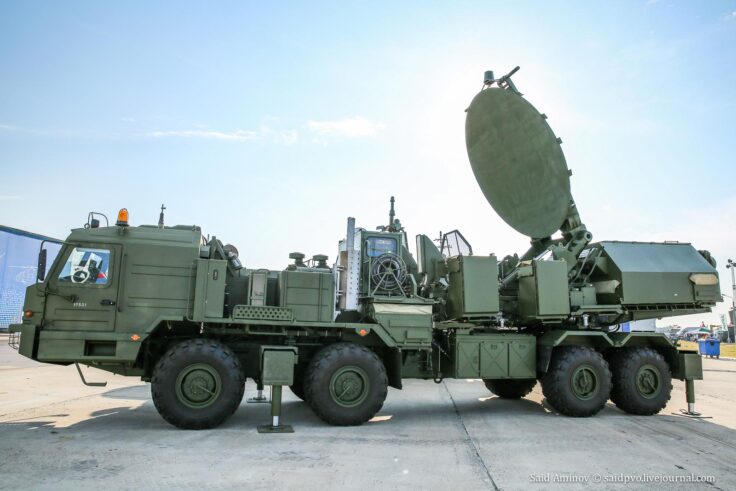
To produce a traumatic effect similar to HS inside a building using the largest realistically concealable antenna of 1.5 m, even a powerful system like Ranets-E would, because of unavoidable diffraction divergence, have to approach the window no farther than about 80 m. Meanwhile, the microwave pulse would disrupt electronics in many rooms of the building (and across the street due to strong reflection), and in rooms close to the target it would likely damage them outright.
In recent years the idea of powerful microwave effects on aircraft has been revived thanks to the rapid development of small, relatively slow unmanned aerial vehicles (drones), which are much less protected against electromagnetic effects than large and expensive missiles and aircraft. Manufacturers of high-power microwave systems are now offering solutions to defend against drone swarms, and these solutions are at the cutting edge of high-power microwave technology because of the extreme importance of the task.
For several years now one can find advertisements for the Tactical High-power Operational Responder (THOR) system developed by the U.S. Air Force Research Laboratory, designed to protect field military camps and bases against drone attacks. The images below clearly show a modern “mobile” high-power microwave system powerful enough to cause a painful Frey effect at a distance of about 100 m.
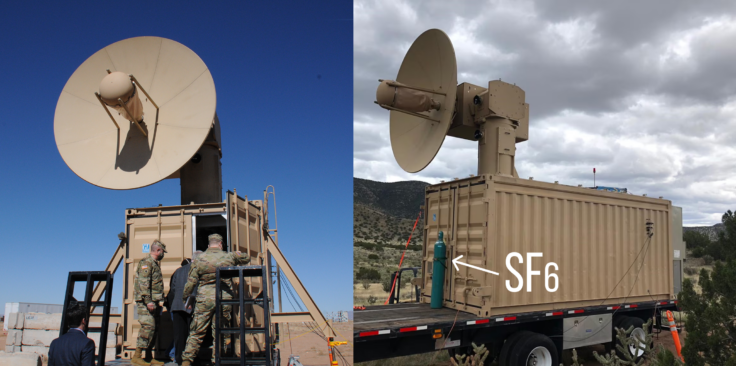
The system is housed in a standard shipping container that can be easily transported on military cargo aircraft. The parabolic antenna with its powerful steering mechanism has a diameter of 2.5 m and requires complex on-site assembly. Also visible in the photograph is a green cylinder of SF6 gas (marked by the arrow), needed to prevent electrical breakdown in the waveguides that deliver microwave energy to the antenna. This indicates a generator power of at least tens of megawatts. The system cost cited in various videos ranges from $15 to $18 million. The images make it clear that THOR is conceptually the same as Ranets-E, just somewhat smaller and with a faster, more advanced steering system.
The Specialized Portable Electromagnetic Attack Radiator (SPEAR) from Leonardo DRS is probably the most compact system of this type. The manufacturer strongly emphasizes the “portable size, low weight, modest power requirements, and effectiveness” of the SPEAR system. It is indeed far more compact than THOR or Ranets-E, yet it is still mounted on a framed platform, has a massive steering mechanism, and an antenna about 170 cm in diameter. Even SPEAR would be quite difficult to place inside a room, minivan, or pickup truck.
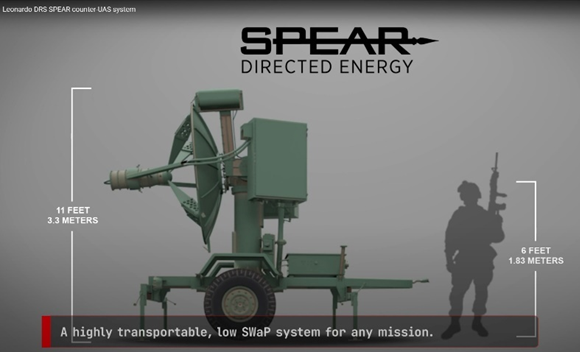
If covert use is intended, such a system cannot be transported in assembled form. But then on-site assembly and functional testing become a rather complex task even for trained specialists. In an emergency, rapid disassembly and concealment of such a system would also be extremely difficult. It is worth emphasizing that the last two systems come from the world’s leading manufacturers of microwave technology, and it is hard to imagine that their counterparts in China or Russia have achieved some dramatic technological breakthrough in comparison.
This brief review shows that even the most compact systems in service could not be used for incidents resembling Havana Syndrome because they lack sufficient pulse power and are too bulky to be reliably concealed.
The “Russian Trail” and the Search for Secret Technologies
Given these limitations, supporters of the microwave version of Havana Syndrome resort to a common counterargument — a kind of wild card: “secret developments” unknown to the global scientific community in Russia and/or China. After all, it is often assumed classified engineers have found technical solutions that radically reduce the size and complexity of HPM devices.
The hypothesis of Russian special services’ involvement in HS emerged soon after the acoustic-impact version was discarded in 2017. At the 2018 Senate hearings, Senator Marco Rubio rhetorically asked: “What third country would want to disrupt the U.S. presence in Cuba?” — answering that Russia was the logical candidate.
The version received new impetus from the joint investigation published in April 2024 by The Insider, CBS (60 Minutes), and Der Spiegel. Journalists Roman Dobrokhotov, Christo Grozev, and Michael Weiss discovered that the locations of alleged HS incidents around the world often correlated with the travel schedules of employees of Russian military intelligence unit 29155. Moreover, the investigators highlighted specific developments in Russian research institutes in the field of microwave radiation. In particular, they mentioned experiments at the Tomsk Institute of High-Current Electronics on the effects of pulsed microwaves on animals.
Talk of secret developments heated up again in January 2026 after a CNN report (details can be found in the Meduza article and the CBS report) that U.S. intelligence had allegedly purchased, for an eight-figure sum, a foreign-made portable device capable of inducing HS symptoms. In expert circles, some suggest the deal may have involved intermediaries from the so-called “Russian mafia.”
However, even if such a device really exists, this would still not confirm the microwave hypothesis. The most compact installations from Tomsk occupy an entire room and could in no way placed in a backpack or car trunk. For a microwave device of that size there is no practical way to deliver a traumatic dose of energy over a distance of 30–50 m without disabling all nearby electronics.
This detective story about the purchase of a secret device highlights the key problem: HS has turned into a “black hole” for intelligence agencies. On the one hand, the investigation by The Insider and its partners revealed suspicious activity by Russian military intelligence officers; on the other, the technical analysis of these incidents still depends on “improbable” microwaves.
In most cases, secret developments in leading countries are at comparable levels, and they certainly cannot bypass fundamental physical laws. Moreover, secret developments rarely surpasses experimental research at the cutting edge, which is described in detail in open scientific publications. The current level of the most advanced high-power microwave generators makes them unlikely to be used in incidents like HS. Such systems are complex, large and cumbersome (especially the vacuum beam lines of relativistic accelerators, powerful pulsed magnets, the difficulty of interfacing with large antennas, etc.). This would rule out their covert transport to the attack site, rapid assembly, targeting, and rapid disassembly. In addition, it would require highly qualified scientific personnel in these risky operations — people unlikely to blindly follow secrecy directives under stressful circumstances.
If such attacks did occur, a more practical approach would likely have been used. Alexander Kostinsky is surprised that after years of discussion no one has proposed the obvious alternative: to replace the microwave beam with a pulsed infrared laser.
The Laser Alternative: Optoacoustic Impact
In his preprint, Kostinsky shows how a portable device capable of causing painful sensations similar to Havana Syndrome can be built with an inexpensive, compact, and easy-to-use industrial laser. Thanks to the laser optoacoustic effect, such a device can operate at much greater distance and with much greater efficiency, including the ability to target people through windows inside closed rooms. At the same time, most of the technical problems of microwave emitters are eliminated.
T-INVARIANT REFERENCE
Alexander Graham Bell’s Greatest Scientific Achievement
The optoacoustic (or photoacoustic) effect is a physical phenomenon in which a pulse of electromagnetic radiation produce sound inside an absorbing medium. The Frey effect, on which supporters of the microwave hypothesis rely, is merely a special case of it.
The discovery of the optoacoustic effect goes back to the 19th century. As early as 1880, telephone inventor Alexander Graham Bell discovered that modulated sunlight falling on a solid body produces audible vibrations. On this principle Bell created the “photophone” — the first wireless voice transmission device in history, functioning over a distance of about two hundred meters. The inventor considered this solar-beam communication his greatest scientific achievement, yet for 80 years it remained on the margins of science due to the absence of powerful coherent light sources. This changed with the advent of lasers capable of generating ultrashort and powerful pulses.
In principle, a laser “attack” is analogous to a microwave one. Infrared radiation, for example with a wavelength of 1.06 μm, penetrates the skin to a depth of about 2 mm — similar to the penetration depth of 3-cm microwaves. In both cases, the pulse causes instantaneous microheating of tissues, generating an acoustic wave perceived as a loud sound that can be strong enough to cause a concussion. Moreover, laser technology has several advantages over the microwave approach.
- Focusing. A microwave beam with a wavelength of 1–2 cm diverges due to diffraction at an angle of 1–5° and at a distance of about 100 m illuminates a spot several meters in diameter — two to three orders of magnitude larger than the target area. At a wavelength of 1–2 μm, an infrared laser beam can be concentrated into a spot that is millions of times smaller (the square of the wavelength ratio). Thus a laser pulse would actually need to be slightly defocused to avoid a pinpoint burn.
- Power density. For the optoacoustic effect the key factor is not total radiated power but rather the energy delivered by the pulse per unit area. With a laser spot just a few centimeters across — as opposed to several meters for a microwave beam — the energy requirements of the source are reduced by four orders of magnitude. A further order of magnitude can be gained from lower absorption and scattering losses. And although microwave devices convert electricity to radiation roughly 30 times more efficiently, laser systems can achieve the same effect using thousands of times less energy.
- Energy. Because the laser provides high power density, a traumatic effect requires only a radiation pulse with energy of 0.03–0.10 J. Such a device, with batteries, could fit into a large backpack or suitcase. A microwave pulse would have to be three to four orders of magnitude stronger and requires a powerful and bulky power supply.
- Stealth. A laser beam can be aimed precisely at the target and is invisible from the side without special IR cameras (and even then only at night or in twilight). Reflected radiation remains within the room and leaves no trace. In contrast, a microwave beam capable of passing through walls would “light up” an entire floor, if not the whole building, causing electronics failures and, near the target, could end up disabling devices and unmasking the attacker.
- Retargeting. Laser radiation can be readily redirected across a wide range of angles using compact acousto-optic deflectors (not to be confused with optoacoustics). This allows a laser to rapidly and selectively target several people per second. A microwave emitter, by contrast, strikes areas and requires turning large antenna for aiming.
Why, then, was the laser version never seriously considered in HS investigations? “Probably because laser beams do not pass through walls, and people were often attacked indoors,” Alexander Kostinsky suggests. “However, lasers penetrate windows far better than microwaves and can be aimed from long distances” (in at least several key cases, the people were near windows). In addition, not all cornerstone cases occurred inside buildings. For example, in 2020 such an incident happened to a CIA officer in Washington, D.C., on the street near the White House. It is hard to imagine a powerful microwave source being nearby. A laser aimed from 1–2 km away, however, would still be plausible.
In correspondence with the editors, Professor Kenneth Foster noted that laser radiation can damage the retina, since this is where the eye focuses IR radiation. Therefore, a pulse powerful enough for HS striking the eye would burn the retina in certain spots. This likely led investigative commissions to dismiss the laser hypothesis at the outset, since no cases of eye damage had been recorded.
Kostinsky sees this as a mistake of narrow expertise: if a laser with a wavelength of 1.5–1.6 μm rather than 1nbsp;μm is used, the radiation is entirely absorbed by the cornea and never reaches the retina. At the same time it retains the ability to create a powerful acoustic shock inside the skull. “Moreover, the presumed attackers would be unlikely to aim directly at the eyes so as not to reveal themselves. Specialists of this caliber would likely be good ‘snipers’ and would be able to wait for the right moment to attack,” he adds.
This illustrates the main problem of Havana Syndrome: it turned out to be a extreme complexity task requiring deep expertise in neurophysiology, microwave physics, laser technology, psychology, and politics. As a result, specialists working within narrow disciplines spent years focused on the “flying donkeys” of the microwave hypothesis overlooking a more convincing solution that lay in a different part of the electromagnetic spectrum.
How to Cure Havana Syndrome
After a decade of uncertainty, we should acknowledge: Havana Syndrome is not a single disease but a multilayered phenomenon. It first appeared in 2016 in Cuba, against the backdrop the Americans’ past negative experience in “socialist countries.” It is possible that “patient zero” in Havana was exposed to pesticides when Cuban authorities were combating the Zika virus. Then the psychogenic factor came into play: HS investigations framed the chirping of crickets as an “acoustic attack” and created a viral template for hundreds of other personnel.
Here Alexander Kostinsky suggests that explains the position of the skeptical physicians: a real technological device may have appeared later not in 2016 but considerably later. Seeing the demoralizing effect of the “Havana myth” on U.S. intelligence services, adversaries could have developed or adapted a laser device specifically “to match the syndrome’s symptoms” in order to keep the fires burning artificially.
However, from this standpoint it is difficult to explain — something Kostinsky himself notes — the new cornerstone cases in 2017–2020, when such a technological response could not yet have been developed. This suggests leaving the question open of when the first device appeared, while acknowledging only that in 2016 Cuba, which was desperately in need of investment and rapprochement with America, would be unlikely to allow Russian agents to carry out sabotage on its territory. The subsequent explosion of interest in the HS theme aligned with the first Trump administration far more, as it was seeking a pretext to escalate tensions with the island.
The emergence of the laser alternative does not reduce the significance of the investigations by The Insider, Christo Grozev, and Michael Weiss. The correlations between the movements of officers from Russia’s military intelligence unit 29155 and HS incidents remain important evidence that requires explanation. It is worth adding, however, that their recent investigation, devoted to the CIA’s role in the story, runs up against “microwave evidence,” which further supports our point: for years the intelligence services were looking for the wrong mechanism and following the wrong path.
The political influence of HS is growing again, while a clear answer about its real causes is still missing. This provides hardliners in the CIA the opportunity to act without regard for experts, citing the lack of consensus and to the strong arguments against the microwave hypothesis. Among them, for example, is the second investigation by the well-known defense expert group JASON. The authors show that microwave radiation cannot be the cause of the most serious cases attributed to HS, for several reasons.
The new laser optoacoustic hypothesis offers a way out of this deadlock and at the same time significantly broadens the range of potential actors. Indeed, this technology is accessible to many countries — for example Iran or Cuba — and even to large criminal organizations such as drug cartels. Nevertheless, the political interests of various parties, the interdisciplinary complexity of the issue, and the secrecy of numerous investigations all still hinder independent study of the problem that would consider all possible versions.
Given this it seems necessary, using various electromagnetic radiation sensors, to improve detection capabilities for human exposure across all relevant ranges of radiation (ultraviolet, visible, infrared, and microwave, as well as the acoustic range). This would help reassure all current and potential victims, to show that the situation is under control, and thereby, to reduce speculation and limit the further psychogenic spread of the phenomenon.
The effects of powerful microwave radiation are difficult to conceal, and anyone — especially an organization — can purchase on the open market, instruments for detecting microwaves across all bands (wavelengths from millimeters to tens of centimeters). These devices have become widely available amid the “collective paranoia” about 5G cellular towers, which has become a kind of amplifier for events attributed to HS.
However, as Robert Bartholomew suggests, HS is unlikely to be “cured”. He believes that the story was hyped by the Trump administration as a convenient pretext for imposing harsh embargo measures or for invading Cuba to change the regime or for other purposes.
“They will claim,” Bartholomew believes, “that Cuba attacked American diplomats and spies with new weapons, so we will pursue Cuba in self-defense. Either way, we will very soon see the political consequences of the American government’s acquisition of a miracle device.”
Thus any new information about a “mysterious device” capable of causing painful symptoms raises more questions. The American secret weapon allegedly used in the operation in Venezuela that Donald Trump spoke about, and the device allegedly created by a foreign adversary and purchased by U.S. intelligence for hundreds of millions of dollars that CNN reports on — might they be the same device? Who manufactured it? If it was created by countries hostile to the United States, why has its effect never manifested itself during Russia’s war against Ukraine or the Iran–Israel conflict? Why has no evidence of Chinese involvement emerged in the most pronounced cases of HS if only Russia and China are believed to possess such powerful and compact microwave systems? Answers to these questions can come only from the intelligence services or representatives of the U.S. presidential administration. But the involvement of broad independent scientific expertise could help prevent Havana Syndrome from being exploited as a mysterious wild card in the international political game.