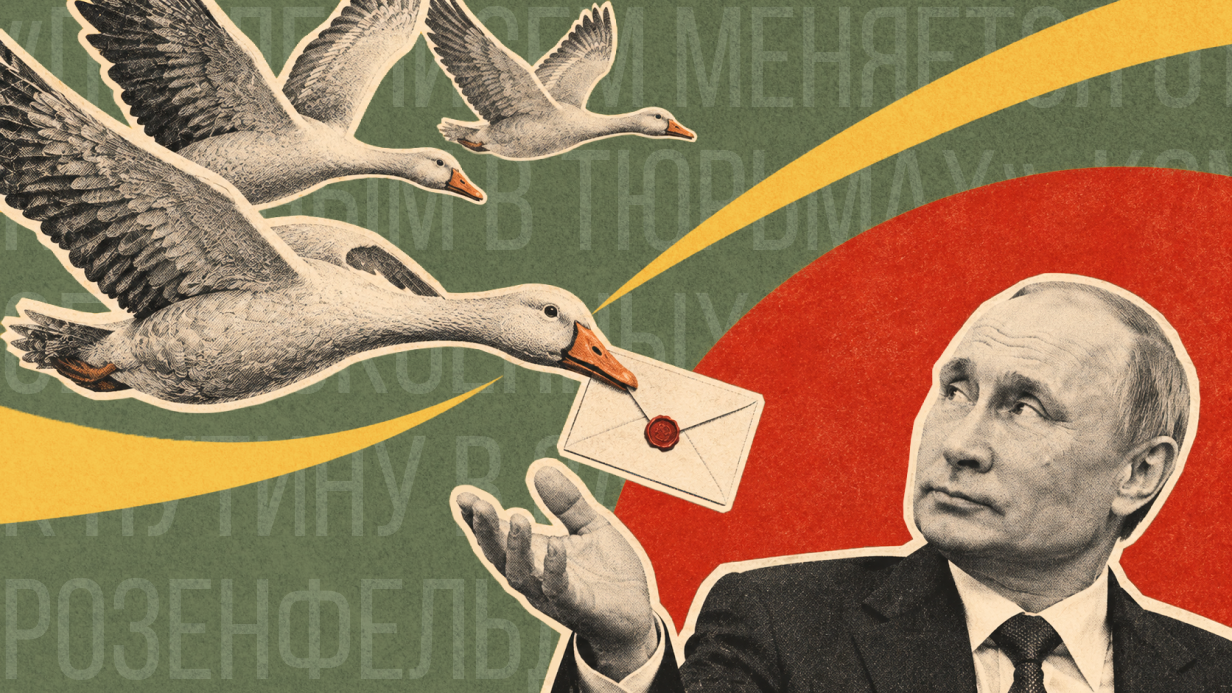
The U.S.-based Committee of Concerned Scientists has published an appeal to Russian President Vladimir Putin on behalf of ornithologist and Doctor of Sciences in Biology Sofia Rosenfeld. The open letter makes three demands: release Rosenfeld pending appeal, carefully review the evidence on whether she knew about the ban on the Anti-Corruption Foundation (FBK) and whether she had any criminal intent, and use the legal avenues available to reconsider her sentence. T-invariant spoke with one of the letter’s authors, physicist Eugene Chudnovsky, who has spent several decades defending the rights of scientists and who was himself persecuted by the KGB in Soviet times.
Top news on scientists’ work and experiences during the war, along with videos and infographics — subscribe to the T-invariant Telegram channel to stay updated.
The Committee of Concerned Scientists (CCS) is an independent human rights organization founded in the United States in 1972 by scientists, physicians, engineers, and researchers to defend the human rights and academic freedom of their colleagues around the world. At first, the Committee focused on supporting Soviet colleagues, above all refuseniks — people whom the Soviet authorities would not allow to emigrate.
The Committee’s help went well beyond open letters: CCS members translated and published refuseniks’ work, paid for their subscriptions to scientific journals, brought them books, and kept up personal contacts. In 1988, the Committee organized the Frontiers of Science conference in Moscow, with sessions held in the apartments of refuseniks who were barred from attending international scientific meetings. CCS later expanded its reach to 75 countries.
T-INVARIANT BACKGROUND
How the Committee of Concerned Scientists works
CCS’s main tools are public pressure, professional solidarity, and targeted assistance. The Committee supports persecuted scientists in the following ways:
- documenting violations of scientists’ rights;
- appealing to governments and enlisting other scientific societies to stand up for colleagues;
- organizing petitions and press conferences and drawing media attention;
- working with the U.S. Congress and the executive branch to support persecuted scientists.
The letter was published in English. Its full text is below.
Dear Mr. President,
The Committee of Concerned Scientists (CCS), an independent organization that defends the human rights and academic freedom of scientists and scholars, expresses its deep concern over the sentencing and imprisonment of Sofia Borisovna Rosenfeld, a senior research fellow at the A.N. Severtsov Institute of Ecology and Evolution of the Russian Academy of Sciences and a leading expert on Arctic waterfowl.
On October 7, 2026, the Gagarinsky District Court of Moscow sentenced Sofia Rosenfeld to three years and six months in a general-regime penal colony under Part 1 of Article 282.3 of the Russian Criminal Code [financing extremist activity — T-invariant]. The charge concerned two transfers of 1,000 rubles each to the Anti-Corruption Foundation (FBK), made in August and September 2021, after the organization had been designated extremist.
According to published reports on the trial, these payments were made as part of a recurring donation subscription. Rosenfeld explained that during that period she was on an extended scientific expedition without reliable communications, and that she canceled the subscription as soon as she learned of the ban [on FBK]. Her defense reportedly introduced her written cancellation request into evidence. She acknowledged making the donations but denied supporting extremism or intending to finance extremist activity.
We are deeply troubled by the severity of a prison sentence imposed for two small payments under these circumstances, particularly in light of reports of evidence bearing on her knowledge and intent. The sentence also interrupts valuable scientific research on Arctic bird populations, their migration, and their conservation. The prosecution of scientists for peaceful civic activity is a matter of concern to the international scientific community.
We urge the appropriate Russian authorities to release Sofia Rosenfeld pending appeal, to ensure a full and fair review of the evidence concerning her knowledge and intent, and to pursue all lawful avenues to reconsider this disproportionate decision. We also urge that she be allowed to resume her scientific and conservation work without intimidation or retaliatory harassment.
We respect the independence of the judiciary and ask that any judicial proceedings be conducted in accordance with the law and with full respect for due process. We would be grateful for a response describing the steps taken to address the concerns we have raised.
Sincerely,
Joel L. Lebowitz (Rutgers University), Walter Reich (George Washington University), Eugene M. Chudnovsky (Lehman College), Alexander Greer (Brooklyn College)
Co-Chairs, Committee of Concerned Scientists
T-invariant spoke with one of the letter’s authors, physicist Eugene Chudnovsky.
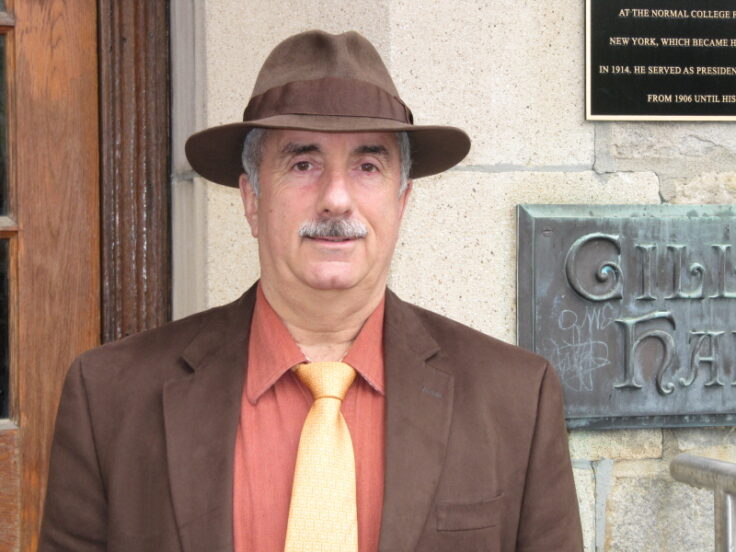
T-invariant: You have sent an appeal to Putin and Russian officials. What other steps are you planning?
Eugene Chudnovsky: Our job is to bring the persecution of scientists into the open. We started with a letter, and we’ll see where it goes from there. In the past, we’ve been able to bring in the U.S. National Academy of Sciences to defend a scientist. Once, more than 100 Nobel laureates signed one of our letters. Within the Committee, we have a subcommittee of young scientists, and we often hand cases over to them to look into. Maybe they’ll come up with something.
T-INVARIANT BACKGROUND
Eugene M. Chudnovsky (born Yevgeny Chudnovsky) is a Soviet-born American theoretical physicist and a professor at Lehman College and the Graduate Center of the City University of New York (CUNY). He specializes in magnetism, superconductivity, and quantum tunneling. He graduated from Kharkiv University. In the USSR, he was persecuted for seeking to emigrate and for his ties to dissidents, and for eight years he was barred from working as a physicist. He emigrated to the United States in 1987 and has worked at CUNY since 1988. Since 2011, he has served as co-chair of the Committee of Concerned Scientists. He has chaired the human rights committees of the American Physical Society and the New York Academy of Sciences. He received the American Physical Society’s 2024 Andrei Sakharov Prize for his many years of work defending persecuted scientists.
T-i: You yourself were persecuted by the KGB and the Soviet authorities. Before you emigrated to the United States, state security officers interrogated you repeatedly. How do you see the persecution of scientists in today’s Russia? What would you advise researchers who are afraid of drawing the attention of the security services?
EC: I was born in the Land of the Soviets, so I’ll refrain from giving advice [a pun: in Russian, sovety means both “soviets” and “advice” — T-invariant]. I’ve studied the hypersonic scientists’ cases in detail, since the subject is close to my own field. I’ve written about them in the American press more than once. My impression is that the FSB’s main goal is to frighten people. It was mostly older scientists who were arrested, while the young ones were largely left alone. The point was to intimidate young and middle-aged scientists. So that they wouldn’t get in touch with foreign colleagues. So that they wouldn’t try to share scientific data and contacts. So that they wouldn’t even look in that direction. But notice that the scientific work itself didn’t stop — the research goes on. For Putin and the Russian authorities, it’s important to maintain their lead in this field and to emphasize it.
Sofia Rosenfeld’s case resembles the Dymov case. The amounts match, the sentences match, and it was even the same court. Still, I don’t see mass persecution of scientists the way there was in Soviet times. We live in the information age, so targeted repression works just as well: it lets them intimidate and control everyone.
T-i: What can your letter change on its own?
EC: We understand that a letter won’t get anyone out of a penal colony or a pretrial detention center. But our goal is public exposure. Once well-known people or respected organizations speak up, attitudes toward the scientist change. In prisons, the administration starts treating the person differently. They stop sending in criminals to lean on him. On the other hand, this kind of exposure also plays into the hands of the Russian authorities and security services. It serves their interests: there are fewer actual cases — I’m comparing this with Soviet times — but more and more information about them. What can be done on a global scale? Nothing. It’s like an ant going up against an elephant. But sometimes you can help a specific person and make their lot at least a little better.
T-i: Many scientists who oppose the war would like to leave Russia to escape persecution and be able to state their views openly. But the options for moving to the leading scientific countries are limited. That leaves China or perhaps India. What do you make of this situation?
EC: We have repeatedly spoken out against sanctions on Russian scientists. Physicists, biologists, and humanities scholars are not responsible for the actions of their governments. What’s more, this principle should apply to all scientists, regardless of their views on the Russian–Ukrainian war, even if they voice those views only around their own kitchen table. And right now the road really is closed to scientists. It all comes down to money. In the United States, most science programs are government-funded. And that’s where the sanctions kick in. Universities are told that the government can’t fund research if a scientist from Russia is involved.